

The Roman Empire set its sights on the south of the Iberian Peninsula due to its wealth of raw materials (metals, agricultural products, fishing resources, etc.), its favorable climate, and the high level of development in the area, thanks to previous civilizations such as Tartessos and contact with Phoenician and Greek traders in earlier centuries. Consequently, this territory underwent profound Romanization starting from the 1st century BC and during the first centuries of our era. In this post, we highlight the finest Roman remains in Andalusia, spread across nearly every province.
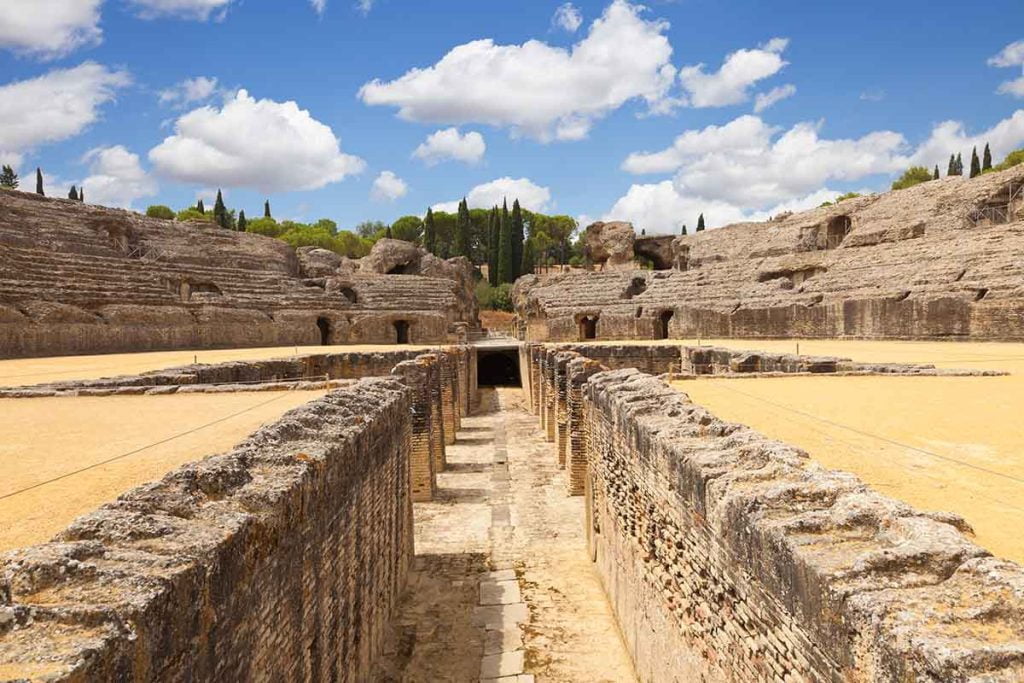
Italica: the largest concentration of Roman remains in Andalusia
Many refer to it as the ‘Spanish Pompeii,’ as it can be considered the largest concentration of Roman remains in Andalusia. It was not buried by a volcano, yet it remains in an excellent state of preservation. Italica (Seville) was one of the most important cities in the south of the peninsula, not only for its size but also for its prestige: no fewer than two Roman emperors were born here: Hadrian and Trajan! Therefore, we will dedicate a well-deserved post to it in due course.
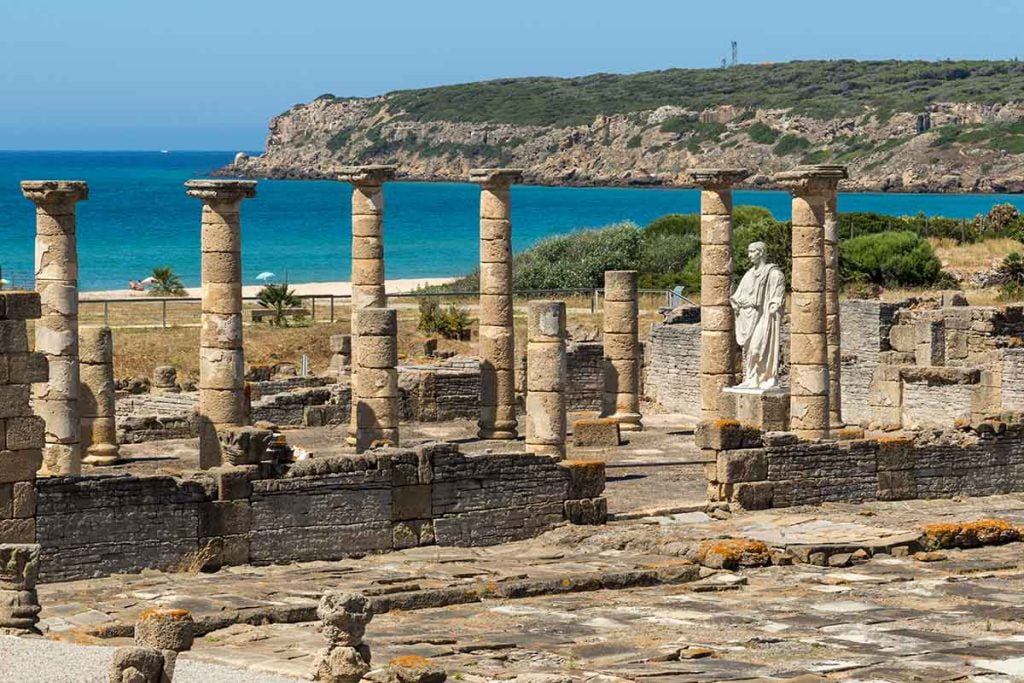
Baelo Claudia, an archaeological site on Bolonia beach
Who wouldn’t enjoy a stroll through a Roman site between dips in the sea? That is exactly what you can do at Bolonia Beach, in the municipality of Tarifa (Cadiz). It featured a necropolis and a Roman theater, but perhaps its most representative space is the fish-salting factory, whose products were exported to many other points of the Empire. It is well-equipped with a museum for educational purposes and is located right on the beachfront, offering an unbeatable setting.
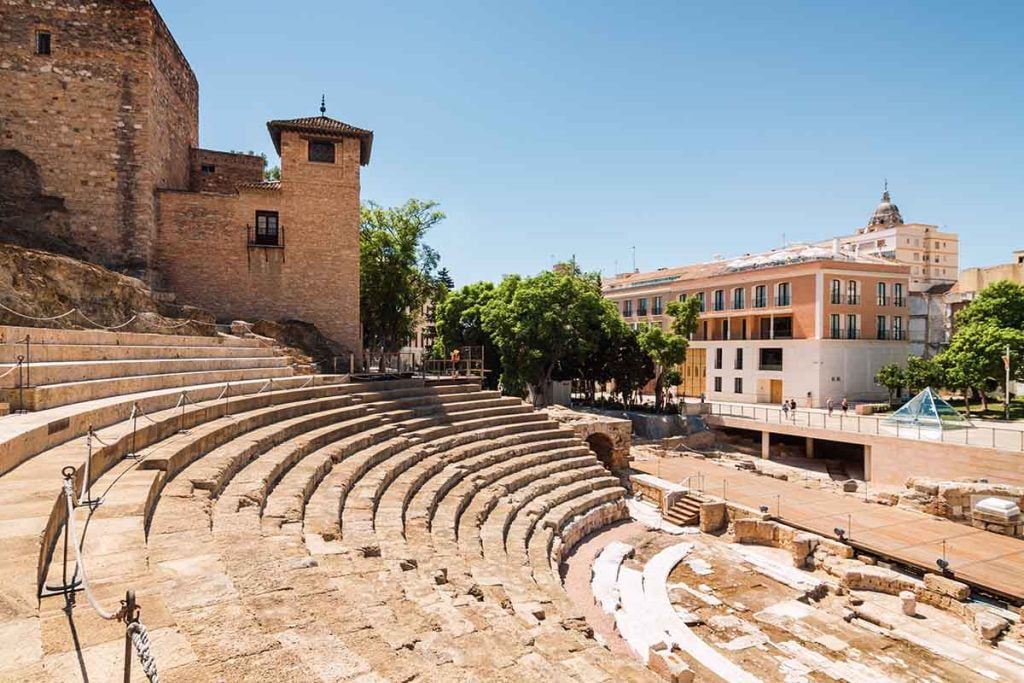
Roman Theater of Malaga, at the foot of the Alcazaba
There are many Roman theaters scattered throughout Andalusia. And in the province of Malaga, there are several of them. For example, the one in Acinipo, in Ronda. However, perhaps the most significant is the one in Malaga city, located in a very symbolic spot at the foot of the Alcazaba, forming an extraordinary historical ensemble to experience both historical periods: the Roman and the Moorish.
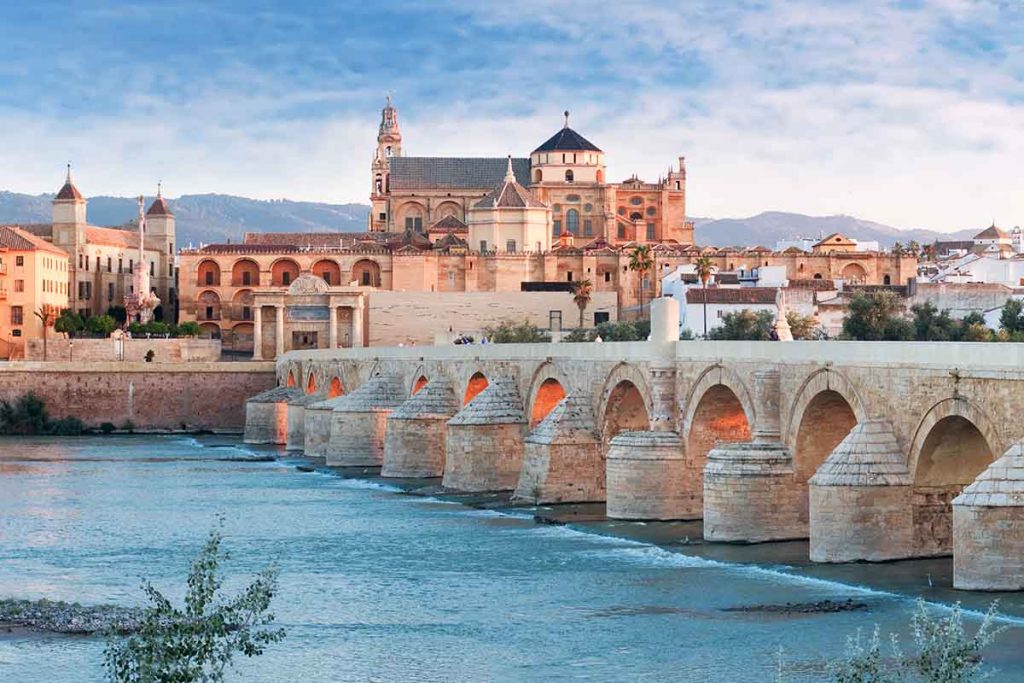
Roman Bridge of Cordoba, its grand entrance gate
Corduba, modern-day Cordoba, was another of the great cities of Hispania, to the point of being the capital of the Ulterior and Baetica provinces during their respective periods. The main vestige remaining from that era is its spectacular Roman bridge over the Guadalquivir River, built between the 1st century BC and the 1st century AD, spanning over 300 meters in width with 16 arches. For this reason, it can well be considered one of the best Roman remains in Andalusia, maintaining its full relevance today.
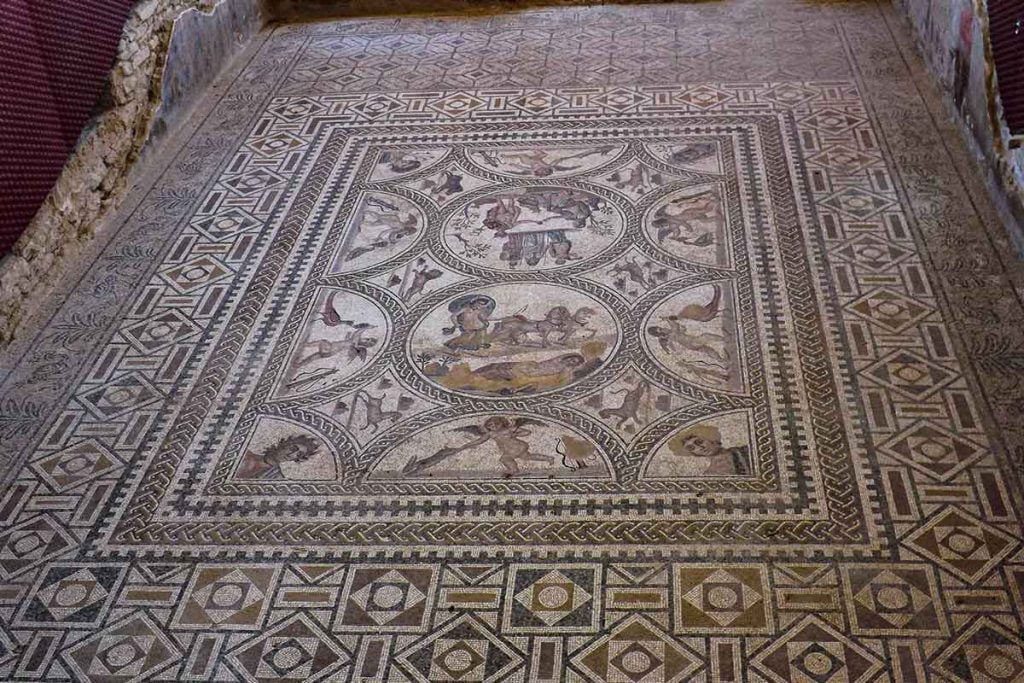
Villas of Bruñel and Cástulo, two jewels of the province of Jaén
The territory of the current province of Jaén was, in the past, one of the most important areas for the Iberian culture. Consequently, some of its sites include Iberian and later Roman constructions. This is the case with the villa of Cástulo, very close to Linares, where magnificent mosaics are preserved. The same applies to the Roman villa of Bruñel, in Quesada, about 70 km from the former, which preserves an Iberian necropolis and wonderful mosaics that simply had to be included in this list of Roman remains in Andalusia.