


Rural tourism in Jaén: among olive groves and natural parks
Discover the most authentic inland Andalusia among mountain ranges, white villages, and rural experiences designed privately and tailored to you.
Rural tourism in Jaén: olive groves and mountain ranges full of flavour
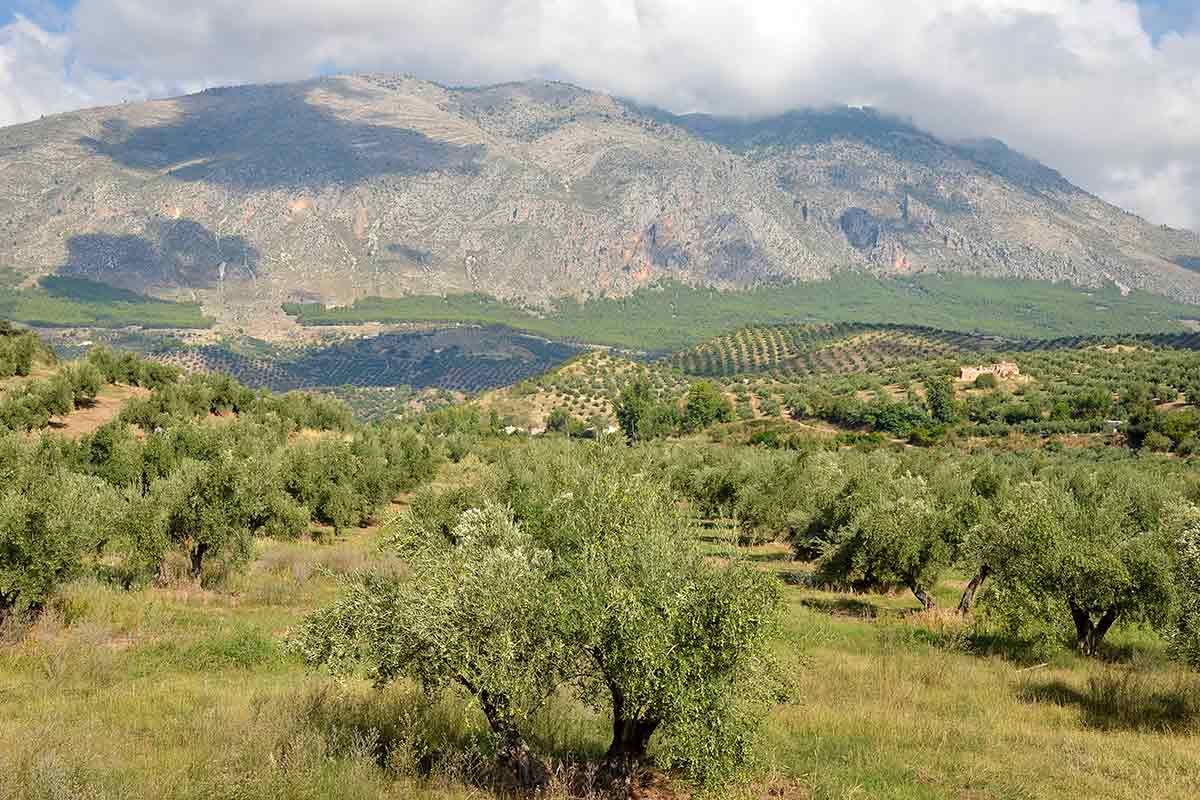
Rural tourism in Jaén is one of its greatest strengths. It is a province with no coastline, but it makes up for that with a great variety of mountain ranges, such as Cazorla and Andújar, among others. Within these landscapes of rugged mountains and Mediterranean vegetation lie many charming villages, with visitor services and companies dedicated to active tourism and adventure. By contrast, La Campiña and the rest of the flatter lands are dominated by a sea of olive trees, a hallmark of the province’s identity. In fact, olive oil is the main ingredient in its cuisine, delighting visitors with products and recipes where the flavour of tradition is ever-present.
Contents
Cazorla, Segura and Las Villas
The Sierras of Cazorla, Segura and Las Villas form one of the most beautiful landscapes in the entire province, where nature remains wild and free from mass tourism. Native wildlife roams here, such as wild boar, deer, mouflon and ibex, which are among the most representative species of the area. In addition, there are more than thirty mammals, 130 breeding bird species, around twenty reptiles, a dozen amphibians and ten different fish species. All of this is set in an environment where olive groves in the lower areas give way to pine forests and high-altitude Mediterranean scrub. Its flora also includes endemic species, such as the Cazorla violet and the Cazorla daffodil. The uniqueness of this ecosystem, whose balance has not been disrupted by humans, has earned it designation as a Natural Park and a Biosphere Reserve.
For all these reasons, the Natural Park of the Sierras of Cazorla, Segura and Las Villas is the perfect place for hiking enthusiasts and for rural tourism in Jaén. The network of trails is extensive and varied, and includes dozens of short trails (PR), as well as numerous long-distance routes (GR), some of which were traditionally used for transhumance.
It is in these mountain ranges that two of the most important rivers in southern Spain are born: the Segura, which heads southeast to empty into the Region of Murcia, and above all the Guadalquivir, which rises in the Sierra de Cazorla, forms the El Tranco reservoir, and leaves the Natural Park heading west, crossing the Sierra de Las Villas. The natural landscape combines ridgelines and peaks that break the horizon above 2,000 m above sea level, as well as small valleys, sinkholes and chasms. This rugged profile is caused in part by the upper course of the aforementioned rivers, but also by the presence of numerous streams.
On the other hand, it is worth remembering that the Natural Park of the Sierras of Cazorla, Segura and Las Villas has another very important attraction for many people who enjoy rural tourism in Jaén: hunting. In the surroundings of this protected area there are numerous private hunting grounds and sporting estates where this activity can be pursued to hunt small and big game species: partridge, rabbit, wood pigeons, turtle doves, wild boar, etc.
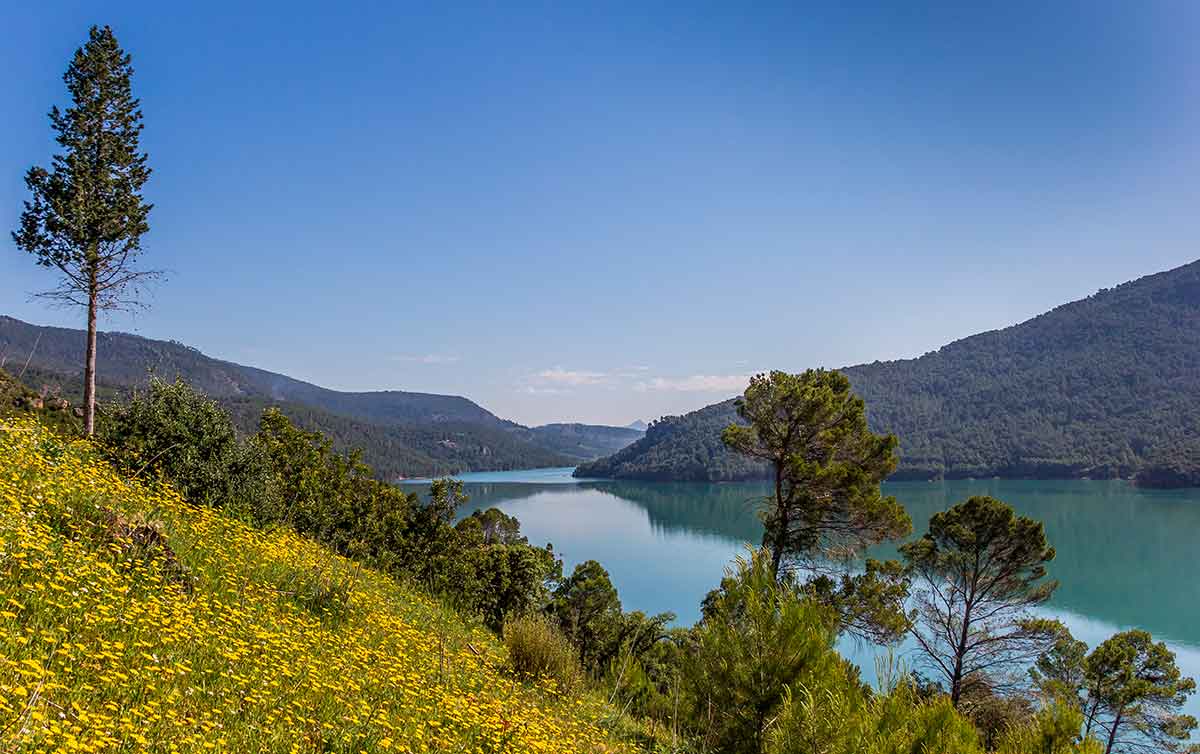
Cazorla and its surroundings
Cazorla is one of the main gateways to this Natural Park, and can therefore serve as an excellent “base of operations” for your trip. It is a charming village with a lively selection of restaurants and taverns, especially around Plaza de Santa María. There, you can savour some typical local dishes, such as rin-ran: a potato purée with dried peppers, boiled egg, cod, and the area’s two unmistakable touches—olives and a drizzle of olive oil. It also has several monumental buildings you can visit. For example, the Castle of La Yedra, located at the highest point of the village, rising above the houses like its inseparable sentinel. Even higher, though in ruins, is the Castle of the Five Corners, which bids farewell to hikers on their way to the heart of the Natural Park.
The evocative ruins of Santa María are also noteworthy, with a vault that remains standing as a reminder of the catastrophic Peninsular War that destroyed it in the early 19th century. Other churches are still in use, such as El Carmen and San José. In addition, the rugged natural setting makes it ideal for its various hermitages, among which the Hermitage of the Virgen de la Cabeza, patron saint of the municipality, stands out. The area also has several interpretation centres.
Other places of interest near Cazorla, where you can enjoy rural tourism in Jaén, include:
- La Iruela: a picturesque village at the foot of a rocky crag, crowned by the remains of a castle and the Monastery of the Templars
- Quesada: nearby lies the unique Sanctuary of the Virgen de Tíscar
- Arroyo Frío: a small hamlet from which excursions often depart to the source of the Guadalquivir River, which can also be done from Quesada
Segura and its surroundings
Another point of interest in the Natural Park of the Sierras of Cazorla, Segura and Las Villas is reflected in its second name: Segura de la Sierra. This is a village located on the slope of a steep mountain, topped by a Mudéjar castle and its walls, with several towers. The Church of Nuestra Señora del Collado is its main temple, with an alabaster carving of the Virgen de la Peña.
Other places of interest include the Imperial Fountain of Charles V, Puerta Nueva, the Arco Cavalcavia, the Moorish Baths and the Town Hall, a former Jesuit school. This picturesque and beautiful setting may well have inspired the poet Jorge Manrique, who spent his childhood here and, according to some authors, was born here (and not in Paredes de la Nava, Palencia). The house considered to have been his family home still exists. For all these reasons, Segura de la Sierra is part of the select group of The Most Beautiful Villages in Spain and, therefore, one of the favourite options for enjoying rural tourism in Jaén. You can also make the most of your stay to try the grilled meats, a local speciality, accompanied by ajoatao, a cold sauce made from crushed garlic, spread on toasted bread
In addition to Segura de la Sierra, here are other villages that are sure to leave a very good impression:
- Hornos: a small village set on a steep rocky outcrop, with a small walled enclosure dating back to the 12th century. The Church of Nuestra Señora de la Asunción is another of its notable buildings. Its privileged open-sky location and lack of light pollution have enabled the installation of Cosmolarium in the heart of the medieval castle—an astronomy outreach centre with a small planetarium and a terrace for direct stargazing. All of this makes for an attractive option for those coming with children to enjoy rural tourism in Jaén
- Collado del Almendral Wildlife Park: a natural area of more than 100 hectares dedicated to the conservation and educational dissemination of native species, with a strong focus on children. It features a train-vehicle used for internal transport during guided visits
- Coto Ríos: a small hamlet that appeals to those who wish to enjoy activities in or around the El Tranco reservoir. Some of these activities include kayaking, zip-lining, or a ride on a solar-powered boat
- Santiago-Pontones: it has another interpretation centre for the Natural Park, at Torre del Vinagre, and is therefore also a gateway to it. One of the hiking routes in the area is to the source of the Segura River, in the place known as Fuente Segura
- Beas de Segura: a whitewashed village among olive groves and hills, known in tourism for being part of the Huella de Santa Teresa route, focused on the foundations established by this saint from Ávila. Specifically, she founded the Discalced Carmelite convent in 1575, which Saint John of the Cross also visited three years later. Another interesting place is Puente Mocho, whose surroundings include an archaeological site that has supplied numerous prehistoric pieces to the provincial archaeological museum
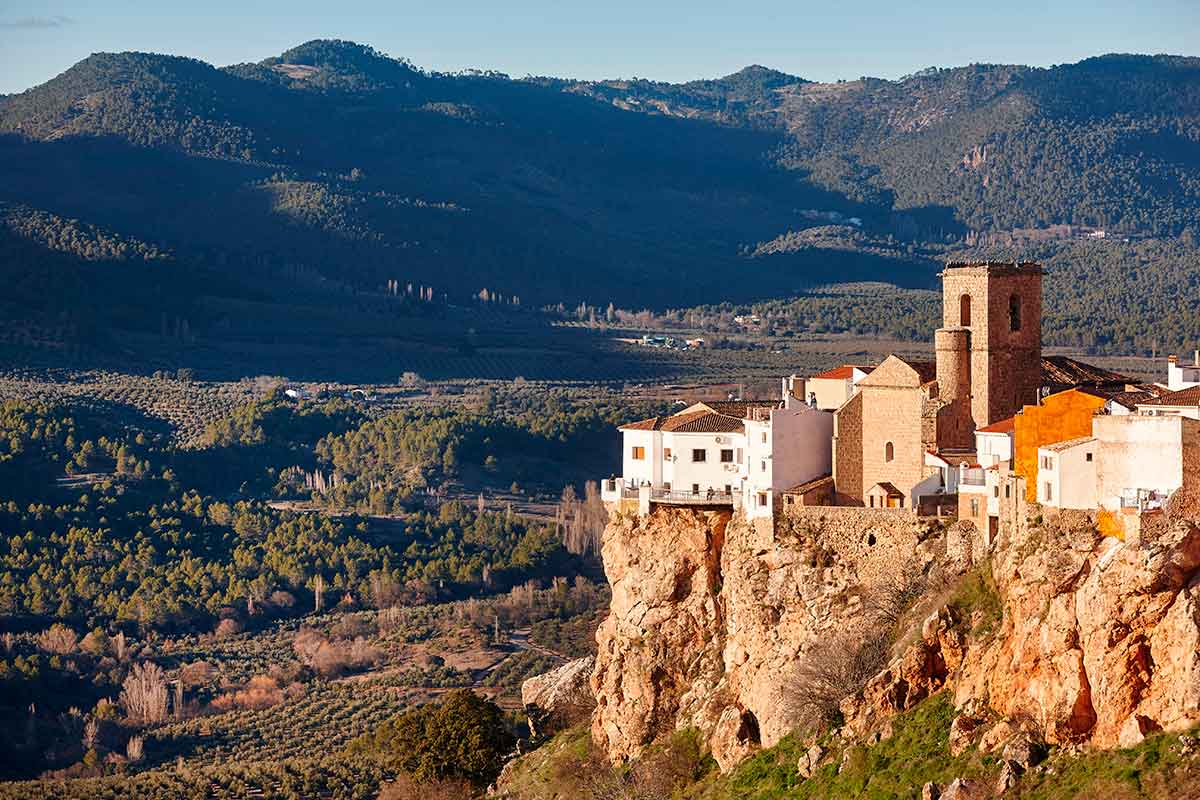
The Villas area
The Sierra de las Villas (or Cuatro Villas) is the third mountain range within this Natural Park, stretching across the region of the same name, and it also adds to the park’s appeal with routes and interesting villages for those who wish to enjoy rural tourism in Jaén. Its main population centre is Villanueva del Arzobispo, a town of fewer than 10,000 inhabitants that will appeal to many enthusiasts of rural tourism in Jaén, as it offers charming corners, a good selection of rustic accommodation, and monuments of interest.
For example, the Sanctuary of the Virgen de la Fuensanta, of medieval origin with Baroque renovations, where the town’s patron saint is found. Or the Church of the Vera Cruz, home to the other patron of the town, in the form of a sculpture by Mariano Benlliure. The Church of San Andrés also stands out, combining religious and military architecture, as well as the Convent of Santa Ana, with its Renaissance cloister. Its bullring, in neo-Mudéjar style, is also famous and is now close to a century old.
Other places of interest in this region include:
- Iznatoraf: the old town of this small village was declared a Historic-Artistic Site, with labyrinthine streets and charming corners, such as Fernando el Santo Square and Convento Square. All of this lies within a walled enclosure from the Muslim period. Its most symbolic element is the Clock Tower, and its main church is the Church of Nuestra Señora de la Asunción.
- Villacarrillo: this town, similar in size to Villanueva del Arzobispo, lies in the Úbeda hills and is surrounded by olive groves and cereal fields. Its urban centre has buildings of interest, such as the Church of Nuestra Señora de la Asunción, designed in part by Andrés de Vandelvira, with grand dimensions and vaults decorated in the Baroque period with great originality. Beneath it are Civil War air-raid shelters, which can be visited by those enjoying rural tourism in Jaén. The Church of Santa Isabel de los Ángeles is also worth mentioning. Another attraction in this municipality is the La Fresnedilla Astronomical Observatory, which has an audiovisual room and a large observatory under a 5-metre dome, with a 400 mm aperture telescope
Sierra Morena: Sierra de Andújar and Despeñaperros
In the north of the province, bordering Ciudad Real (Castilla-La Mancha), lies one of the areas that receives the most rural tourism in Jaén: Sierra Morena. It can be divided into two different areas: the Sierra de Andújar and Despeñaperros, both protected as Natural Parks. They cover territories in different regions: La Campiña in the first case and Sierra Morena (or Comarca del Norte) in the second. However, it is common for them to be treated as a single area, especially in tourism, due to their proximity and landscape similarities, referring to this region as the Northern Countryside (Campiña del Norte).
It is one of the most successful areas in the rural tourism sector in Jaén, mainly due to its strategic position, as it marks the boundary between Castilla-La Mancha and Andalusia—the frontier between the Castilian plateau and the Guadalquivir Depression. In addition, it has traditionally been the main gateway into the region, as the Madrid–Andalusia road once ran through here, now the A-4 motorway. It is no coincidence, therefore, that some of the most famous battles in the country’s history have been fought in this strategic area, such as the Battle of Las Navas de Tolosa (1212) between the Arab Almohad army and the Christian army of Castilians, Aragonese and Navarrese, or the Battle of Bailén (1808), between French and Spanish troops during the Peninsular War.
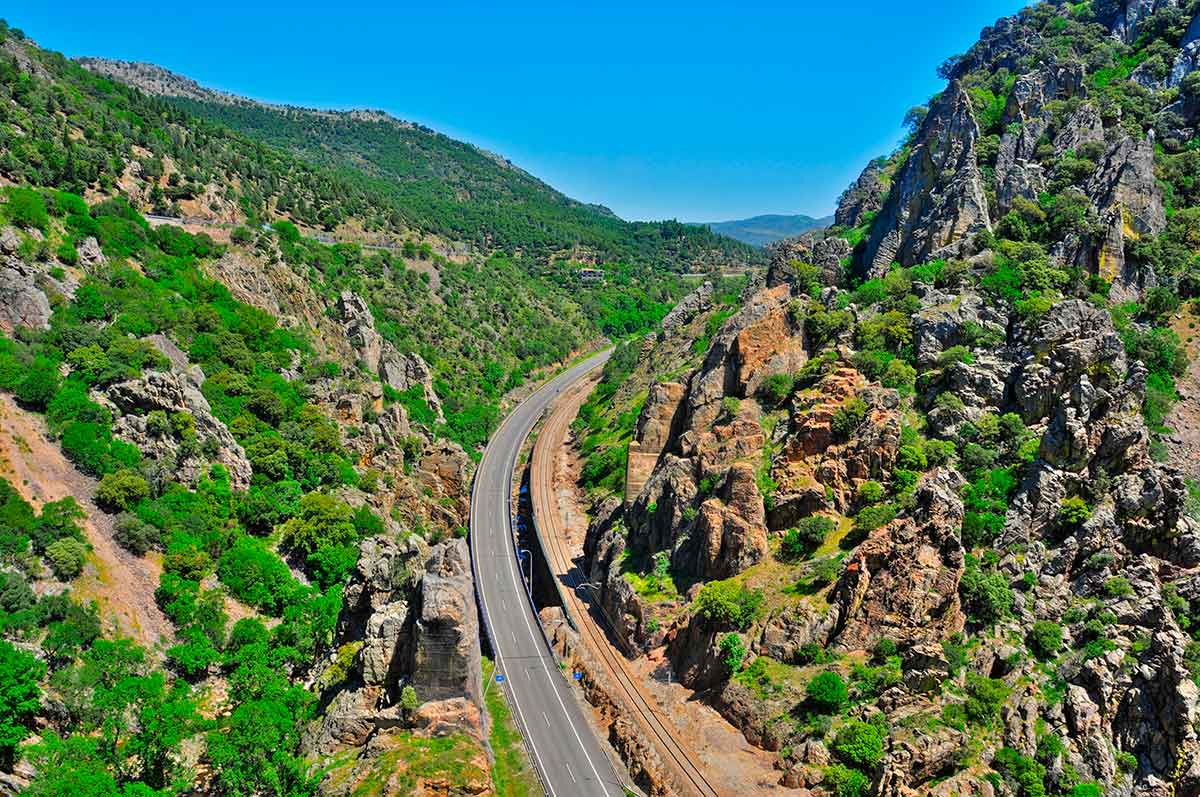
Sierra de Andújar and its natural park
The Sierra de Andújar is a true haven of peace, ideal for enjoying rural tourism in Jaén, characterised by its terraced hills covered with holm oaks and cork oaks, stretching from the Guadalquivir valley to the La Mancha plateau, the Natural Park of Montoro and Cardeña, and Los Pedroches. Strawberry trees, stone pines and Pyrenean oaks also appear in different areas and at different elevations. It boasts great wildlife diversity, with the Spanish imperial eagle standing out, sharing the skies with the black vulture, black stork and Eurasian eagle-owl, among others. In the waters of its small, deeply cut rivers live otters and bogardillas, the latter an endemic species of the mountain range.
The town that gives it its name, Andújar, is not located in the heart of this Natural Park, but it serves as a “base camp” from which to reach the starts of the routes. It is also a municipality of great tourist interest, with stately homes, traditional architecture, and monuments such as the Clock Tower, as well as an imposing bridge of possible Roman origin over the Guadalquivir River on the outskirts. As for religious buildings, the most beautiful and noteworthy are the churches of Santa María, San Bartolomé and San Miguel. Above all, however, the Sanctuary of the Virgen de la Cabeza stands out, in whose honour one of Andalusia’s oldest and most popular pilgrimages is held.
Another village in the area that can be part of a rural tourism route through Jaén is Marmolejo. It preserves the remains of an Arab castle and a Renaissance bridge. Its main monument is the Church of Nuestra Señora de la Paz, whose oldest elements date back to the 14th century. But without a doubt, this town is well known and widely visited for its spa, next to the Guadalquivir River, with mineral-medicinal waters used for different treatments, especially for kidney ailments.
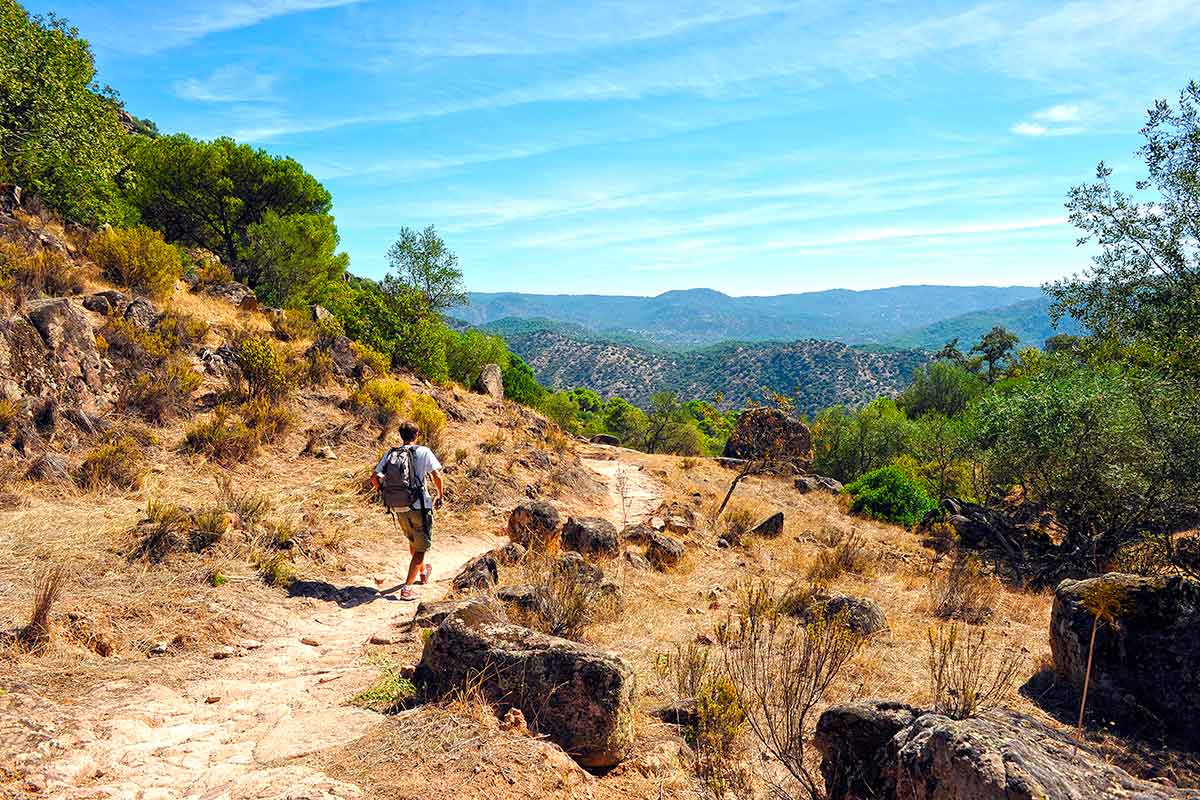
Despeñaperros and its surroundings
The Natural Park of Despeñaperros and the villages in its surroundings are the Sierra Morena region’s main contribution to rural tourism in Jaén. Although it is not one of the largest protected areas in the region, it does have notable wildlife and flora diversity, as well as very pleasant landscapes that are easy to explore through hiking and other activities.
Some of the most representative plant species include holm oaks, rockroses, cork oaks, pines and Pyrenean oaks; among the wildlife, birds of prey, wild boar and deer stand out. It is also an area where Iberian lynx and wolves roam. The terrain also includes hunting estates, and along with Cazorla it is one of the areas with the strongest hunting tradition. There, it is possible to hunt (if current regulations allow) mouflon or Spanish ibex, among others, in modalities such as montería, driven hunt, stalking or waiting.
As it is a natural passage between the plateau and the Guadalquivir valley, it has also seen human presence since time immemorial, so the archaeological discoveries made here (idols, grave goods, etc.) are of the highest level. In fact, many of its pieces are in archaeological museums in the province, the autonomous community, and even the National Archaeological Museum in Madrid.
These are the main towns you can visit during your rural tourism trip to Jaén:
- Santa Elena: this municipality lies in the heart of the Natural Park of Despeñaperros and is considered the Gateway to Andalusia, as well as the starting point for numerous routes in the area. Some places for easy walks include El Empedraíllo, Huerta de Juan Santos, or the Los Órganos Natural Monument, which offers spectacular panoramic views of the park and the constant flow of traffic on the A-4 motorway.
- Navas de Tolosa: a hamlet belonging to the municipality of La Carolina, which gives its name to one of the most important battles of the Reconquista, in which Castilian, Aragonese and Navarrese troops defeated the Muslim Almohads in 1212. Little remains from that period, except for the remains of an Islamic castle in the surrounding area. You can also visit the Museum of the Battle of Las Navas de Tolosa in Santa Elena
- La Carolina: a town of around 15,000 inhabitants, where you can visit the complex of the Church of the Immaculate Conception and the Intendant Olavide’s palace, as well as routes related to its mining past
- Bailén: similar in size to La Carolina, this is another town famous for a military battle—in this case, in 1808—which marked the first major defeat of the Napoleonic Empire in Europe at the hands of Spanish troops. A museum commemorates that conflict. In addition, you can visit the Church of Nuestra Señora de la Encarnación or take hiking routes in the surrounding area
- Baños de la Encina: another charming village that can be part of a rural tourism route through Jaén. The most spectacular monument is the Castle of Baños, built in the 10th century during the Umayyad Caliphate of Córdoba, and it is magnificently preserved. The Church of San Mateo and the Hermitage of Jesús del Llano also stand out. As you stroll through its old town, you will discover stately houses and beautiful corners, such as the Arco de los Benalúa or the Plaza Mayor
- Aldeaquemada: located on the border with Ciudad Real, which lends its most emblematic places a certain La Mancha feel, such as Constitución Square and the Church of the Purísima Concepción. But this small village has two major attractions for any visitor, unique within rural tourism in Jaén and throughout Andalusia. On the one hand, its examples of rock art, with up to 25 paintings in schematic and Levantine styles in caves and natural shelters, declared a UNESCO World Heritage Site under the designation Rock Art of the Mediterranean Basin on the Iberian Peninsula. Its other attraction is the Cimbarra Waterfall, a rugged natural setting where the Guarrizas River cuts through the terrain and forms spectacular cascades, with a total height of around 20 metres
- Villanueva de la Reina: a village on the banks of the Guadalquivir River, whose urban centre features the Church of the Nativity of Our Lady and the façade of the chapel of Cortijo de San Nicolás. In the surrounding area, the Early Imperial Roman remains at the Hermitage of Santa Potenciana and the Lituergo caves are also of interest, as they were even used as dwellings until the mid-20th century
- Linares: it is not exactly a village; in fact, it is one of the most populated cities in the province, with more than 50,000 inhabitants. However, it has an interesting monumental heritage, making it a worthwhile excursion for those enjoying rural tourism in Jaén, especially for those staying in the Sierra Morena region. Some places to visit and discover include the churches of Santa María la Mayor and San Francisco de Asís, the Sanctuary of the Virgen de Linarejos, the old Pósito, and the municipal archaeological museum. It also attracts many visitors to the Coso de Santa Margarita, the bullring where the famous Córdoba bullfighter Manolete lost his life
Sierra Mágina: Jaén’s rocky island
Sierra Mágina, a region largely made up of the Natural Park of the same name, is an interesting option for rural tourism in Jaén. It rises imposing like a rocky island to the south of the province, striking for its rugged profile and great elevation. In fact, one of Andalusia’s highest peaks stands here: Pico Mágina, at 2,167 m above sea level. For this reason, the silhouette of this small yet slender mountain range can be seen from many different and distant places, including the provincial capital.
Within its nearly 20,000 hectares there are corners of great natural beauty and places well worth visiting. For example, the Adelfal del Río Cuadros, the Pinar de Cánava, or the Zurreón waterfall—a large cascade that offers spectacular scenes in winter, when it freezes. The ever-present olive trees, as well as cherry and almond trees in the lower areas, give way to mixed forests (holm oak, Valencian oak, juniper), savins and pines as you climb. It is also possible to find the occasional dwarf apple tree specimen. The wildlife is dominated by Spanish ibex and, to a lesser extent, wild boar. All of them are watched from above by birds such as the golden eagle, griffon vulture, kestrel, Bonelli’s eagle, and falcon.
Around Sierra Mágina, on any of its slopes, there are small villages of interest for those coming for rural tourism in Jaén, from which routes to the Natural Park can be organised and pleasant visits enjoyed in their small, charming historic centres. Here is a brief list with a few examples:
- Jódar: to the north of the mountain range, it is the capital and largest town in the region, but it still retains the atmosphere of a quiet village, with just over 10,000 inhabitants. Its main monumental jewel is its castle, built atop an Iberian fortress expanded during the Islamic period, inside which an interpretation centre about the mountain range has been set up. In its old town—made up of narrow streets and designated a Historic-Artistic Site—the parish Church of the Assumption also stands out, with a Renaissance façade following the prevailing trend in nearby Úbeda and Baeza
- Huelma: south of the park, this municipality is somewhat smaller and also has a castle, as well as an imposing church. The former belonged to the Dukes of Alburquerque and was built with Renaissance taste, although it has reached us in a ruined state. The latter, dedicated to the Immaculate Conception, is a beautiful temple of Renaissance elegance designed by two of Spain’s leading architects in the 16th century: Diego de Siloé and Andrés de Vandelvira, whose many works in the province represent an artistic draw for rural tourism in Jaén. It preserves part of its walls, and within its municipal area there is also an important Iberian archaeological site. One of its hamlets, Solera, surprises with its location on the very slope of Cerro Morrón, flanked by a medieval castle built onto the rock
- Albanchez de Mágina: right at the northern entrance to the Natural Park lies this small village, notable for a castle also built onto the rock, probably from the 14th century
Sierra Sur: A place to switch off
The Sierra Sur, located at the southernmost end of the province, is also an ideal destination for rural tourism in Jaén, as its tranquil atmosphere and gentle mountains are perfect for a restorative getaway. It borders the provinces of Córdoba and Granada, acting as a barrier for the Guadalquivir Depression.
This is an area dominated by olive groves across its plains and gentle hills, while Mediterranean woodland appears as you gain elevation: Valencian oaks, holm oaks, junipers, etc. It features natural areas of great interest, such as Laguna del Chinche and Laguna Honda, and it also allows for sports such as cycling, for example along the Vía Verde del Aceite.
In addition, thanks to the quality of its night sky, most municipalities in the Sierra Sur have received certification as an astronomical destination from the Starlight Foundation, becoming the Sierra Sur Starlight Reserve. In this way, its peaks—both within the towns and in the surrounding areas—offer ideal conditions for stargazing. Several associations organise related activities.
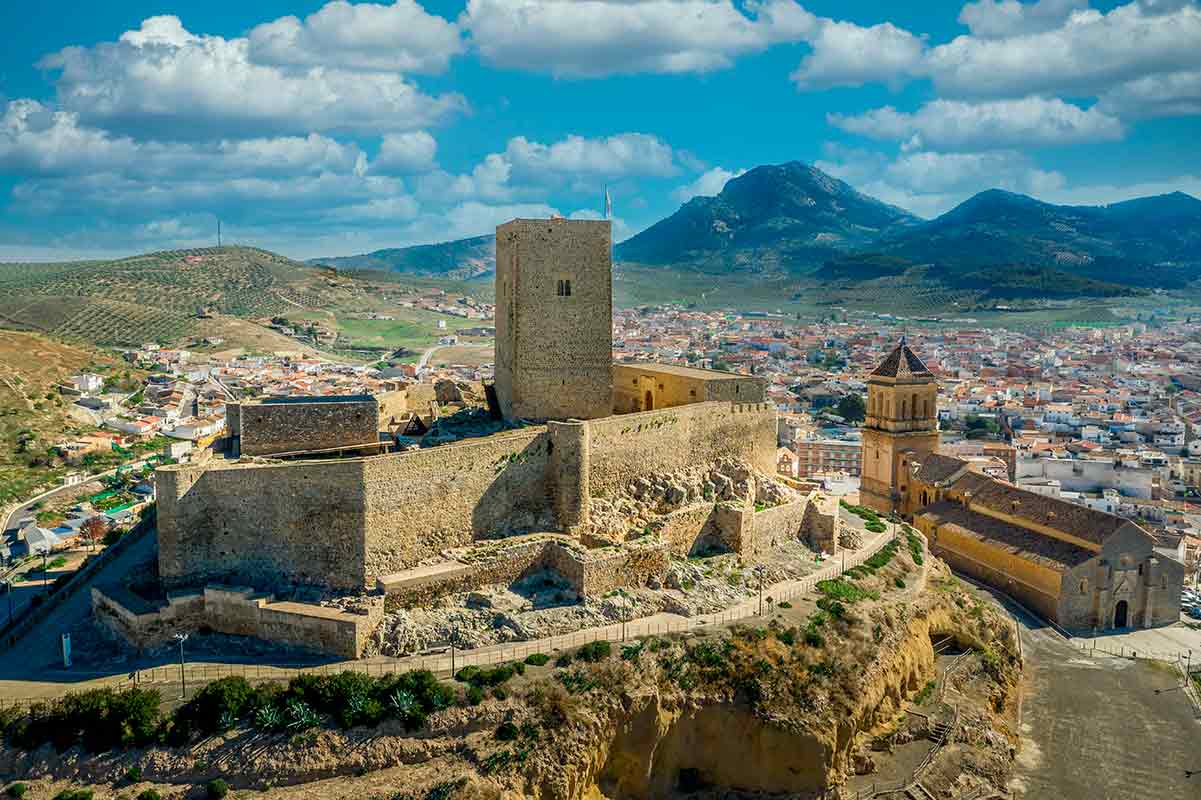
Its capital is Alcalá la Real, with around 20,000 inhabitants, and many attractive options for those who wish to enjoy rural tourism in Jaén. Its main attractions are on Cerro de la Mota, where a fortress built in the Nasrid period (13th century) stands. From its citadel, a slender keep (Torre del Homenaje) remains. After the Christian reconquest, the town’s abbey was created, whose main church was the spectacular abbatial church, atop the hill, with Renaissance and Plateresque features. In the rest of the walled enclosure, you can see the remains of other buildings that were part of the fortress. In the town centre, you can visit the Abbot’s Palace Museum, housed in a beautiful Baroque building. Other monuments of interest in this municipality include the churches of San Antón, La Encarnación and La Consolación, with the Virgen de las Mercedes, patron saint of the city. You can also take the opportunity to try pollo a la secretaria, a stew with vegetables and red peppers.
The other most interesting town is Alcaudete, which also offers many attractions for lovers of rural tourism in Jaén. This is a village whose houses spread out at the foot of a large hill, crowned by its two main monuments. On the one hand, the castle, originally built during the Caliphal period, but after the Christian conquest it came under the management of the Order of Calatrava. Its interior transports visitors to the medieval period, when this municipality was an important frontier post between Moors and Christians. On the other hand, the Church of Santa María la Mayor, built over the former mosque in Gothic style, expanded with Renaissance elements in the 16th century and topped with its bell tower in the 18th. Other distinctive sites include the hermitage-sanctuary of the Virgen de Fuensanta, the Town Hall, the Arab Mill of Fuente Armuña, and the Fuente de la Villa.
In addition to these two major highlights, it is worth mentioning other villages in this region for those coming for rural tourism in Jaén. One of them is Valdepeñas de Jaén, with its Church of Santiago, and Castillo de Locubín, with its La Villeta fortress, the Church of San Pedro, the Hermitage of San Antón and numerous charming corners, such as Plaza del Carmen.
Rural tourism in Jaén: Other points of interest
Although rural tourism in Jaén is clearly focused on its mountain ranges, there are also other villages and mid-sized towns that attract many visitors. For many people, the vast olive groves that dominate the province’s flatlands are enough to inspire a break from everyday bustle. For this reason, in the other regions you will also find surprising destinations for a getaway, such as the ones we show you below.
Jaén Metropolitan Area
These villages and towns lie within the capital’s wider area, in lowlands dominated by the ever-present olive groves. The highlights include:
- Martos: it is part of the Jaén Metropolitan Area, although it has traditionally been considered within Sierra Sur. It is particularly striking for the imposing Cerro de la Peña rising above the houses, with the ruins of an old castle of the Order of Calatrava. Another fortress stands in the town centre: the Fortress of the Villa, although the most outstanding panoramic views are enjoyed from the nearby Santa María de la Villa viewpoint.
- Porcuna: also within the Metropolitan Area, though in the surroundings of the Northern Countryside (Campiña del Norte). Therefore, this is also an interesting village for enjoying rural tourism in Jaén. Its main monument is the castle of the Order of Calatrava, specifically its Torre Nueva or Tower of Boabdil, where the last Nasrid sultan was imprisoned after being captured in the Battle of Lucena. The Church of Nuestra Señora de la Asunción is also of interest, as well as the Church of San Benito
- La Guardia de Jaén: a village with an immense history, as demonstrated by its prehistoric, Iberian, Roman and Visigothic archaeological finds. Its splendour came during the Arab period, when its castle was built on the foundations of the Iberian-Roman oppidum . Another gem of its heritage is the former Dominican Convent, designed by Andrés de Vandelvira
- Torredonjimeno: like many other towns in the region, it is noted for its castle from the Almohad period, later managed by the Knights of Calatrava. It has small gardens. The Dominican nuns’ hermitage and the Church of Santa María are also of interest
La Loma and El Condado region
Located between the centre and the north of the province, they also offer rustic accommodation and attractions that make them ideal destinations for a rural tourism getaway in Jaén. Some examples include:
- Sabiote: a charming village, especially its Albaicín quarter, a district of narrow, winding streets. Its main monument is the 13th-century castle, later renovated in the 16th. The Church of San Pedro Apóstol also stands out, with an imposing bell tower, as well as some Renaissance houses, such as the Palacio de las Manillas
- Begíjar: three elements stand out. First, the ruins of its castle, of which the keep remains. Second, the Church of Santiago Apóstol, large in size with Baroque interior decoration. And third, the 16th-century Bishop’s Bridge
- Castellar: an interesting village for its rich historical and monumental heritage. In its surroundings there is an Iberian sanctuary, and some of the pieces found there led to the creation of a Museum of Iberian Art. The Castle of Pallarés is also interesting, incorporating the Medinaceli Palace. In addition, it has two major religious temples: the former Collegiate Church of Santiago and the parish Church of Nuestra Señora de la Encarnación
In addition to these suggestions for enjoying rural tourism in JaénWe remind you that the Renaissance ensembles of Úbeda and Baeza are well worth a visit, as they were recognized as UNESCO World Heritage Sites. The capital, Jaén, also offers interesting cultural and gastronomic experiences for visitors. Therefore, if you plan an extended stay in this region, you may consider making excursions to these three remarkable tourist destinations.
More information for traveling to Jaén
How do you envision your trip through Andalusia?
Your turn.
Let us know what you have in mind for your experience.