


Málaga Province: Coast, Culture, and Charming Towns
Discover a province where the sea, history and Andalusian tradition come together in private experiences designed to your requirements.
Tourism in the Province of Málaga
Contents
Málaga: a seafaring and creative city
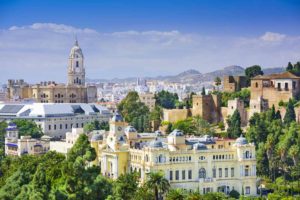
Within tourism in the Province of Málaga, the capital plays an important role—above all as a gateway, but increasingly also as a destination in its own right. Its rich history, with a remarkable layering of cultures (Phoenicians, Greeks, Punics, Romans, Visigoths, Byzantines, Arabs, Christians…), is reflected in many archaeological sites and standing monuments. Its main tourist highlights include the historic centre, La Malagueta, the Port and Gibralfaro, among others.
This city stands out for its lively atmosphere, both in the urban centre and on its beaches—especially La Malagueta, where beach bars abound. It has also managed to position itself as an appealing cultural city, with important museums, some of them recently established: the Picasso Museum, the Centre Pompidou or the Carmen Thyssen.
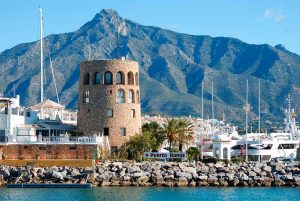
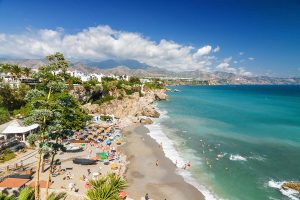
However, the main focus of tourism in the Province of Málaga is its Costa del Sol, which includes the capital but extends both east and west of it.. The most famous is the Western Costa del Sol, with such renowned destinations as Benalmádena, Marbella, Torremolinos, Fuengirola or Estepona. On the Eastern Costa del Sol, meanwhile, places such as Nerja or Vélez-Málaga stand out. While family tourism is well catered for on both coasts, top-end luxury prefers the Western Costa del Sol, with iconic spots such as Puerto Banús.
Other outstanding corners of the province
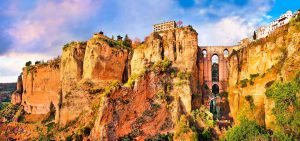
Beyond the capital and the Costa del Sol, tourism in the Province of Málaga hides interesting surprises inland. For example, in the Serranía de Ronda and in the town that gives it its name, with its bandit and bullfighter charm. Or Antequera, with an extensive monumental and archaeological ensemble, especially the Dolmens of El Romeral, Viera and Menga. Natural routes across the province are also attracting growing interest, such as the Caminito del Rey, in the Guadalhorce Valley, and activities in the Sierra de las Nieves or in the Laguna de Fuente de Piedra Nature Reserve.
Gastronomy and general culture
Eating here is a feast for the senses. In fact, many choose to visit the Province of Málaga simply for the pleasure of sitting at a beach bar and enjoying some fine fried fish or succulent sardine skewers right on the seafront. But there is more: for example, ensalada malagueña, porra antequerana, cod fritters, stews made with different legumes, Málaga-style berza, or oxtail Ronda-style—finished off with sweets such as bienmesabe, tortas and all kinds of cakes.
In terms of festivities and traditions, tourism in the Province of Málaga also has much to offer—many of them in the capital. The Málaga Fair in August is the most popular, and Holy Week is the most deeply felt, declared of International Tourist Interest; but special mention should also be made of the various Carmen festivals (Nerja, Fuengirola, etc.) or the Night of San Juan all along the Costa del Sol. More modern festivals such as Marbella’s Starlite or the Spanish Film Festival add a touch of glamour to Málaga’s scene.
More practical information

Road: different motorways reach or run through the city, mainly: A-7: from the east (Granada and Almería). The best option for travelling along the Eastern Costa del Sol AP-7: the continuation of the above along the Western Costa del Sol A-45: access to the capital from the north of the province and from Córdoba A-92: comes from the Province of Granada and connects different northern towns, such as Antequera or Archidona A-92M and AP-46: access from Granada city MA-20: the city’s urban motorway

Bus: an option that is often more affordable and offers greater variety and frequency of services. It is a network of routes connecting places as diverse as Antequera, Algeciras, Cádiz, Córdoba, Granada, Jaén, Madrid, Murcia, Nerja, Motril, Ronda, Seville or Tarifa.

Train: a useful option for tourism in the Province of Málaga is the local commuter train and regional services, but the main rail gateway is the high-speed AVE, as it reaches not only the capital but also Antequera.

Plane: Málaga–Costa del Sol Airport is one of Spain’s pioneers and the fourth-busiest in annual passenger traffic (around 20 million). It connects with about ten Spanish autonomous communities and with more than a hundred cities across four continents.

Boat: the capital’s port plays a very important role in tourism in the Province of Málaga. It receives cruise ships practically every day in high season, as well as regular ferry routes from cities such as Barcelona, Valencia, Tarragona, Setúbal, Panama, Guayaquil or Genoa.
Discover everything about Málaga
How do you envision your trip through Andalusia?
Your turn.
Tell us what you have in mind for your experience.