


Jewish Heritage in Andalusia
Discover the Sephardic heritage of Andalusia: history, ancient Jewish quarters, and sites linked to the Jewish legacy in Cordoba, Granada, Seville, and more.
In the Footsteps of the Sephardim, the Jews of Andalusia
If you travel to southern Spain to follow in the footsteps of the Jews of Andalusia, you will discover a fascinating history, with traumatic episodes but also with great rays of light that still illuminate some of the region’s most charming corners today. In these lines we tell you everything you should know about the Sephardim, whose history and legacy have already become one of the region’s tourist attractions.
Contents
There is no consensus regarding the beginning of Jewish history in Andalusia. In fact, some argue that Hebrews may have had some form of contact, primarily commercial, with the south of the Iberian Peninsula as early as the time of Solomon (10th century BC). This argument is based on the idea that Tartessos, the civilization that occupied the lands of Seville, Huelva, and Cádiz at that time, is the Tarshish mentioned in books such as Isaiah or Jeremiah. On the other hand, oral tradition among Spanish Jews indicated that the first settlements in Spain occurred after the fall of the First Temple of Solomon.
However, the oldest archaeological evidence in Spain dates back to the 4th century AD and comes precisely from an Andalusian site: Cástulo, an ancient Ibero-Roman city in the current province of Jaén. From this period (early 4th century AD) comes the oldest document that unequivocally mentions Jews in what is now Andalusia: the Council of Elvira, in the current province of Granada, referring to its people as prosperous and proselytizing in spirit.
Following the fall of the Roman Empire and the subsequent Visigothic rule (Arian Christians), the local Jewish community went through two phases. Initially, in the 6th century, there was a certain degree of tolerance toward them: while mixed marriages or the construction of new synagogues were not permitted, they were allowed to restore existing ones or maintain their own courts. However, at the end of that century, with the conversion of Reccared to Catholicism, an era of persecution and repression began.
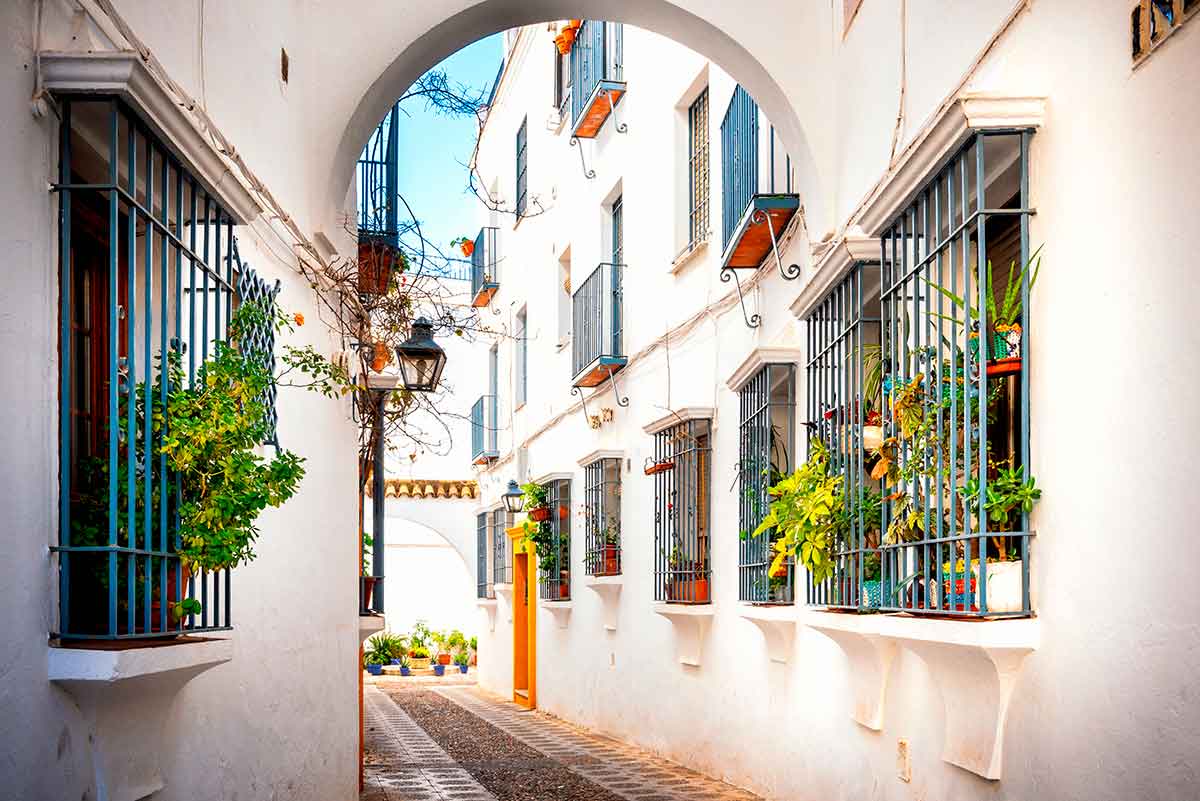
Jews in Al-Andalus
Visigothic persecution led many Jews from southern Spain to cross the Strait toward the territory recently conquered by the Arabs in North Africa. According to some historians, it also prompted them to request aid from the Iberian Peninsula. Whether true or not, it is clear that from 711, following the Muslim landing on the peninsula, the Jewish community provided assistance, for example, in guarding cities such as Córdoba or the aforementioned Elvira.
Once the conquest was consolidated, the Jews of Al-Andalus (the Arab-dominated territory of the peninsula) were treated as dhimmi or ‘People of the Book’: by virtue of professing an Abrahamic monotheistic religion, they received relatively permissive treatment, as was also the case with Christians. Although they were placed on a lower social tier than Muslims, they were guaranteed the ownership of their property and freedom of worship. In return, they were required to contribute tax payments to the Islamic rulers.

Regarding the treatment of Jews in Muslim Andalusia, three phases can be identified.
- Initially, during the Emirate and the Caliphate of Córdoba and during the Taifa kingdoms, the situation was one of tolerance, as previously mentioned. This has led many historians to speak of a true Golden Age, which produced prominent figures such as Maimonides of Córdoba—a physician, philosopher, astronomer, and rabbi—as well as Talmudic schools such as those in Córdoba or Lucena.
- Following the Almoravid and Almohad invasions of the 12th century, religious tolerance was drastically reduced, leading to mass expulsions or conversions, particularly under the latter.
- Persecution, however, did not occur later in the only remaining Arab territory in the south of the peninsula from the 13th to the 15th centuries: the Kingdom of Granada.
Jews in Medieval Christian Andalusia
As for the Christian side of what is now Andalusia, in the western half since the 13th century, the situation was also initially one of relative tolerance, mainly within circles close to the King, although general equality of rights with Christians only occurred at specific times. Figures such as Ferdinand III the Saint or Alfonso X the Wise always treated the region’s Jewish community well. They held positions of great importance at Court: since education was a basic obligation in Judaism to read the Torah, members of this community were qualified to serve as physicians, bankers, tax collectors, or even royal treasurers, among other professions.
In contrast, the situation of Jews in the Christian Andalusia of that time also worsened, primarily in the 14th and 15th centuries. Anti-Semitic hatred spread among the populace, often encouraged by Christian preachers who accused them of the death of Jesus, the spread of epidemics, or the rise in taxes due to their activity as royal moneylenders.
This was the breeding ground for the rise of the Inquisition, which was established in Seville in 1480 to, among other things, persecute Judaizing practices among Andalusian converts. In fact, in 1483, the expulsion of Jews from Andalusia was decreed, nine years before the final expulsion of 1492. In this case, they were forced to leave the territories of Córdoba, Seville, and Cádiz to head for Extremadura, although there are doubts regarding the degree of compliance with that order.
The Expulsion of 1492
The Edict of Granada of 1492, promoted by Tomás de Torquemada and approved by the Catholic Monarchs, decreed the expulsion or conversion of all Jews in Andalusia and the kingdoms of Castile and Aragon in general. Although some chose conversion, the majority left Spanish lands, heading for northern Morocco, Venice, and many other places, such as Portugal and, from there, to the Americas, where laws were applied with greater laxity in the newly discovered lands.
It was a devastating blow. Economically, of course, as they had only four months to sell their real estate and belongings before departure, which in reality led them to sell everything at a loss. But it was also an emotional blow; in fact, even today, this is considered one of the most painful episodes in the history of the Jewish people in general, a grievance comparable to the diasporas of the ancient world.
After the expulsion, the grievances against their descendants continued, with Inquisition persecutions of converts who practiced Judaism (known popularly and derogatorily as marranos) and the subsequent blood purity statutes, which elevated ‘Old Christians’ above converts. Furthermore, Castile in general and Andalusia in particular suffered a significant impact from the loss of thousands of skilled individuals in positions that were difficult to fill.
Interestingly, it was after the expulsion that the name Sephardic emerged to refer to the Jews of Andalusia and Spain, as the Iberian Peninsula began to be identified with the territory of the biblical Sepharad. In their new destinations, ties were by no means lost: cultural aspects such as gastronomy, music, and the Judeo-Spanish language or Ladino—still in use and bearing a striking resemblance to Old Spanish—were maintained.
The deep nostalgia for their departure is symbolized by the key to the Spanish house or the local synagogue which, according to tradition, Sephardic families took with them and still keep safe in a drawer in their current residences, hoping to return and that it will serve to open their homes and memories once again.
The Jewish Quarters of Andalusia
Judería is the name given to the ancient Jewish quarters in Andalusia and Spain in general, expressing a reality very similar to that of such areas in other countries, such as the Moroccan mellahs. Generally, they were walled or enclosed areas for security reasons, not far from royal palaces or the residences of rulers due to the close relationship they maintained with certain members of the community. At night, their access gates were locked tight, though this did not prevent numerous assaults throughout history. Their streets were usually cobbled and their buildings were often asymmetrical, adapting to the topography of the site, which today offers tourists angles, corners, and perspectives worthy of a photograph.
There is no evidence that the Hebrew population lived separately from the rest during the Roman era, but they did during the Arab rule, which imposed the separation of communities based on ethno-religious criteria, as there were also suburbs for Mozarabs (of the Christian faith). This practice was also consolidated in the reconquered territories, leaving the central spaces of the city to the Christians, while the Arabs occupied the Moorish quarters and the Jews, the Jewish quarters.
Caminos de Sefarad
In recent decades, a project for the recovery of Jewish quarters throughout Spain has materialized, carried out by the association Caminos de Sefarad. More than twenty municipalities have joined the initiative, developing restoration and outreach plans for the Sephardic legacy in these neighborhoods.
Three Jewish quarters in Andalusia are part of this network, and they are:
- Córdoba: located in what is now the Alcázar Viejo neighborhood, with entry through the Almodóvar Gate. It preserves much of its original layout and important buildings, most notably the aforementioned synagogue. It was the birthplace and childhood home of Maimonides, as well as the home of Hasdai ibn Shaprut, who founded one of the most prestigious Talmudic schools in the Jewish world here.
- Jaén: located in the current old town, between what are now Martínez Molina and Huertas streets. The layout of the neighborhood reminds us of its past as a Jewish quarter, with only a few interesting points remaining, such as the Monastery of Santa Clara, which housed the Church of Santa Cruz, formerly the synagogue.
- Lucena: rather than a Jewish quarter, one could speak of a ‘Jewish city’ since, in the 9th and 12th centuries, its intramural space was inhabited exclusively by Sephardim. There was an important Talmudic school here and a large cemetery, which was archaeologically excavated for its recovery. Its nickname, ‘the Pearl of Sepharad,’ allows us to understand its significance.
In addition to these three Jewish quarters of Caminos de Sefarad, we must not forget that there were other neighborhoods for the exclusive use of Jewish inhabitants in Andalusia. This is the case with Seville, located in the current Santa Cruz neighborhood; Granada, in what is now the Realejo; or Málaga, between San Agustín Street and Alcazabilla Street.
Other Related Tourist Attractions
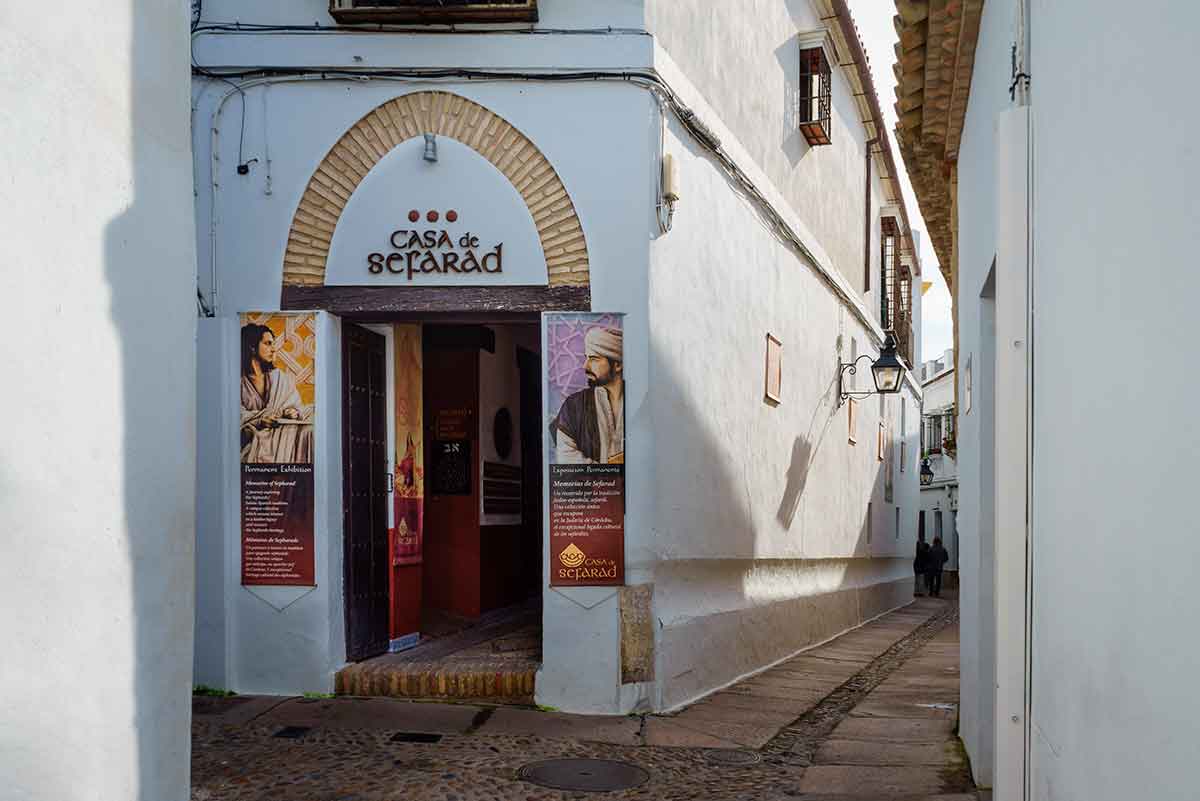
Those interested in learning about the Jewish past in Andalusia will find other interesting tourist attractions. For example, the Museum of Sephardic Culture in Granada, located in a typical Granadan house in the Jewish quarter, on the Mauror hill in the Realejo neighborhood. Or the Casa de Sefarad-Casa de la Memoria in Córdoba, in another typical tenement house in the Jewish quarter, where you can take an exhibition tour of Sephardic daily life and culture.
Furthermore, the Caminos de Sefarad association organizes cultural and musical festivals, such as Sephardic September in Lucena, Sephardic Autumn in Córdoba, or the International Sephardic Music Festival, also in Córdoba. Additionally, there is the Sefarad Card, a loyalty card for obtaining discounts at establishments and tourist services related to the Sephardic community.
It is difficult to establish the current number of Jews in Andalusia, as data varies according to sources and refers to the entire country: from 12,000 to 50,000. The return of Sephardim was progressive, mainly since the Constitution of 1869 established freedom of worship by law. At the beginning of the 19th century, Philo-Sephardic societies were created to spread their culture and strengthen ties with communities in North Africa.
In more recent times, Law 12/2015 is noteworthy, granting Spanish nationality to those who could prove their Sephardic origin. This prompted numerous trips by Jews to Andalusia to complete this process, many of them coming from the Americas. It is estimated that nearly 5,000 people took advantage of this opportunity.
Whether moved by this desire to acquire dual nationality or not, the truth is that tourist activity by Jews in Andalusia has increased enormously. On their travels, they not only discover the most important episodes of the Sephardim in the region—many of which are sad and dark—but they also visit places of immense beauty, still preserved today, such as the Synagogue of Córdoba or the Water Synagogue in Úbeda (Jaén), or explore Jewish quarters that still retain much of their charm.
And of course, the rich Andalusian Jewish heritage is open to travelers of all kinds, from any faith and background, as it represents a magnificent way to share the Sephardic legacy and promote interreligious dialogue.
How do you want your trip through Andalusia to be?
Your turn.
Tell us what you have in mind for your experience.