Traveling to Granada City: What to See and How to Discover It

Essential guide to exploring Granada: history, culture, and must-see places to understand one of Andalusia’s most iconic cities.

Traveling to Granada City: Tourism with Great Charm

In the city of Granada, tourism possesses a unique charm. It is one of the most enchanting cities in the country, thanks in part to the significance of its Muslim past, with the Alhambra as its greatest exponent. However, the contributions of Christian civilization after the conquest are also evident, such as the Granada Cathedral and the Royal Crypt. Above all, this is a destination where it is impossible to be bored. This is furthered by the University and the student atmosphere it generates, one of the most prominent in Andalusia, which fills its streets with young people. Also by its lively selection of bars, taverns, and restaurants, making the city one of the best for enjoying tapas. And, of course, its close relationship with music: from flamenco in the hidden corners of the Albaicín and Sacromonte, to indie and rock concerts in its venues, and its particular connection with classical music. In the following lines, we show you the highlights of Granada city so you can make the most of your stay in this very special place.

Contents

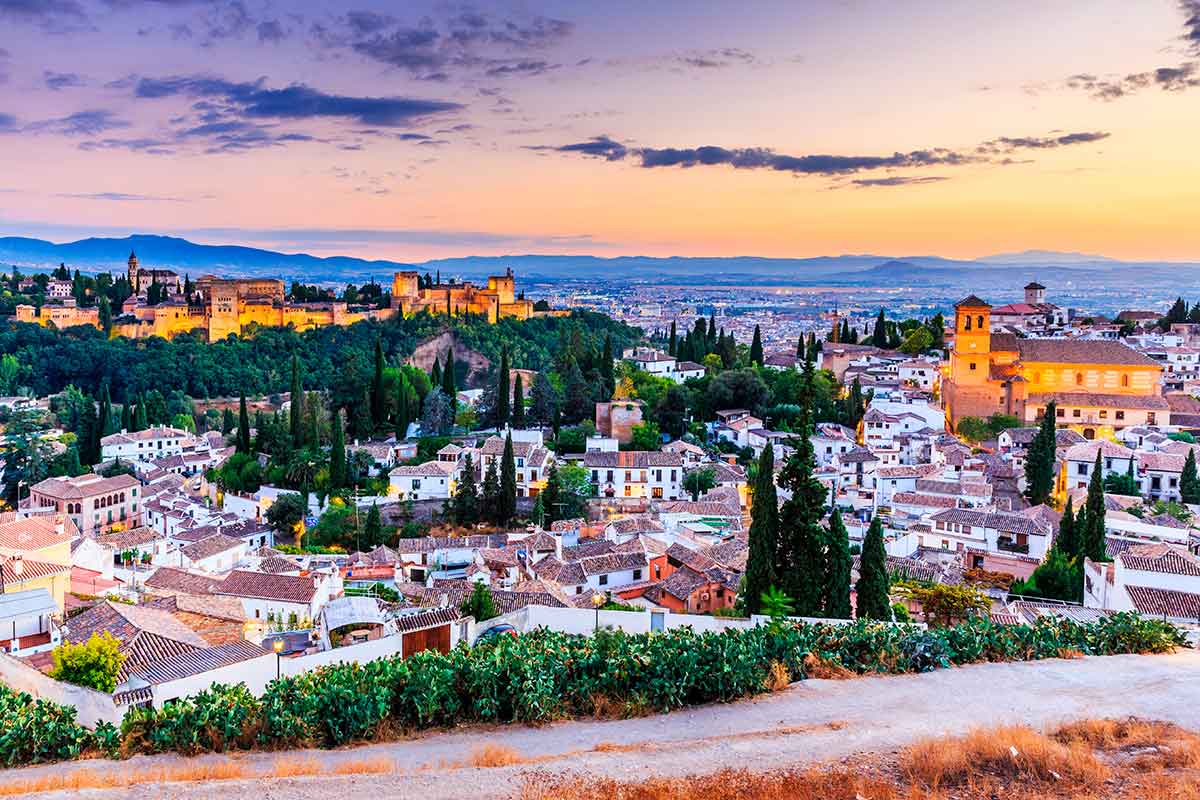
Views of Granada city
Beautiful views of the city of Granada

A Brief History of Granada

First, it is worth reviewing the history of Granada. Its tourism is largely cultural, making constant mention of its Muslim past and the different civilizations that have inhabited its urban center. Therefore, to appreciate and admire every monument and place of interest, it is essential to put them into context.

The first inhabitants of what is now Granada were the Iberians, who built an oppidum or hillfort in the mid-7th century BC, forming an urban nucleus of about 5 hectares located on the San Nicolás hill called Ilturir. After Bastetani rule and Carthaginian influence, the period of Roman domination began in the late 2nd century BC, likely through a pact, later renamed Municipium Florentinum Iliberitanum or simply Florentia. It must have been an important city, although archaeological remains do not yet confirm this. Following the fall of the Roman Empire, it remained uninhabited at some point during the Early Middle Ages.

And so, depopulated, it also reached the early times of Arab rule: until the beginning of the 11th century, its oppidum was only used for military purposes, perhaps with a small hamlet in its surroundings. Even then, it was called Hisn Garnata, a name given by the Muslims and the origin of its current name.

1013 is the year of its refounding, during the era of the Taifa Kingdoms. It was the Zirids, specifically the first of them, Zawi ben Ziri, who abandoned the nearby and important Madinat Ilbira and settled in this Madinat Garnata, spreading through the Albaicín and remaining through the Berber period (Almohads and Almoravids, in the 12th and 13th centuries). But it was under the Nasrids, after the creation of the Kingdom of Granada in the mid-13th century, that the city was promoted and embellished. Under King Alhamar, the construction of the palatial city of the Alhambra began, continued primarily by his descendants, Muhammad II and Muhammad III. In total, there were six walled districts connected to each other.

And so, in broad terms, it remained until it passed into the hands of the Catholic Monarchs, the epilogue of the so-called Granada War, although the capture of the city on January 2, 1492, was the result of a negotiation process materialized in the Capitulations or Treaty of Granada. The initial conditions were generous to the people of Granada, allowing freedom of worship and respecting property, but they tightened significantly a few years later, with the conversion of mosques into churches, the expulsion of the Moriscos, book burnings, and other repressive measures. As we will see below when reviewing Granada’s attractions, the city’s tourism also revolves recurrently around this historical moment.

The admiration of successive kings and travelers for the existing buildings did not prevent a policy of asserting the new power and the new religion. Examples of this are some of the most representative constructions, such as the Cathedral, the Royal Chapel, or the Palace of Charles V in the heart of the Alhambra. The Albaicín also saw its urban layout modified during the Habsburg era, especially after the Morisco rebellion (1568), seeking reforms to improve security with wider spaces and broader streets. It was then that this famous neighborhood acquired its definitive image, with its “cármenes” and orchards. The 17th century, under the ‘Minor Habsburgs’, was a period of stagnation, with episodes of epidemics, the final expulsion of the Moriscos, and demographic decline to approximately 40,000 inhabitants.

The 18th century, by contrast, brought a respite and slight economic and demographic growth, with modern urban renewal projects such as the Paseo del Violón, and the explosion of a Baroque style that still dazzles those visiting Granada for tourism today. It was, in fact, one of the cities with the highest income, boasting top-tier institutions like the Royal Chancery or its prestigious University, and commercial activities that enjoyed good health, especially due to alliances with England.

However, the conflicts of the early 19th century took a toll on the city, which did not recover until the middle of the century, thanks in part to the arrival of the railway and the development of new industries, such as those linked to sugar beets. Some visible urban projects in the city date back to that time, such as the Gran Vía de Colón. But this growth and prosperity ended in the 1930s with social conflict, the material and human disasters of the war, and a harsh post-war period that placed the entire province at the bottom of Spain’s rankings. Furthermore, the developmentalism of the mid-century was evident in the destruction of important heritage and high-impact urbanization, building over the fertile plain (vega). Since the end of the 20th century, prospects have been more promising in Granada: tourism is increasingly popular, as are events in their various forms, encouraging the rehabilitation of buildings and the creation of new ones, such as the Conference Center.


As can be seen at a glance on a walk through Granada, tourism has put it on the international map, despite being a relatively small city: it has just over 230,000 inhabitants, making it the fourth largest in Andalusia. It is located in the Intrabetic Depression of the Genil River valley, at about 680 meters above sea level and at the foothills of the Sierra Nevada. In fact, its topography is quite irregular, with several hills, which gives rise to many charming viewpoints.

Although there are five population centers in Granada, tourism is mainly concentrated in several areas of the city. What is known as the Historic Center is the area around Plaza de Isabel la Católica, Gran Vía de Colón, and its surroundings. This is the low and flat area of the city, where some of Granada’s most important monuments are located. For example, its Cathedral, a masterpiece by Diego de Siloé built in the mid-16th century: it features a Renaissance style on the Gothic foundations of the preceding project by Enrique Egas. However, its most recognizable element, its facade, was designed a century later by Alonso Cano with Baroque elements, although the final result is not as grand as his original idea, which envisioned two towers much taller than the current one.

It is in the Cathedral where one of the city’s most iconic sites is also found: the Royal Chapel. It is one of the most important burial sites in all of Spain, as it holds the remains of the Catholic Monarchs (Isabella I of Castile and Ferdinand II of Aragon), as well as their daughter Joanna and their son-in-law, Philip the Handsome. This chapel, which has its own entrance and a defined space, functions as a separate temple with its own museum, featuring works by Botticelli and Memling, among others.

Logically, the city’s religious artistic heritage is vast and goes beyond the Cathedral and the Royal Chapel, with other high-level buildings such as the Charterhouse (La Cartuja). Other religious and touristically interesting buildings include the Church of the Sagrario, the Basilica of Nuestra Señora de las Angustias, the Basilica of San Juan de Dios, the Church of Santo Domingo, the Collegiate Church of Saints Justus and Pastor, the Royal Monastery of San Jerónimo, or the Church of San Gil y Santa Ana, among many others.

Highlights to Visit in Granada

The Alhambra of Granada: Endless Tourism

But without a doubt, there is one thing for which Granada and its tourism are world-renowned: the Alhambra. This palatial city, residence of the Nasrid kings and their court, is one of the most beautiful architectural ensembles in the world, as well as one of the best integrated with the surrounding nature, whether with its eponymous forest or the Sierra Nevada mountains as a backdrop, forming a postcard that former US President Bill Clinton described as “the most beautiful sunset on the planet.” Another fact that Granadinos can be proud of is that this monument, named a World Heritage Site, is the first Spanish site to appear on the recent list of the 7 Wonders of the Modern World: it ranked 13th, ahead of iconic places like the Statue of Liberty in New York or the Acropolis in Athens.

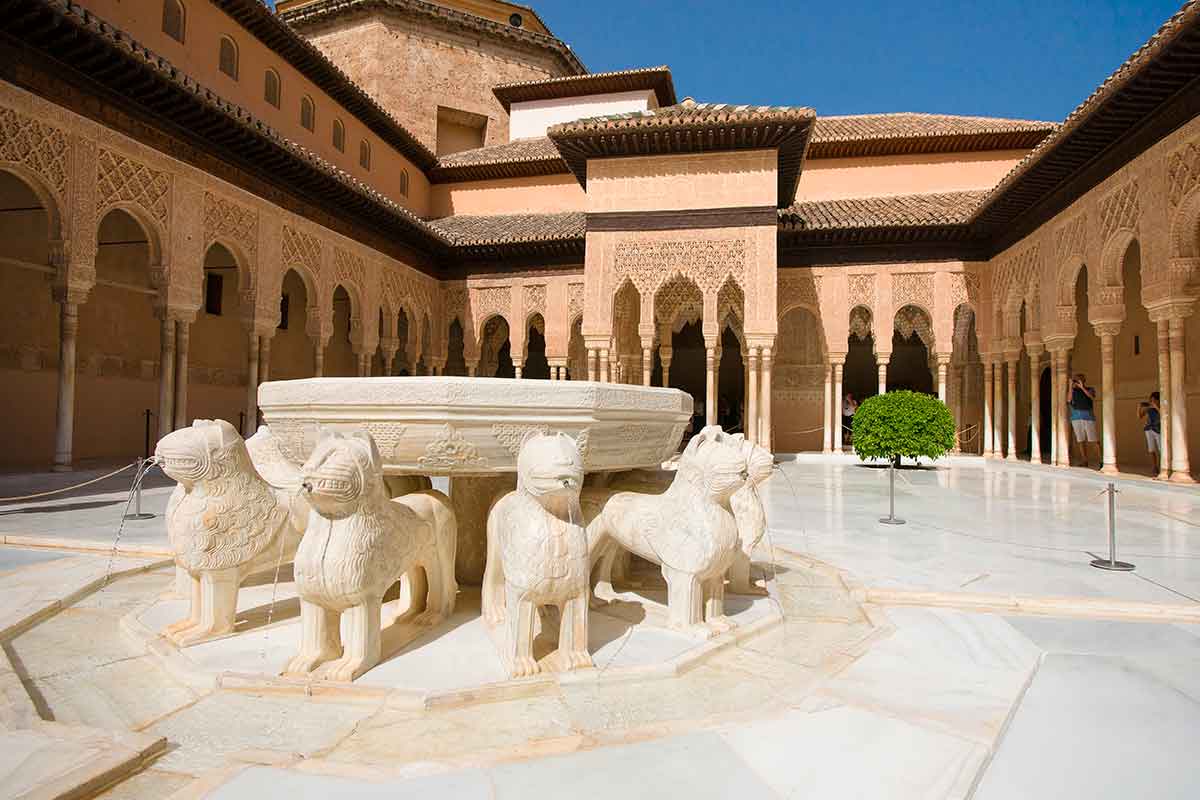
The Alhambra measures over 100,000 m2, with a wall of more than 1.7 linear km and several entrances to the north, east, and south, notably the Gate of the Pomegranates, the Gate of Justice, the Wine Gate, and the Gate of the Seven Floors, among others. One of its most prominent sections is the Alcazaba, the military castle, which is the oldest part of the complex, with origins in the Caliphate period (11th century). It is the best-protected part of the ensemble, featuring two main towers: the Torre de la Vela and the Torre del Homenaje. But where the visitor coming to Granada for tourism is most fascinated is undoubtedly in the Nasrid Palaces: the Comares Palace and the Palace of the Lions. The former dates back to the time of Ismail I in the early 14th century, while the latter dates from the end of that same century, under the rule of Muhammad V. Its courtyards (such as the Myrtles or the Lions), its halls (such as the Ambassadors, the Mexuar, the Abencerrajes, the Kings, or the Two Sisters), and its coffered ceilings are certainly among the highest achievements of Andalusi art.

Other important spaces within the Alhambra are the medina (a true Islamic mini-city for court workers), the Palace of Charles V (one of the best examples of the Renaissance, from the 16th century), or the Monastery of San Francisco (the first founded in the city after its conquest and the first burial place of the Catholic Monarchs).

Court of the Lions in the Alhambra

Generalife and Albaicín, Two Other World Heritage Sites

But the Alhambra is not the only architectural ensemble that takes us back to the glorious past of Granada. Tourism in the city is also concentrated in the Generalife, the leisure villa of the Nasrid dynasty, which began construction in the 13th century by Sultan Muhammad II. It is located opposite the Alhambra, on the other side of the Cuesta del Rey Chico, and features the Patio de la Acequia, a true orchard-like garden that indicates the importance nature held for the Nasrid rulers, where a purifying fountain was rarely missing. The same is true when walking through t he Upper Gardens and the Water Staircase. Meanwhile, the Royal Hall and the Viewpoint of Ismail I are places of intoxicating beauty, especially due to the refined relief and muqarnas work.

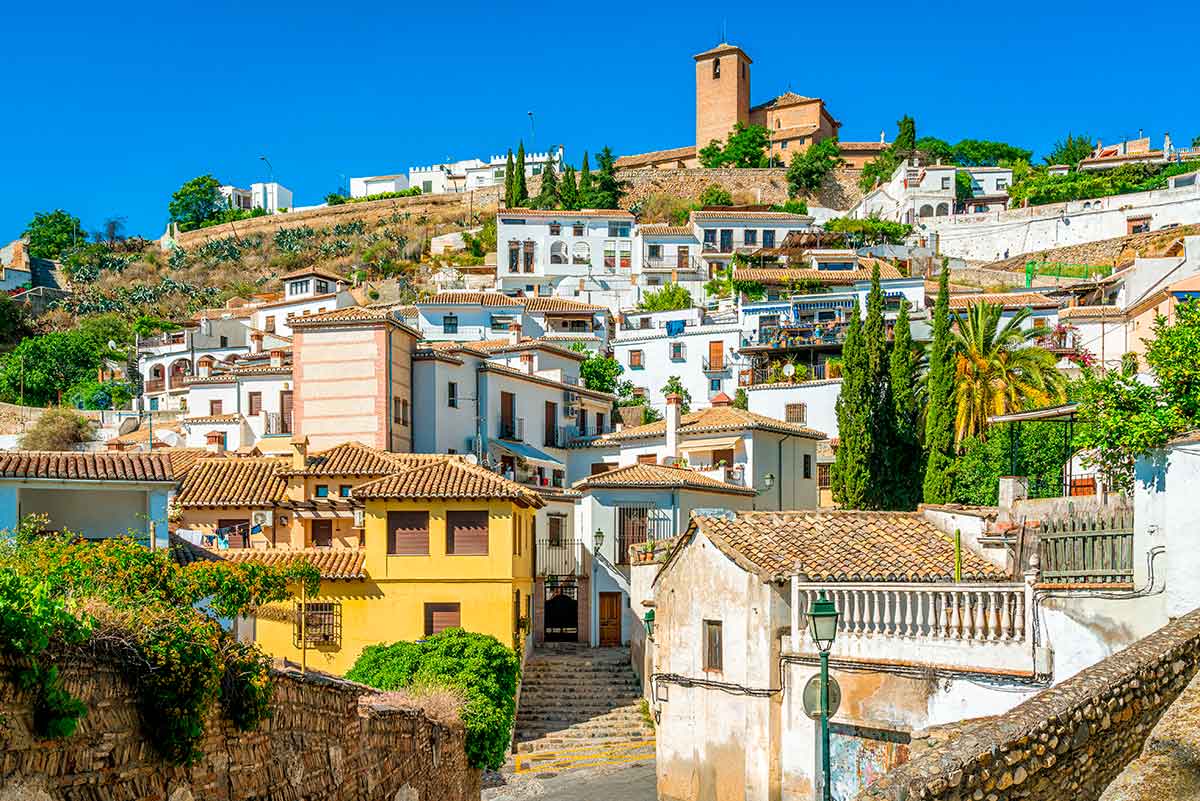
A beauty and historical importance that earned it World Heritage status in 1984, a title also held by another charming corner that attracts many visitors to Granada for tourism: the Albaicín. This unique neighborhood evokes not only Muslim Granada but also the intimate, welcoming, and peaceful character of many Andalusian and Mediterranean towns. Its white walls, its intricate streets and slopes, its “cármenes” (small houses with gardens), its humble churches, its viewpoints… Everything here has magic, and we encourage you to experience it.

Albaicín Neighborhood Granada

What to See and Do in Granada

Another neighborhood that deserves special attention is Sacromonte. Within it lies a good part of the soul of this city, as its most surprising element is the “zambras” or caves where the lives of its inhabitants unfold and which have served as the cradle of the city’s flamenco. Without a doubt, it is an enchanting place where the pure white turns reddish at sunset and where there is also room for monumental constructions, such as the Abbey of Sacromonte.

In addition to everything mentioned above, if you are going to visit Granada for tourism, there are other places of interest you can explore:

The old Jewish quarter where some of its buildings still exude a Sephardic aroma, such as the Corrala de Santiago. Other charming spaces here include the Cuarto Real, the Basilica of the Virgin of Angustias, or the Sephardic House

This is the name given to the area around the Jardines del Triunfo. A common area for tapas among locals, here you will find the Bullring or the Elvira Gate, the old entrance arch to the medina.

Near the river of the same name, this is the area toward which the city has expanded most recently. Two of its museums stand out: the Science Park and the CajaGranada Museum

Located on the outskirts, it preserves an essential place to learn about the great 20th-century Spanish poet: Federico García Lorca. Here is the park that bears his name, as it houses the Huerta de San Vicente, his summer residence and now the artist’s house-museum

Culture and Gastronomy of Granada

Culture in its most varied forms and gastronomy, which goes beyond the food itself, are fundamental pillars of Granada and its tourism. Regarding museums, the most notable are:

It is the most important art gallery in the city, with more than 2,000 works, including paintings and sculptures. It is located in a privileged spot: the Palace of Charles V, within the Alhambra complex. Among the most prominent artists are Alonso Cano and Sánchez Cotán

The great exhibition center for discovering pieces found in excavations, from the Paleolithic to the Arab era

A modern and family-oriented museum that will fascinate the most inquisitive young minds

Located in a wing of the Palace of Charles V, it focuses on art objects and excavation pieces from the Islamic period, from the Caliphate era to the Nasrid culture

Another of the city’s exhibition and interactive centers, in this case dedicated to the history and culture of Granada

House-museum of Federico García Lorca, in what was his summer residence

On the other hand, in Granada, musical tourism revolves largely around flamenco. As mentioned above, the soul of this musical genre is in the Sacromonte neighborhood, where the “zambras” or caves host the most pure and genuine shows. La Rocío, Los Tarantos, María la Canastera, or Venta del Gallo are some of those located here. Added to these are others like Jardines de Zoraya or El Templo del Flamenco, both in the Albaicín.

But flamenco can also be enjoyed at the various festivals organized in the city throughout the year. For example, Flamenco Viene del Sur or Encuentros Flamencos. Beyond these festivals, there are many others with musical themes: for example, Rincones del Rock, a nod to this musical genre which, coincidentally or not, is closely related to Granada, having produced great artists like Miguel Ríos or Los Planetas. Early music, jazz, organ, or tango are some examples that join this rich calendar. Poetry, Cinema, or Fashion are other themes for these types of events, which are spread across the 12 months of the year.

Flamenco in the Sacromonte Caves

Tapas in Granada, a Favorite for Many Tourists

But without a doubt, tapas in Granada are the highlight for many of its visitors. Here you can taste delicious local dishes, such as the Olla de San Antón, beans with saladillas, the Granadino remojón, or the Sacromonte omelet, as well as popular humble dishes like papas a lo pobre or migas with a fried egg. For those with a sweet tooth, the Carnival curd, soplillos from the Alpujarra, or pestiños from the Encarnación are some sweet suggestions.

But in Granada, gastronomic tourism goes far beyond menus and recipes. Here, tapas are an institution, a social act, an excuse to meet with friends and family and spend time in good company in the city’s numerous wine cellars, bars, inns, and restaurants. For many, the best and most authentic tapas can be tasted here, as there is not a single corner of the center where these types of establishments are missing. Therefore, instead of indicating specific venues, it is better to suggest routes and areas where the concentration of options is especially high:

  • Realejo-Campo del Príncipe
  • Plaza del Campillo, Calle San Matías, and Plaza de Mariana Pineda
  • Alhamar-San Antón
  • Calle Navas and Town Hall area
  • Plaza del Gran Capitán
  • Bullring and surroundings
  • Area around Plaza de Gracia
  • Cathedral-Bib-Rambla
  • Paseo de los Tristes, Elvira, and Albaicín

Festivals and Shows in Granada

As a university city with a large tourist influx and populated by open people, coming to Granada for tourism often means immersing oneself in its traditional festivals, of which there are many. For example, those of a religious nature are interesting for understanding the feelings and devotion of its people, although they often go further, with street parties and fairs open to believers and non-believers alike. The most important is perhaps Corpus Christi, at the end of spring and lasting a week. Not far behind is the Day of the Cross on May 3, popularly known as the Cruces de Mayo. And of course, Holy Week is worth visiting, as it is declared of International Tourist Interest. Other local festivals include the Virgin of Angustias, the city’s patron saint (September 15 and the last Sunday of the month), or the commemoration of the Conquest of Granada on January 2, with a parade of Moors and Christians.

On the other hand, bullfighting still has deep roots in the city, evidence of which is the Granada Bullring, also called the Monumental de Frascuelo. Built in Neo-Mudéjar style and declared a Site of Cultural Interest, it is one of the 10 largest bullrings in the country, with about 12,000 seats. Despite being second-category, it organizes top-level bullfights that often generate great national expectation.

In any case, the main mass spectacles today are sporting events. Especially football, as Granada CF has been a regular in the First Division in recent years. Its stadium is the Nuevo Estadio de los Cármenes, with a capacity for about 20,000 spectators. Another widely followed sport is skiing, thanks to the fact that the Sierra Nevada resort is very close to the city. During the winter season, top-level championships are organized there, such as the 1996 Alpine World Ski Championships. It continues to host qualifying events for the Alpine Ski World Cup, as well as national and international championships in other disciplines, such as snowboarding or freestyle. Additionally, the Vuelta a España cycling race passes through here many summers, in some cases as a stage finish.

Practical Information

If you are coming to Granada for tourism, it will be useful to know the practical information we offer in this section: how to get there, where to stay, and where to get information.

How to Get There: Transport Infrastructure

departures

For those traveling to Granada for tourism, an interesting way to arrive is by plane, at least for those coming from afar. The airport is named Federico García Lorca Granada-Jaén International Airport (GRX) and is located 15 km from the city. It has connections within Spain (Canary Islands, Catalonia, Community of Madrid, Balearic Islands, Basque Country, and Melilla) and with other European countries (Germany, France, Italy, United Kingdom).

train

Since 2019, the train has been an excellent option, as the city now has its own high-speed connection: the AVE. This train takes 3 hours and 20 minutes to reach Madrid and just over 6 hours to reach Barcelona. The station, which also offers numerous medium-distance trains, is in the center, next to the Bullring and the university campus.

steering wheel

However, the most common way to reach Granada for tourism is by road. The bus station is in the Almanjáyar neighborhood, about 4 km from the Cathedral. The connections it offers are numerous: it has 28 bays, and the company managing the routes is Alsa, reaching cities like Almería, Alicante, Madrid, Murcia, Málaga, Seville, Valencia, Jaén, Córdoba, Barcelona, or Cádiz directly, as well as international cities (Casablanca, Paris, Lisbon, Faro). For those traveling by car, the main highways providing access to the city are: A-44 and A-4 from Madrid, A-92 from Málaga and Seville, while from the Levant region, it is also reached via the A-92.

cruise

The A-44 also serves as a connection to Motril and the Costa Tropical, just 60 km away. Therefore, Granada and sun-and-beach tourism are also linked, with the possibility of arriving at this destination by sea, as this city has a port with ferries arriving from places like Melilla, Al Hoceima, or Nador, on the other side of the Alboran Sea.

Granada Tourist Offices

An essential stop if you are coming to Granada for tourism is one of its visitor information offices. There you will find brochures, maps, and event schedules to help you make the most of your stay in the city. Currently, there are three such locations:

  • Municipal Tourist Information Office. Plaza del Carmen, 9. Tel: 958 248 280
  • Provincial Tourist Board Office. Cárcel Baja, 3. Tel: 958 247 128. Also useful for information on the rest of the province
  • Andalusian Regional Government Information Office. Santa Ana, 2. Tel: 958 575 202. Also useful for information on the rest of the autonomous community

Types of Accommodation

In Granada, tourism is also diversified in terms of accommodation types. In this sense, you have several options at your fingertips, adapted to different budgets and preferences:

This is the most numerous category, with nearly a hundred such establishments, mainly in the historic center

These are usually more affordable, though some possess enormous charm. There are more than twenty, with the historic center again being their main location

These are the cheapest, ideal for tight budgets. You will find more than fifty throughout the urban area

A growing option. Ideal for families coming to Granada for tourism with their children or for those who desire more flexibility with schedules. At Andalucía Exclusiva, we have the best tourist apartments in Granada.

The ideal option for backpackers and students who don’t mind sharing a room with others

Road travelers wishing to visit Granada for tourism are in luck, as this city has a campsite right in the urban area, specifically next to the bus station. Therefore, it is an interesting option not only for those traveling by caravan or motorhome but also for those who wish to pitch their small tent here and spend a few days

Travel through Andalusia without haste and without worries

We design private experiences completely tailored to you: exclusive routes, expert guides, charming accommodations, and moments that do not appear in any guide.