

The list of UNESCO World Heritage Sites in Córdoba leaves no room for doubt: it is a city full of history and charm, with historic monuments and fully living traditions. Therefore, if we consider the number of recognitions, this city is the most honored by UNESCO in all of Spain… and one of the most distinguished in the world. In the following lines, we tell you which these distinctions are, encompassing both tangible and intangible heritage, which you cannot miss on your next trip to the city.
The Mosque-Cathedral
For many, the Mosque-Cathedral of Córdoba is the great icon of the city: one of the most spectacular temples in the entire world, both for its dimensions and its artistic architecture, which blends details from different periods and two religions: Christianity and Islam. Its forest of arches and columns is a true symbol of the city, and the complex works to adapt it into a cathedral are among the milestones in the history of architecture in Spain. It was inscribed on the World Heritage list in 1984, making it one of the first Spanish monuments to be recognized as such (along with El Escorial, Burgos Cathedral, the Alhambra, and Gaudí’s architecture in Barcelona), which speaks to its importance.
Historic Centre of Córdoba
Shortly after the designation of the Mosque-Cathedral as a World Heritage Site, it was concluded that this recognition was insufficient. Therefore, in 1994, this distinction was extended to the entire historic centre of Córdoba, encompassing other emblematic sites of the city, such as the Roman Bridge and the Alcázar of the Christian Monarchs. The famous Jewish Quarter of the city is also inscribed in this site, which attests to the fruitful coexistence of the three cultures for many centuries, which led the city to become one of the most important cities in the world during the medieval period. Therefore, these were two distinct recognitions, on different dates, although today they form a whole.
Medina Azahara
About eight kilometers from the city center, but within the municipality of Córdoba, lies Medina Azahara, the palatine city of Abd al-Rahman III, the emir who declared himself caliph and brought Al-Andalus to its greatest heights of cultural and artistic refinement. And although Medina Azahara is today considered an archaeological site, its remains allow us to understand the splendor of those years, in the mid-tenth century. Its recognition came in 2018, coinciding with projects to improve, musealize, and interpret the site.
Festival of the Patios of Córdoba
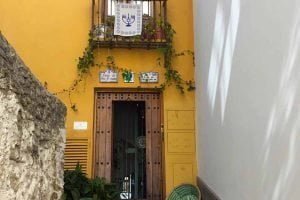
This intangible cultural heritage achieved the highest recognition by UNESCO in 2012, thus rewarding the fundamental role of the people of Córdoba in the beautification of their own city: in spring, the owners of the historic centre agree to adorn their private or communal patios with flowers of all colors, ornamental plants, and other plant elements. And during the month of May, for two weeks, a festival takes place in which these patios become the perfect setting for a most evocative cultural program, with concerts, poetry recitals, and more.
Flamenco, Another Hallmark of the City
Finally, it is fitting to also include flamenco on this list, declared Intangible Cultural Heritage of Humanity in 2010. It is true that this musical art form is not exclusive to Córdoba, but extends throughout southern Spain and other regions of the country. However, Córdoba is one of its undisputed epicenters, with truly iconic indigenous elements, both in terms of attire (Cordoban hat, the long, fitted women’s dress with ruffles) and music (Cordoban soleá and guitar ‘capital’), so the city breathes flamenco through and through.