

The vestiges of the Iberian presence in Andalusia are one of the main attractions for lovers of archaeological tourism. This people, also known as Iberians, represents one of the most interesting pre-Roman civilizations in Europe, despite not enjoying the fame of other ancient peoples such as the Egyptians, Greeks, Hittites, or Etruscans. In this post, we share where you can admire their legacy within this region of southern Spain.
Temporal and Geographical Framework of the Iberians
Iberian was how the ancient Romans and Greeks referred to the inhabitants of the area closest to them in the Iberian Peninsula. That is, a wide coastal strip stretching from the Pyrenees to the Costa del Sol, extending inland into its corresponding peninsular territory.
The period in which they lived spans more than five centuries, from the 6th century BC onwards. Both their beginning and end are blurred, as their emergence is linked to the progressive assimilation of the cultures of the Iron Age conquerors (mainly Greeks, Carthaginians, and Romans), who came into contact with the indigenous peninsular population.
For this reason, Iberian culture is characterized by numerous borrowings or adaptations from these Mediterranean conquerors, such as their language (yet to be deciphered) or their artistic expressions. Although some of the most important cities and iconic pieces come from other regions (such as Albacete or Alicante), the truth is that Andalusia has much to offer regarding this fascinating civilization.
Essential Sites for the Iberians in Andalusia
The Iberians spread mainly through eastern Andalusia, especially through the provinces of Cordoba, Granada, and Jaén, with the latter two having the most to offer the interested traveler. The most representative locations, shown below, are both archaeological sites and museums: the former allow us to understand the geographical reality in which they developed in situ, while the latter facilitate a deeper and more contextualized interpretation.
Sites in Granada
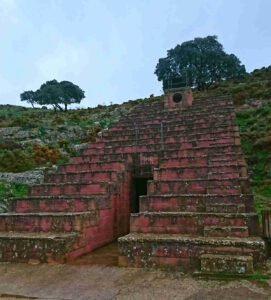
In the province of Granada, we can find two major archaeological sites equipped with interpretation elements. One to highlight is the Necropolis of Tútugi (Galera), located within the UNESCO Global Geopark of Granada, featuring dozens of magnificently restored tombs. Another very special site is that of Baza (ancient Basti). The great icons of both places, however, are in the National Archaeological Museum in Madrid (the Ladies of Galera and Baza), with copies in the local archaeological museums.
Sites in Jaén
The province of Jaén undoubtedly houses some of the most valuable vestiges of this civilization. The Cerrillo Blanco Archaeological Park in Porcuna and the Oppidum of Puente Tablas, in the town of the same name, shine brightly. In the latter site, the Sun Gate, oriented toward the sunrise, continues to hold great suggestive power, especially knowing that during the spring and autumn equinoxes, the dawn light illuminated the female divinity in an adjacent sanctuary.
Iberian Museum of Jaén
This is the great thematic museum of this civilization. While it is not the only one, as there are archaeological museums for each provincial council, or even archaeological sections in other monuments (such as the Boabdil Tower in Porcuna), this museum is the most ambitious to date for delving into that civilization. Inaugurated in 2017, this modern-design building houses archaeological pieces of great value, displayed in rooms that cover the figures of the lady, the hero, the prince, or the goddess. All of this is presented with an audiovisual and interactive display in line with the tastes of modern visitors.