Traveling to Inland Almería: Nature, Silence, and Authenticity
Discover the most rural side of Almería from a personalized perspective: open landscapes, local traditions, and tailor-made experiences designed to connect with the most genuine essence of southeastern Andalusia.
Rural Tourism in Almería: Surprises for All Visitors
While the coast showcases its scenic and underwater beauty (Cabo de Gata-Níjar Maritime-Terrestrial Natural Park) and the capital becomes increasingly culturally dynamic, rural tourism in Almería is primarily concentrated in the province’s interior. The offerings are heavily influenced by the landscape, which is one of the most unique in all of Spain. The extreme aridity of vast areas gives rise to the best examples of badlands, while the mountain ranges that unfold in different areas provide a green counterpoint with surprising results for all types of travelers. On this page, we tell you what you can visit if you wish to enjoy a stress-free stay, away from crowds, in towns with a beauty different from what Andalusia usually offers.
Contents
Alpujarra and Poniente
The regions in the westernmost part of the province are among the best for rural tourism in Almería. These are the Alpujarra Almeriense and the Poniente Almeriense. In fact, they host the highest mountain ranges in the province. Firstly, Sierra Nevada, which extends from Granada with peaks here rising above 2,500 meters above sea level, such as Chullo and Almirez. And secondly, the Sierra de Gádor, with mountains of great character, like Morrón de la Lagunilla (2,249 meters above sea level). Both mountain ranges feature protected green spaces, which are a great attraction for those traveling with family, as a couple, or with friends.
Here you will find the greenest and most humid landscapes in the province. This is largely due to the snows that whiten the peaks well into spring and irrigate the valleys with abundant rivers and streams during the thaw. Precisely for this reason, vineyards find their only place here to settle with quality and sustainability.
Alpujarra Almeriense
The Alpujarra Almeriense: 100% Authentic
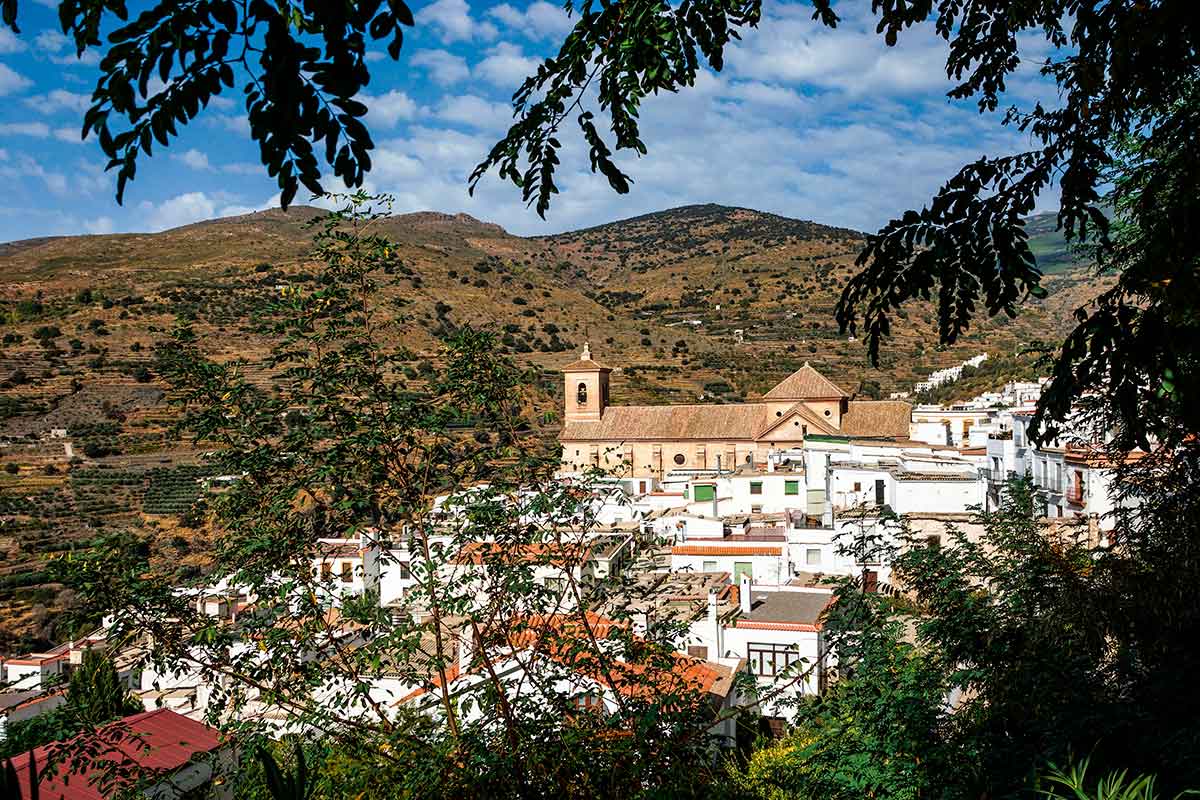
Although not as famous as its Granadan counterpart, the Alpujarra Almeriense has much to offer. In fact, it is one of the most attractive areas for practicing rural tourism in Almería. It shares characteristics with its neighbor, as they have always formed a single historical region, now divided at the Puerto de La Ragua. If the Guadalfeo river valley is the backbone in the Granadan part, here it is the Andarax, with the Sierra de Gádor as the coastal mountain range on which the Lower Alpujarra Almeriense is situated, opposite the Upper Alpujarra of Sierra Nevada. In this mountainous environment, the variety of landscapes depending on altitude, terraced crops, and powerful streams, sometimes channeled into irrigation ditches, will surprise you.
Of course, they also share history and culture: a Nasrid land for several centuries, Islamic traditions held great weight even after the Reconquista thanks to the Morisco population. These, in the time of Philip II, provoked the Alpujarras Rebellion (1568-1571) due to the hardening of religious policy against them, leading to their massive deportation.
And in the villages, that typical Andalusian character is maintained, with labyrinthine hamlets adapting to the mountain slopes and forming streets that defy the laws of gravity. Tinaos (covered passages), terraos (flat roofs), small orchards, and whitewash covering houses built with local materials, such as pebbles, slate, or wood from local forests, often formed by walnut, poplar, or chestnut trees, are found everywhere.
If you are planning a rural tourism trip through Almería and wish to discover the most charming villages, here is a list of suggestions:
Bayárcal: included in the Sierra Nevada Natural Park, its location is strategic, nestled in the Barranco de La Ragua (on the border with the Granadan Alpujarra). The mountain route to Marquesado and Guadix passes through here. Its staggered houses on the mountain offer a panoramic view of the valley.
Laujar de Andarax: the capital of the region, it is undoubtedly one of the most attractive villages for enjoying rural tourism in Almería. It not only offers the scenic beauty of the Alpujarran enclaves but also a rich heritage, among the most outstanding in the region. The 17th-century Church of the Incarnation, built with brick and masonry walls and Arab tiles for the roofs, stands out. Its dimensions and beauty lead it to be considered ‘the cathedral of the Alpujarra Almeriense’. The ruins of an alcazaba are preserved, which, according to tradition, housed King Boabdil after his expulsion from the Kingdom of Granada. Its hermitages and fountains also add a special charm to the village. And its wineries are an exception in the province and, therefore, a good excuse to visit them.
Alhama de Almería: located in the foothills of Sierra de Gádor, it preserves an interesting religious heritage, especially its hermitages, among which the Hermitage of San Antonio de Padua stands out. Its most historic construction is the Arab Baths: the Islamic civilization took advantage of the thermal waters of this area. La Puente, over the Barranco del Serbalillo, is an interesting construction from the late 17th century, very well integrated into the Alhama landscape.
Alcolea: at the turning point between Sierra Nevada and Sierra de Gádor, its Church of San Sebastián stands out. It also encompasses the towns of Lucainena and Darrícal, where the interesting Church of Santo Ángel Custodio is located.
Interior of Poniente Almeriense
Although the best-known part of Poniente Almeriense is its Campo de Dalías, currently covered by agricultural greenhouses, some interesting options can be found inland for those wishing to experience rural tourism in Almería. Here is a brief list:
Berja: considered the border between the Poniente and Alpujarra Almeriense. Its main temple is the Church of the Annunciation, in neoclassical style, while the Torre de los Enciso is older: from the 16th century, in Mudejar style. The Porticoed or Abastos Square, from 1860, is the most elegant of all, and also a good place to have a drink on its terraces. But the most interesting part of this municipality is in its surroundings: the Castala Periurban Park, one of the best places for hiking in the west of the province. From its viewpoint, with a picnic area, you can see the Albufera de Adra Natural Reserve, and it is a popular spot for family entertainment.
Enix: considered one of Almería’s white villages. Here, mountains and sea meet, as part of its municipal area is on the coast and has a small pebble beach, while its old town is located on the southern slopes of the Sierra de Gádor. There, you can take nature walks, reaching places like Peñón del Sombrero or the Wind Farm.
Vícar: its most unique building is the 16th-century masonry church-fortress of San Benito. In its surroundings, the Aqueduct of the Twenty Arches, in the Carcáuz Ravine, will attract attention.
Sierra María and Los Vélez
The north of the province offers one of the most pleasant surprises for those engaging in rural tourism in Almería. Both in terms of landscapes and artistic and monumental heritage. Here is the Sierra María-Los Vélez Natural Park, one of the few natural areas where green is the predominant color everywhere: Aleppo and black pines from reforestation are largely responsible, but also holm oak groves at lower altitudes. And of course, a great variety of scrubland, notably rosemary and esparto grass, among others. Furthermore, it is the natural habitat of numerous birds, especially raptors.
Its geographical location has also facilitated a mix of cultures that is evident in architecture, gastronomy, and other aspects. A transit point between Andalusia and the Levante, it is in close contact with other towns in neighboring Murcia, Albacete, and Granada. Its culture dates back several millennia, as it was home to prehistoric man. Testimonies of immense value in the form of cave paintings are preserved from this period.
The region actually consists of only four municipalities, but all of them are interesting:
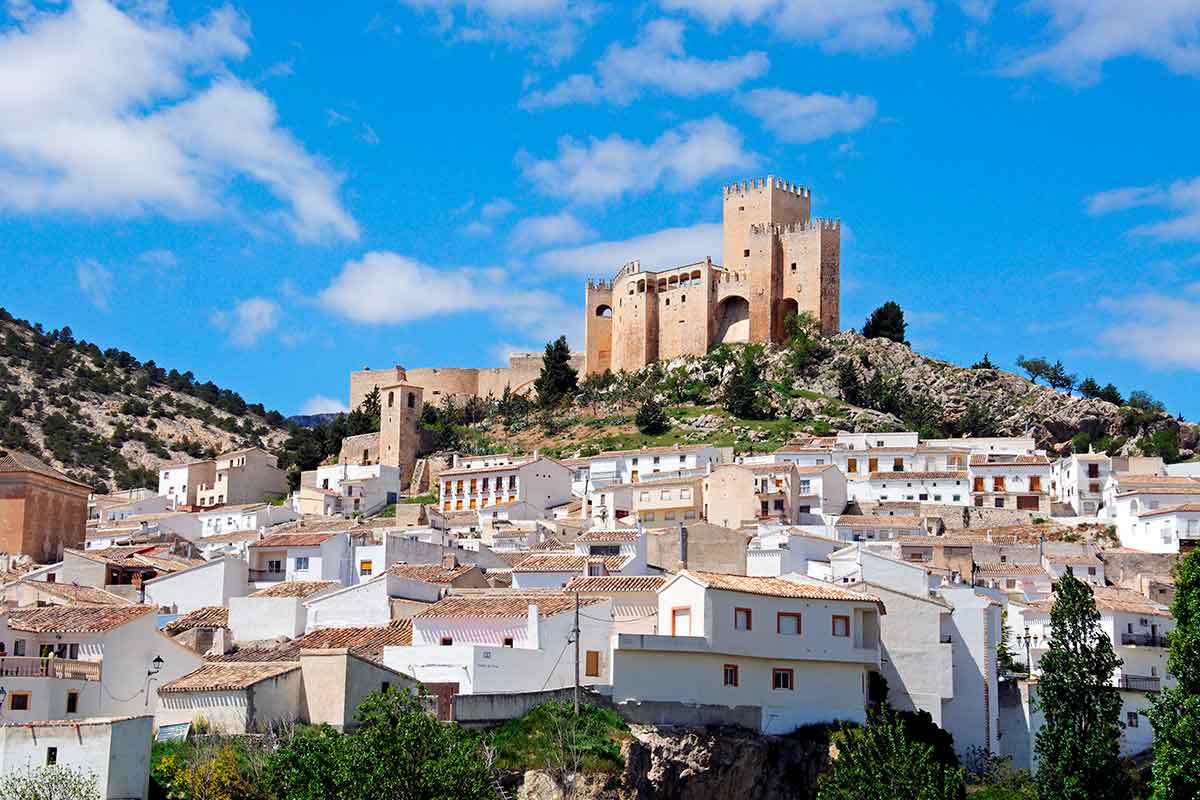
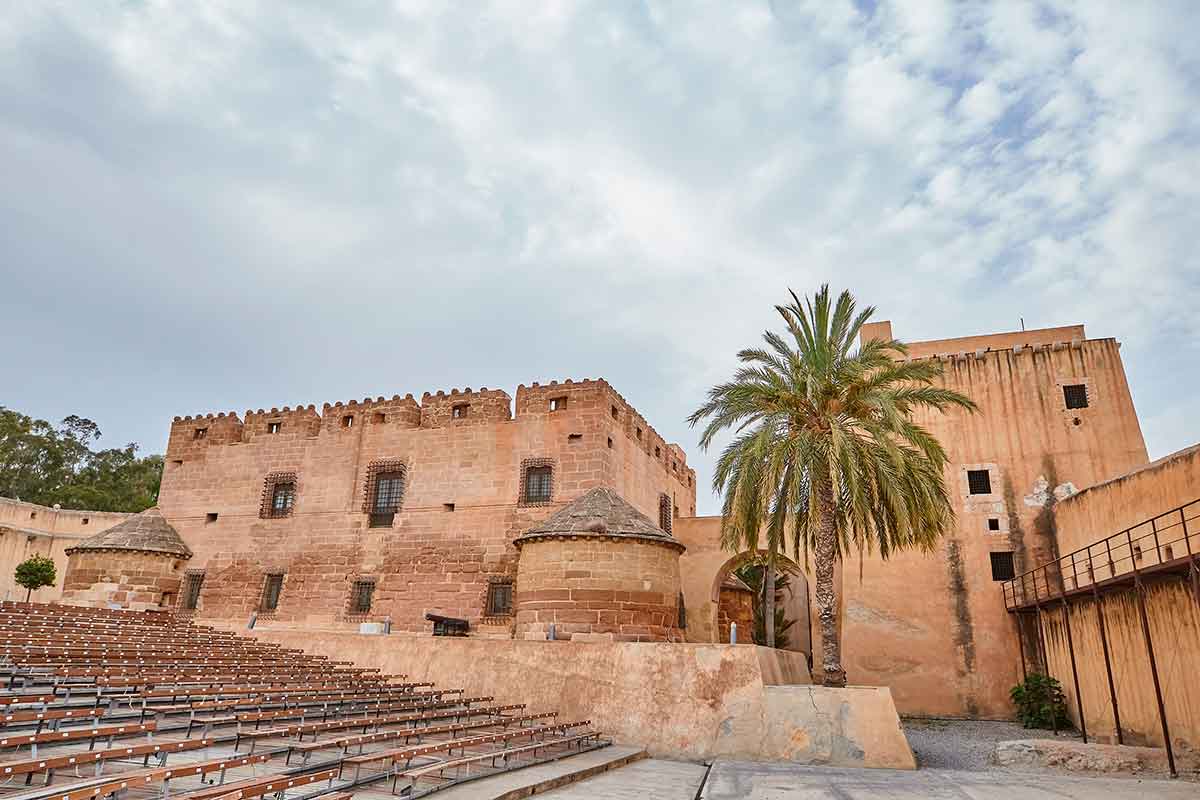
Vélez-Blanco: located over 1,000 meters above sea level, it enjoys clean air, fertile lands, and panoramic views of the entire region. All these ingredients captivate those who engage in rural tourism in Almería. But there’s more: its monuments are among the most beautiful in the entire province. Especially the Castle of Vélez-Blanco, built by the Marquis of Los Vélez at the beginning of the 16th century. It is a beautiful combination of military architecture on its exterior and palatial interiors, with coats of arms and columns for decoration. The religious heritage is also notable: its Church of Santiago Apóstol is the most prominent, but other no less interesting visits include the Hermitage of La Concepción and the Convent of San Luis. But undoubtedly, the great treasure of Vélez-Blanco is its Cueva de los Letreros (Cave of the Signs), declared a World Heritage Site by UNESCO, as part of the Rock Art of the Mediterranean Basin. Its paintings, datable to around 5,000 BC, include the Indalo, which has become a symbol of the province: an enigmatic drawing representing a figure holding an arch over its head.
Vélez-Rubio: it is the capital of the region and its entire old town is a monument, having been declared an Asset of Cultural Interest by the Junta de Andalucía. Its most prominent construction is the Church of Nuestra Señora de la Encarnación, a Baroque gem in brick, with a cathedral-like appearance. Its Plaza de la Encarnación also exudes charm. Additionally, it preserves the ruins of the Castellón, an ancient Nasrid fortress.
María: this municipality gives its name to the region’s mountain range, making it the perfect gateway for routes through this Natural Park. In the village, the Church of the Incarnation stands out, built in the 16th century over an old Arab mosque.
Chirivel: also very suitable for exploring the mountains, its landscape is dominated by pine forests and limestone mountains. Within its municipal area is the archaeological site of El Villar, from the Roman era. An Interpretation Center helps visitors understand the site through sculptures, mosaics, ceramics, and other elements.
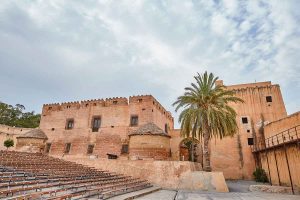
Fajardo Castle Vélez-Blanco Almería
Almanzora Valley: Marble and Tradition
The Almanzora Valley region takes its name from this river, which flows north of the Sierra de los Filabres and south of the Sierra de las Estancias, through a landscape of contrasts: orchards, almond trees, or orange groves are some of the surprises that abound here, in a corridor considered a green lung of the province. Most towns revolve around marble, which is extracted from the depths of these lands and represents a hallmark. This can be seen, for example, in Antonio López’s gigantic sculpture in Olula del Río: Swimming Woman. Craftsmanship, especially pottery, also has a long tradition here, with experiences that can be enjoyed firsthand and serve as an incentive for those organizing their rural tourism trip to Almería.
Some of the towns where you can stop are:
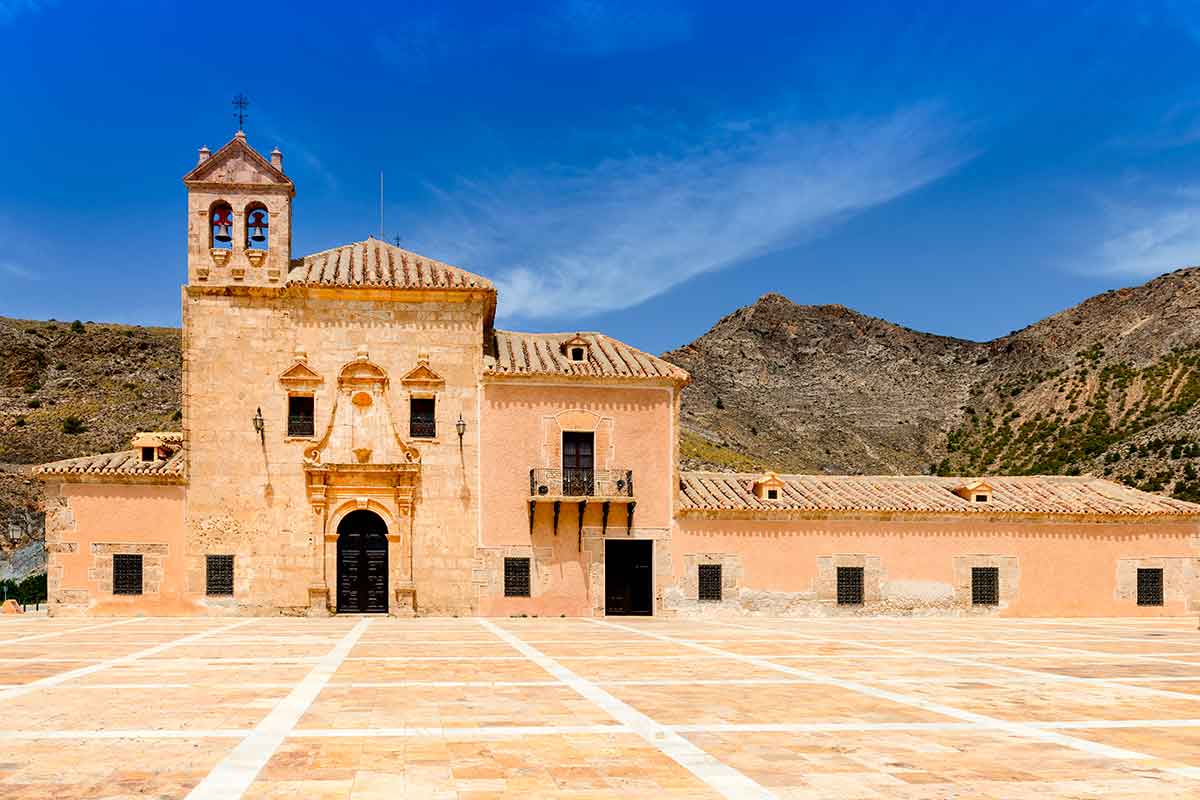
Albox: famous primarily for the Sanctuary of El Saliente, the final destination of one of the most important pilgrimages in southern Spain. The faithful visit the 18th-century image of Nuestra Señora de los Desamparados del Buen Retiro del Saliente. The temple lives up to its devotion: a humble but elegant Baroque construction from the mid-18th century. In the town, the Church of Santa María stands out, with a Baroque facade reminiscent of the Convento de las Puras in the capital of Almería. On the surrounding hills, the ruins of several 13th-century Muslim towers still stand.
Líjar: this village has gained some fame among those doing rural tourism in Almería. And the reason is none other than its castle which, unlike the others, is not historic: it was built in masonry by several local builders in 2005. But its beauty and good integration are celebrated by locals and visitors alike. In its surroundings, the Cueva del Moro (Moor’s Cave) is presented as a good place to introduce children to speleology.
Oria: its impressive Basilica de las Mercedes, made of brick and in late Baroque style (18th century), is notable. The remains of several watchtowers are also visible on some hills in its municipal area.
Zurgena: a peaceful village located in the final kilometers of the Almanzora River, featuring two significant religious buildings. The first, the 16th-century parish church. The second, the Hermitage of El Calvario, in eclectic style (19th century).
Sanctuary of El Saliente Albox
Los Filabres: Crossroads of Paths and Cultures
The Sierra de los Filabres is, in fact, the continuation of the Sierra de Baza: an unprotected area of about 150,000 hectares that, nevertheless, offers many possibilities for hiking and rural tourism in Almería. Scrubland (esparto, rockrose, blue gorse, etc.) combines with dispersed extensions of reforested pines, holm oak groves, and other Mediterranean trees, forming a green space that, in certain municipalities, is interrupted by marble quarries.
Here are some towns that might be of interest to you:
Gérgal: two constructions compete for dominance of the heights in this village. The first, the Castle of Gérgal, built of slate slab masonry with a unique structure combining the crenellated central tower cube and corner cylinders as buttresses. The second, the Calar Alto Observatory, which is one of the largest in Europe, with various telescopes, notably a 3.5 m reflector.
Purchena: from the remains of its Arab alcazaba, the entire village is dominated. And within it, the Church of San Ginés stands out, where a beautiful Mudejar wooden ceiling can be admired.
Serón: many who come for rural tourism to Almería, do so with their sights set on its Serrano hams, one of the most renowned meat products in the province. In addition to delighting the palate, travelers can also feast their eyes, for example, from the panoramic viewpoint of the Hermitage of the Virgen de la Cabeza. Or with the Baroque Church of the Assumption, from the 17th century.
Fiñana: an interesting village for rural tourism in Almería, as it preserves corners of humble and popular taste within its interior, as well as unique constructions. For example, the old mosque, now the Hermitage of Nuestro Padre Jesús Nazareno, where 12th-century plasterwork can still be admired.
Tabernas Desert and Sierra de Alhamillas
In the center of the province, a different but suitable environment for rural tourism in Almería opens up: the Tabernas Desert. This Natural Area emerges between the Sierra de los Filabres and the Sierra Alhamilla, isolated from the humidity of the nearby Mediterranean. This latter mountain range, which stands apart between the Bajo Andarax and the Campo de Níjar, is closely related to the desert, acting as a green lung thanks to the scattered holm oak groves that appear here, a true relic in Almería’s lands.
The Tabernas Desert is protected as a Natural Area by the Junta de Andalucía. Its pronounced aridity gives it an iconic landscape of badlands badlands, receiving less than 250 mm of precipitation annually. It is of enormous geological interest and is the subject of continuous research into its extreme climatic conditions. This has generated endemic flora, such as a specific type of crucifer, or the abundant presence of shrubs, such as oleanders. A habitat has also emerged to which different animals adapt, such as ladder snakes, foxes, and Spanish hedgehogs. The same applies to birds: both this desert and the neighboring Sierra Alhamilla are SPAs (Special Protection Areas), home to an appreciable variety of species, especially steppe birds, such as the rock martin. The most symbolic peak in this area is Pico Alfaro (619 meters above sea level), while in the Sierra de Alhamilla, peaks above 1,200 meters above sea level are reached (Pico de Colataví, 1387 meters above sea level).
All these are very peculiar characteristics that did not go unnoticed by the international film industry, which focused on this corner of Almería to shoot numerous films of the so-called Spaghetti Western: Western-themed feature films but shot on European soil, especially in Italy and Spain. Some of the most famous films with scenes shot here were by Sergio Leone, such as The Good, the Bad and the Ugly. And the region is exploiting this attraction, which can also serve as a topic of interest for those who come for rural tourism in Almería. Proof of this is the Oasys MiniHollywood theme park.
Interesting Towns in the Area
Some towns suitable for rural tourism in Almería are found here, such as Tabernas. The surrounding landscape seems to transport the traveler to corners of the Wild West, although some elements reveal the place’s Islamic and later Christian past. For example, the 11th-century Tabernas Castle, in Nasrid style, whose views allow for a vast contemplation of the desert. Within the town, one of the most interesting spaces is the Terrera Ventura and Tabernas Desert Interpretation Center, which not only didactically explains the environmental keys of the desert but also those of the Terrera Ventura site, from the end of the Neolithic period (approximately 2,300 BC).
However, if we talk about beauty, Níjar stands out as one of the most beautiful for rural tourism in Almería. Its municipal area is vast: it stretches from the southern foothills of the Sierra de Alhamilla to the coast, with interesting beaches and coves, as well as numerous hamlets. Its almost 600 km 2 extend over a large part of the Cabo de Gata-Níjar Natural Park. But those who wish to stay in the village will enjoy charming spots and popular constructions. The Plaza de la Glorieta is its meeting place, where the Town Hall and the 16th-century Church of the Annunciation are located, with Mudejar elements and a peculiar bell tower, which also served as a fortress tower. In this regard, the network of medieval watchtowers scattered throughout its territory is also preserved. And scattered throughout its hamlets is a long list of places of interest: the mill and aqueduct of Fernán Pérez, the Castle of San Felipe, the Cortijo del Fraile (where Federico García Lorca’s “Blood Wedding” took place), the waterwheel and washing place of Torre de los Frailes, or the Church of Santa María and the Castle of Huebro. Additionally, its Butterfly Garden, a unique space to learn about more than 300 species of these lepidopterans, is worth highlighting. Blood Wedding by Federico García Lorca), the waterwheel and the laundry site of Torre de los Frailes, or the Church of Santa María and the Castle of Huebro. Additionally, its Butterfly House is noteworthy—a unique space to discover more than 300 species of these lepidoptera.
Another town in the area is Gádor. Although it administratively belongs to the Metropolitan Region of Almería, its location makes it very suitable for visits to the desert and the mountains. Its most important building is the Church of Nuestra Señora del Rosario, straddling Baroque and Neoclassical styles, with the participation of the royal architect Ventura Rodríguez. Also worth mentioning is Santa Fe de Mondújar: its urban area is crossed by the railway bridge designed by Gustave Eiffel’s team of engineers in the late 19th century. And at its feet, the remains of a Nasrid tower, which is the most important historical construction, along with the Church of the Virgen del Rosario. However, the most outstanding feature of these last two towns is the Los Millares site, which represents one of the star attractions for a rural tourism trip in Almería. The site, which extends across parts of both municipalities, is considered one of the most important Copper Age enclaves in Europe (2700-1800 BC) and one of the first cities on the Old Continent. It featured four lines of walls, a dozen small forts, and over a hundred collective tombs, which speaks to its scale. Its good state of preservation enhances the visitor experience.
The Metropolitan Region
The Levante Almeriense region and the Metropolitan Region of Almería have a great appeal for sun and beach tourism, with famous destinations like Mojácar or the capital itself. However, inland, it also boasts good villages for rural tourism in Almería, which are not only attractive due to their proximity to the sea for a dip, but also to the Cabo de Gata-Níjar Natural Park, within whose territory some municipalities are located.
Below, we show you a list of interesting towns. Additionally, in their urban centers and surroundings, you will find houses and hotels that are part of the network of accommodations for rural tourism in Almería:
Lubrín: in the foothills of the Sierra de los Filabres, its characteristic white and clustered houses give it a very picturesque appearance. The Plaza de Arriba and Plaza de Abajo are two of its most symbolic places, as well as the fountain and the municipal washing place. It is also a village with a rich ethnographic heritage, as can be seen in the Rural Food Interpretation Center.
Huércal Overa: regarding historical constructions, the elegant Church of the Assumption stands out, a Baroque building with Murcian inspiration. In fact, it houses one of the first processional carvings by Francisco Salzillo. The medieval Nasrid tower, recently restored, is also worth mentioning. Additionally, it has other visitable spaces, such as the Water Museum, the Ethnographic Museum, and the Civil War trenches.
Cuevas de Almanzora: this town is one of the most attractive for rural tourism in Almería, not only because its municipal area includes beaches and coves for swimming, but also because its old town features interesting monuments. For example, the Castle of the Marquis of Los Vélez, one of the most imposing in the province. In Villarico, a hamlet of Cuevas de Almanzora, an interesting defensive castle also stands. And 2 km from the urban center are the Cuevas de Calguerín, excavated in the rock, which served as refuge-dwellings since time immemorial. Furthermore, it is one of the most interesting towns in terms of museums, as it has several: the Archaeological, the Ethnographic, the José María Álvarez de Sotomayor, and the AMC Art Museum.
Antas: peaceful and with airy streets, the main construction in its urban center is the Church of Santa María de la Cabeza, as well as the Aqueduct in El Real (19th century). Another place of great value is, without a doubt, the archaeological site of El Argar (between 3,000 and 2,000 BC), which gives its name to one of the most important Bronze Age cultures in Europe, a continuation of that of Los Millares. Although its visit is not as well-conditioned as others, the pieces extracted from this enclave can be found in some of the most important archaeological museums in the south and east of the peninsula, as well as in the National Archaeological Museum of Madrid.
Let us know what you have in mind for your experience.
Utilizamos cookies propias y de terceros para la medición de la actividad del sitio web con el fin de mejorar nuestros servicios. Si continúa navegando acepta su uso. Puede configurar, rechazar las cookies, u obtener más información clicando la opción 'Configurar'. AceptarConfiguraciónLeer más
Privacy & Cookies Policy
Privacy Overview
This website uses cookies to improve your experience while you navigate through the website. Out of these, the cookies that are categorized as necessary are stored on your browser as they are essential for the working of basic functionalities of the website. We also use third-party cookies that help us analyze and understand how you use this website. These cookies will be stored in your browser only with your consent. You also have the option to opt-out of these cookies. But opting out of some of these cookies may affect your browsing experience.
Necessary cookies are absolutely essential for the website to function properly. This category only includes cookies that ensures basic functionalities and security features of the website. These cookies do not store any personal information.
Any cookies that may not be particularly necessary for the website to function and is used specifically to collect user personal data via analytics, ads, other embedded contents are termed as non-necessary cookies. It is mandatory to procure user consent prior to running these cookies on your website.