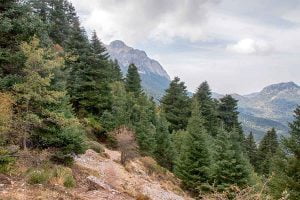


Nature tourism in Andalusia is one of this region’s major draws, as important as its art, traditions, cuisine, or beaches. For this reason, in this post we have compiled four places of great ecological interest where you will enjoy peace and fresh air, and you will also learn a great deal about local flora and fauna. Take note!

Sierra Nevada, the pinnacle of nature tourism in Andalusia
Sierra Nevada National Park is the pinnacle of nature tourism in Andalusia. And we mean that literally: this mountain range in Granada, which extends as far as Almería, boasts the highest mountain on the Iberian Peninsula: Mulhacén, at 3,482 m above sea level. Although much of its tourist fame comes from its ski resort, the truth is that this protected area can be enjoyed through mountaineering, with routes such as the Integral, or via long-distance hiking on the Sulayr trail. It also features high-mountain infrastructure, such as refuges and hostels.

Doñana: Europe’s largest ecological reserve
Doñana National Park is a vast complex of aquatic and terrestrial ecosystems of exceptionally high ecological value. In fact, it is the largest reserve of its kind in Europe, spanning the provinces of Huelva, Córdoba, and Seville. Its marshes stand out, as they are essential for the passage, breeding, and wintering of numerous species of migratory birds. For this reason, it is one of the great havens for birdwatching enthusiasts. But that is not all: it is also home to many fish, amphibians, reptiles, and mammals, including the iconic Iberian lynx, which is endangered. It includes an extensive buffer area, with numerous recreation areas and trails.

Caminito del Rey: adventure and the environment
Caminito del Rey, in the province of Málaga (within the municipalities of Ardales, Álora, and Antequera), is a trail whose appeal sits on the boundary between adventure and nature tourism in Andalusia. Originally, it was a route used by workers from the El Chorro Hydroelectric Company, but its natural beauty and narrow gorges made it famous. Access is not unrestricted; visits must follow specific schedules and rules.

Cabo de Gata: underwater beauty
Nature tourism in Andalusia can be enjoyed not only on land, but also underwater. You can see this for yourself in Cabo de Gata-Níjar Natural Park, in the province of Almería. It is a land-and-sea protected area, with remarkably distinctive landscapes—whether in its arid interior or along its rugged coastline. And if you decide to go scuba diving with one of the many companies that specialise in it, the beauty is extraordinary. Its reefs and rocky seabed conceal an incredible explosion of wild nature: gastropods such as limpets, crustaceans such as goose barnacles, and fish such as the Mediterranean moray eel and the great dusky grouper… There is even a shipwreck (El Vapor) submerged here for nearly a century. That is why many Spaniards choose it as the perfect place for their first open-water dive.