


Andalusia’s industrial architecture is an interesting surprise for any visitor. It is true that these types of constructions from the late 19th and early 20th centuries do not have as long a history as the region’s Roman or medieval monuments, but they possess a special charm. They are a beautiful example of the region’s modernization efforts during that period, often driven by major foreign investors, utilizing the fashionable material of the time: iron. Here is a list of the best sites.
Huelva Docks, an icon of Andalusia’s industrial architecture
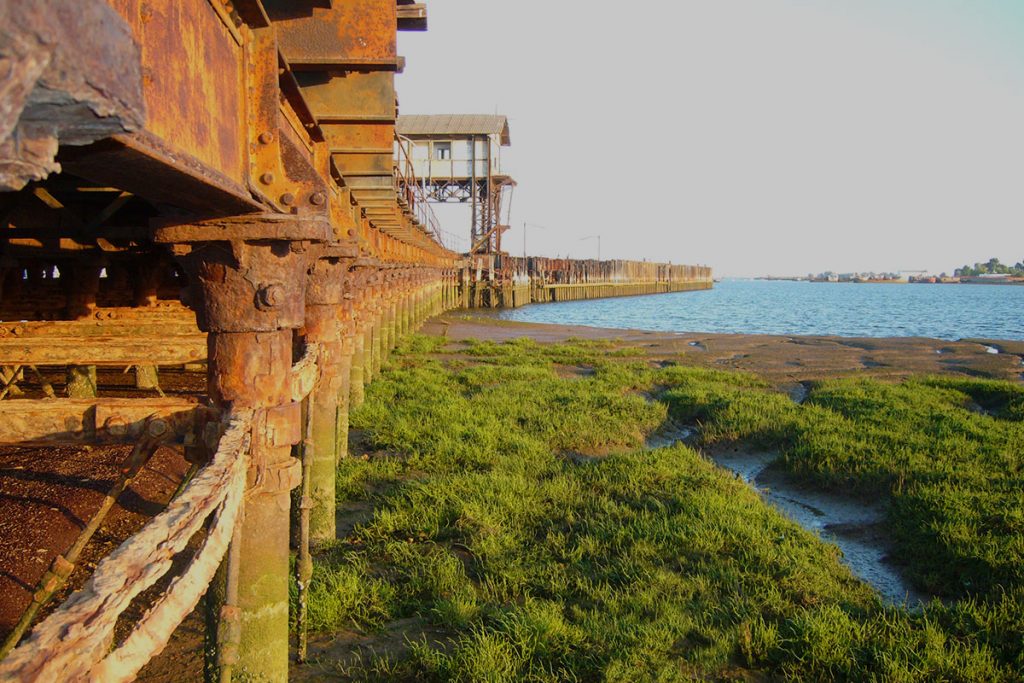
When discussing Andalusia’s industrial architecture, we must mention Huelva, which has probably best leveraged this heritage under the name ‘English Legacy,’ as the capital and a significant portion of the workers who built it came from there. Without a doubt, the Riotinto Company Mineral Pier is its greatest icon, built in 1876 to connect the port with the railway lines of the Mining Basin. Today, it is a Site of Cultural Interest and a key element in its urban landscape. The Tharsis Company Pier, from 1868, on the mouth of the Odiel River, served the same function and enjoys the same protection, albeit in a poorer state of conservation.
Cable Inglés, another symbol of Almería
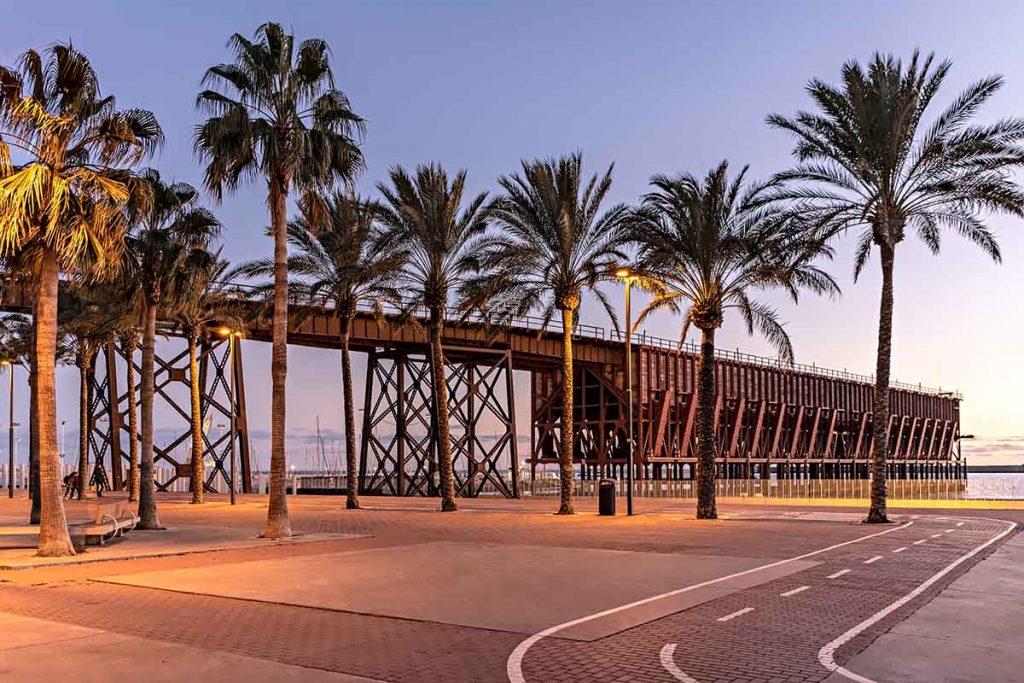
At the other end of Andalusia, in Almería, stands the Cable Inglés, a similar structure, in this case from 1904 and promoted by the British company The Alquife Mines and Railway Company Limited. As in Huelva, it integrates very well into the city’s port landscape, having served the same function as a mineral loader.
Bridges of Granada and Málaga, Industry Amidst Nature
In the province of Granada, there are interesting iron bridges, another classic typology of industrial architecture, in Almería and the rest of the country. They are an example of how these types of constructions can integrate with nature. Notable examples include the Hacho bridge in Alamedilla, the Baúl bridge, the Barracón de Riofrío bridge in Loja, and the Dúrcal bridge. Meanwhile, in the city of Málaga, there are two related bridges: the Iron Bridge and the German Bridge. The location of the latter, on the eastern bank of the Guadalmedina and opposite the church of Santo Domingo, is interesting. But even more interesting is its history: it was a gift from the German people for the help some Malagueños provided during the shipwreck of a German vessel in the city’s waters.

Other Notable Examples
Andalusia’s industrial architecture offers much more, with examples spread across all provinces. Here we highlight the Eagle Aqueduct in Nerja, a kind of Roman-style aqueduct but from the 19th century. Also worth mentioning is the Mercado Lonja del Barranco, probably Seville’s most prominent iron construction, which today serves as a gourmet market.
In addition to all this, it is worth noting that there are many other sites of interest for industrial tourism, a segment that is growing significantly worldwide and in this region: the Riotinto mines are a good example, although there are others that we will address in another post.
