

Explore the Huelva coast on a private, tailor-made trip
Wild beaches, untouched nature, and experiences designed for total comfort. Discover the Huelva coastline with personalized itineraries, charming accommodations, and exclusive service.
Huelva Beaches: Information for your holiday on the Costa de la Luz
Spending your holiday on the Costa de la Luz in Huelva is an excellent choice for those wishing to combine relaxation, nature, and water sports, without missing out on the fun of beach bars. The westernmost corner of the Andalusian coast has all this and more, radiating a fishing and seafaring spirit from every side. It was from these shores that the ships destined to change world history set sail: the Pinta, the Niña, and the Santa María, in a project led by Christopher Columbus and the Pinzón brothers in 1492. More than 500 years later, the beaches of Huelva have become one of the most attractive destinations for national and international tourism, although many have not yet had the chance to visit. Therefore, on this page, we offer detailed information about their location, characteristics, the most recommended swimming areas, the most beautiful villages, and activities to do during your stay.
Contents
Location and Characteristics
The Costa de la Luz in Huelva is the coastal strip located between two of the most important rivers on the Iberian Peninsula: the Guadiana, which serves as the border between Spain (Ayamonte) and Portugal (Vila Real de Santo Antonio), and the Guadalquivir, which marks the limit with the province of Cádiz (Doñana National Park, Sanlúcar de Barrameda), although in Cádiz it is also known as the Costa de la Luz of Cádiz.
Its nearly 110 km of coastline are home to about twenty towns, which are, in alphabetical order: Almonte, Ayamonte, Cartaya, Casita Azul, El Portil and Nuevo Portil, El Rompido, Isla Canela, Isla Cristina, Islantilla, La Antilla, Lepe, Matalascañas, Mazagón, Moguer, Palos de la Frontera, Punta del Moral, Punta Umbría, and Urbasur. Additionally, the provincial capital, Huelva, is also located within this strip.
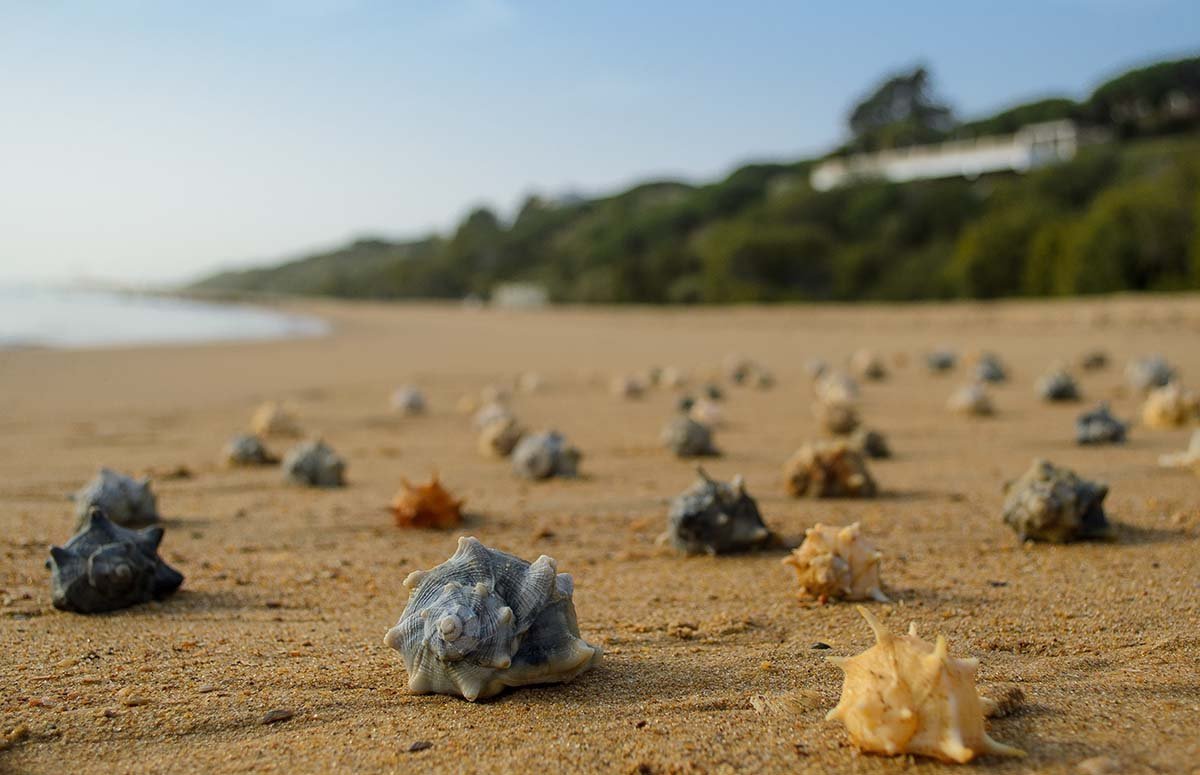
Regarding the characteristics of the beaches of Huelva, it is worth noting their white sand and the environment of dunes and pine forests that surrounds many of them, with swimming areas that have barely lost their pristine and wild character. The prime example is Matalascañas, which, despite its usual liveliness and high occupancy, is a beach located in the heart of the Doñana National Park.
Another notable feature of this area is the abundance of ports, many with a genuine fishing atmosphere typical of the Huelva coast, while many others have adopted a sporting character where numerous nautical activities can be practiced, to the delight of those who come to spend a holiday on the Costa de la Luz in Huelva.
Finally, we cannot forget an important fact: the beaches of Huelva are bathed by the waters of the Atlantic Ocean and are therefore slightly cooler than those of the Andalusian Mediterranean coasts. Also due to its Atlantic character, this is usually a windier coastline, which is positive for sailing sports. Finally, another attraction of this area is its sunsets, where the sun ‘dips’ beyond the horizon line through the gap between the sky and the sea. A most fascinating and romantic sight!
The Best Beaches in Huelva
Although they are not as famous as others in Andalusia, the beaches of Huelva have nothing to envy compared to the rest of this autonomous community, especially regarding beauty and fine sand. To name the best, we can mention the 7 that received the Blue Flag in 2020, recognizing their quality, cleanliness, and services for bathers. These are as follows:
- Ayamonte: Isla Canela and Punta del Moral
- Cartaya: Caño de la Culata and San Miguel
- Isla Cristina / Lepe: Islantilla
- Punta Umbría: El Albergue
- Moguer: Parador Beach (Castilla)
However, beyond this classification, many other beaches in Huelva can be mentioned that are also very famous among local and foreign tourists. One of them is the aforementioned Matalascañas (Almonte), probably a favorite for those from Seville, as it is the closest to the Andalusian capital, just 70 km away. There is room for everyone, as it is a very large beach, 5.5 km long. It is striking that in such a privileged natural environment, one of the most prominent elements is the remains of a military construction: an old tower built in the time of Philip II to defend the area against Barbary attacks. In the 18th century it collapsed, probably due to the 1755 Lisbon earthquake, and it has remained there ever since, upside down, popularly known as ‘El Tapón’.
Another of the beaches in Huelva that has the remains of a 16th-century watchtower is Torre del Loro beach, also belonging to the municipality of Almonte. But in this case, the beach remains practically untouched with a much lower influx of bathers. El Portil beach is also beautiful, next to the Laguna del Portil Nature Reserve and the Los Enebrales Natural Park. Other spectacular beaches due to their natural character are Cuesta Maneli, in the Doñana National Park, and those mentioned above with a Blue Flag: Punta Umbría in the Marismas del Odiel and Punta del Moral in the Marismas de Isla Cristina. Also very noteworthy is El Rompido, partly because it is located in front of a large tongue of land that can be accessed by boat, which is a great plan for those coming with their families to spend their holiday on the Costa de la Luz in Huelva.
The Most Beautiful Villages on the Costa de la Luz in Huelva
The beaches of Huelva are undoubtedly one of the province’s great attractions. But from the extensive list of towns that make up the Costa de la Luz in Huelva mentioned above, there are some that are worth stopping to visit. For example, Ayamonte, which has the interest of all border towns, added to its fishing character, as immortalized by Joaquín Sorolla in one of his many paintings dedicated to this trade. This town has changed a lot in a century since then, but it still preserves places worth knowing, such as the Plaza de la Laguna or its churches, hermitages, and chapels (San Francisco, San Antonio, de las Angustias, etc.), spread between its main center and different neighborhoods. Furthermore, in the upper part of the municipality, on the ruins of a castle, is the Parador de Ayamonte, one of the best places to spend a holiday on the Costa de la Luz in Huelva, offering one of the best sunset views.
Cartaya and the town of El Rompido are other places that attract plenty of tourism, and not by chance. Cartaya has interesting architectural elements, although many of its monuments were destroyed during the devastating 1755 Lisbon earthquake. The most important of all is the Zúñiga Castle, from the 15th century and recently restored. And in El Rompido, its main attraction revolves around its coastline: here you will not only find one of the best beaches in Huelva, but also a charming fishing port, from where tourist boats now set sail.
But if we talk about history, the two most prominent places are Palos de la Frontera and Moguer, locations closely related to Christopher Columbus’s voyage to the Indies in 1492, which ended up becoming the Discovery of America for Western civilization. However, we dedicate the Columbus Sites page to all these places of interest, one of the most interesting cultural proposals if you are coming on holiday to the Costa de la Luz in Huelva. The city of Huelva, the provincial capital, will also pique your cultural interest; it has been extensively renovated recently to provide comfort to its residents and attract new visitors, as evidenced by the Paseo de la Ría.
What to do on a holiday on the Costa de la Luz in Huelva
If you have planned to spend a holiday on the Costa de la Luz in Huelva, you will have many plans at your fingertips to enjoy every day, whatever the time of year. If your great passion is water sports, this is one of the best areas in Andalusia to practice them, due to the value for money and the favorable weather conditions. One of these conditions is, undoubtedly, the wind, so one of the most practiced sports off the beaches of Huelva is windsurfing, as well as kitesurfing. Others that do not depend on the wind are also widely practiced, such as kayaking and, increasingly, paddle surfing, especially in the towns bathed by the Guadiana River.
Of course, along the entire coastline there are marinas from which you can set sail and arrive with your boats, whether sailing or motor-powered. Jet ski routes are very popular in towns like Isla Cristina, while the range of courses to learn catamaran sailing is also considerable in this and other towns. And as we mentioned on this other page, scuba diving is also a very interesting possibility at the beaches of Huelva, with numerous outings organized by companies and professional instructors.
But the boom in water sports has not yet eclipsed the fishing atmosphere that reigns in many ports and beaches of Huelva.. In fact, you will see many small boats anchored off ports like El Rompido or Ayamonte, or even larger ships heading to other latitudes, as well as tuna traps ready for the traditional levantás of bluefin tuna between April and June. And that seafaring and fishing character translates into excellent gastronomy that you can taste in beach bars and restaurants during your holiday on the Costa de la Luz in Huelva. In addition to bluefin tuna, there are other delicacies from the sea, such as white prawns or cuttlefish.
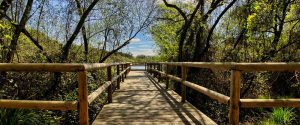
From a natural point of view, the beaches of Huelva also offer surprising plans. Their landscapes of dunes and pines house marked trails, often on wooden walkways, facilitating beautiful walking routes. A similar sensation is provided by horseback riding routes along the coast, especially in the Doñana area, where the traveler can experience the charm of the wildest Andalusia: dune landscapes, the immense sea, purebred Andalusian horses, marvelous sunsets… And don’t forget to have some good binoculars handy in case you are lucky enough to witness the migratory spectacle of birds arriving or departing from the National Park!
In addition to hiking and horse riding, another sport that can be practiced on dry land is golf. In this province, there are not as many courses as in the provinces of Cádiz or Málaga, but those that exist are mainly distributed next to the beaches of Huelva or not too far from them. Good examples are El Rompido Golf & Beach Resort, Islantilla Golf Resort, and Golf Nuevo Portil.
If you are traveling with children, you will be interested to know that much of the children’s leisure activities are located near the beaches of Huelva. One of the favorite places for those spending their holiday on the Costa de la Luz in Huelva is the Aquópolis Water Park in Cartaya, while in the capital, the little ones will find the fun they need with playgrounds and leisure parks.
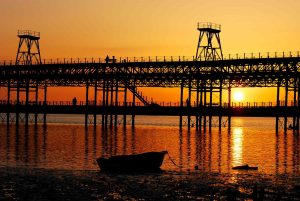
Finally, from a cultural point of view, you can take the excursions proposed above through the most charming local towns, the Columbus Sites, or the provincial capital itself. Just a few meters or kilometers from the Costa de la Luz in Huelva, you will discover places full of history such as the Monastery of La Rábida or the evocative Wharf of the Caravels, with reproductions of the Pinta, the Niña, and the Santa María.
Undoubtedly, the beaches of Huelva and the tourist attractions near them make up a most interesting offer for spending a holiday on the Costa de la Luz in Huelva. If this is the destination you have set for your next getaway, you can contact Andalucía Exclusiva, as we are experts in planning tailor-made trips: from managing your vacation rental to booking leisure experiences, including private transport with a chauffeur and much more. Get in touch with us and enjoy this coastline to the fullest!
More Information for Traveling to Huelva
Travel through Andalusia at your own pace and without worries
We design private experiences tailored entirely to you: exclusive routes, expert guides, charming accommodation, and moments you will not find in any guidebook.