

Traditional Andalusian sweets are the finishing touch to a world-class cuisine. Here we have chosen six from different provinces. You will find some in the major cities, while others you will need to seek out in smaller towns. But one thing is clear: Andalusians themselves love them. So there is no reason to think you will not feel the same. You will love them!
Mostachón from Utrera, perfect with coffee
Like so many other traditional Andalusian sweets, the mostachón from Utrera, in the province of Seville, has Arab origins. Its shape and ingredients are simple: a flattened sponge cake made with flour, honey, sugar, cinnamon, and eggs. What makes it even more appealing is its light, fluffy texture—perfect with coffee.
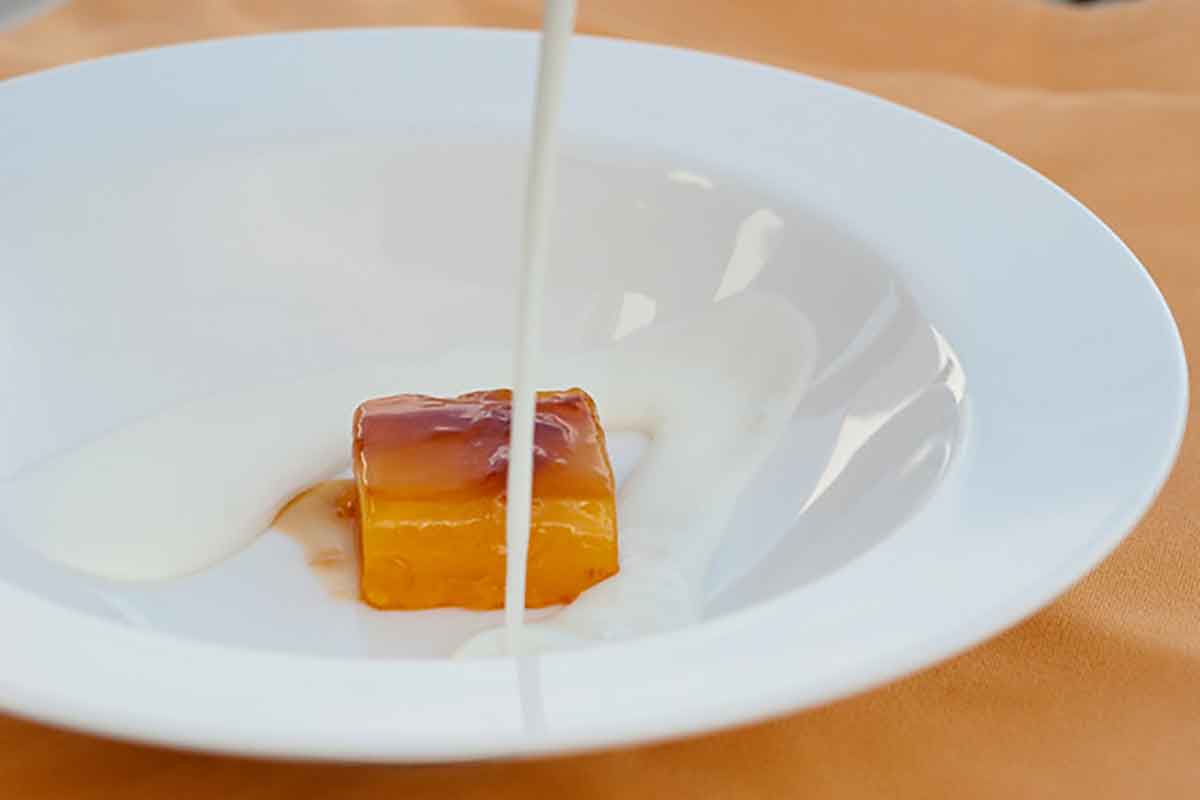
Tocino de cielo from Jerez, among the traditional Andalusian sweets
Tocino de cielo, famous in Jerez de la Frontera, is one of the best-known traditional Andalusian sweets outside the region. According to tradition, its origins date back to the 14th century, when it was first made by the nuns of the Convent of the Holy Spirit. Its name is therefore a nod to religion and to its texture. It is made from caramelised egg yolks cooked in a bain-marie. Today it is enjoyed as a dessert, much like a flan or pudding.
Cordoban pastry: recent, yet delicious
The cordoban pastry, for its part, does not have as much history as tocino de cielo from Jerez (only a few decades), but it has many fans in the city—and beyond. It is a puff pastry tart filled with cabello de ángel and citron, a type of squash widely used in Andalusia to make the aforementioned cabello de ángel. A savoury touch can be added with a few pieces of ham. It is made especially in November, coinciding with the city’s patron saints: Saint Acisclus and Saint Victoria (on the 17th of that month).
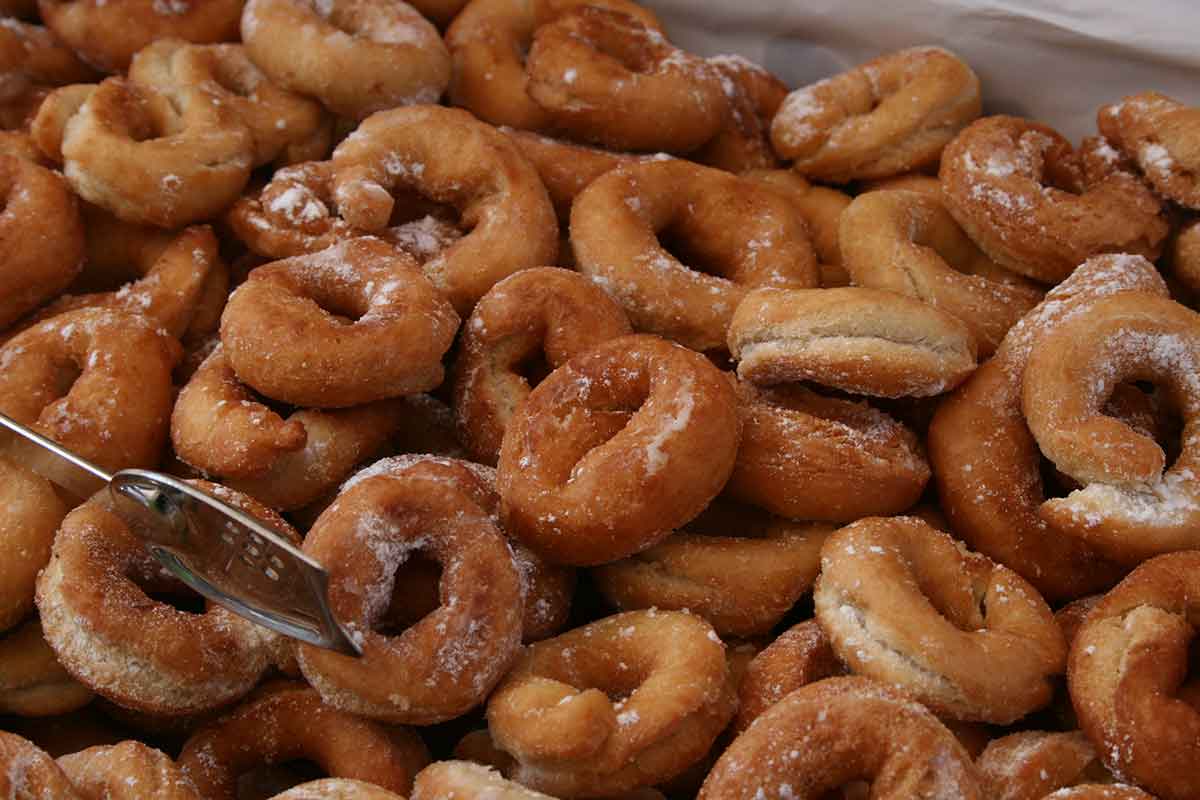
Fried orange rings in Málaga, for Holy Week
Also linked to religion are fried rings with orange, from Málaga and its province, though in this case in celebration of Holy Week. They are the classic sugar-coated doughnuts, made even better by the touch of orange juice added to the dough.
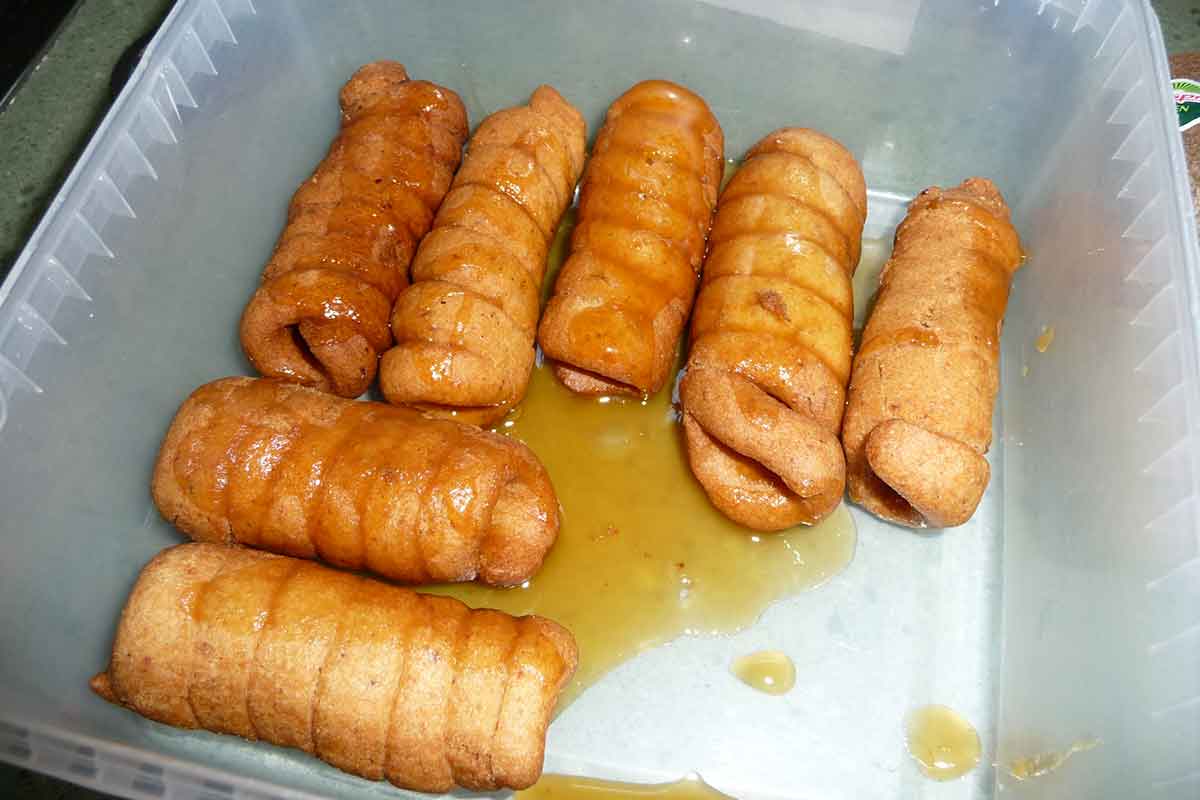
Gañotes from Ubrique, crispy for Lent
Another fried sweet associated with Holy Week is the gañote from Ubrique, in the province of Cádiz. It is a charming spiral stick, made by frying a dough of eggs, sugar, olive oil, sesame, lemon, cinnamon, and flour in sunflower oil. It is especially enjoyed during Lent.
Pezuñas from Almonte, Huelva’s favourite
Pezuñas from Almonte cannot be left off this list of traditional Andalusian sweets, as they are very well known in the province of Huelva and throughout the region. They are named after their shape. This sponge cake includes syrup, egg yolk and pastry cream, as well as a pinch of grated coconut.