


Sephardic cuisine is one of the best gastronomic proposals Andalusia has to offer. It is a great discovery, not only for travelers of Hebrew origin but also for visitors of any culture, including Andalusian citizens themselves. In this post, we provide some insights into this unique type of cuisine, mentioning specific dishes and offering suggestions for tasting.
Key Aspects of Sephardic Cuisine
As with all cuisines worldwide, Sephardic cuisine is heavily influenced by the culture of its people, as it must adapt to their customs and, especially, to their prohibitions. In this regard, it is essential to understand that on the Sabbath (Saturday), the holy day for Judaism, it is not permitted to cook or consume certain foods.
Therefore, it should be noted that some meats are prohibited in Jewish (kosher) gastronomy, such as veal and rabbit. Some fish are also forbidden (dogfish, shellfish), although many others are permitted, even during the Sabbath. For this reason, tuna and anchovies, among others, have a strong presence.
This fact partly led to the great abundance of vegetables in their dishes, with special mention of eggplant, which is prepared in many different ways, and legumes, such as chickpeas. However, lamb and offal are permitted ingredients and are widely used in Sephardic cuisine. Added to all this is the significant role of spices, such as saffron, cumin, cilantro, and cinnamon.
Furthermore, it is worth mentioning that the prohibition of cooking during the Sabbath also stimulated ingenuity in preserving certain foods and preparing some dishes extremely slowly, starting on Friday and cooking on their own throughout the Sabbath. Some examples of this will be seen below.
Examples of Dishes Linked to Sephardic Culture
There are some 100% Sephardic recipes that can still be found today in specialized restaurants. One of the most famous is alboronía, which consists of a simple stew based on eggplant, carrots, and leeks, as well as dried fruits (raisins, walnuts) and spices (turmeric, cumin). This is the basis of the famous Spanish pisto, which added ingredients like tomato or pepper after the Discovery of America.
Another of the most traditional dishes of Sephardic cuisine is adafina, a perfect example of a slow-cooked stew that begins preparation on Friday to be eaten on the Sabbath. Its main ingredients are chickpeas and lamb, and although there are different variations, it is always prepared in a clay pot. Therefore, it is the clear precursor to the Andalusian puchero, which you will also often find in Andalusian restaurants. And it may be surprising to learn that escabeche (marinating in vinegar) also aimed to preserve food for the Sabbath, a predecessor to today’s ubiquitous pescaíto frito (fried fish).
Jandrayo (stuffed eggplant), arroz con pollo (chicken with rice), tuna burekas (pastries), and albóndigas de pescado con salsa de limón (fish meatballs with lemon sauce) are also deeply rooted in Sephardic culture.
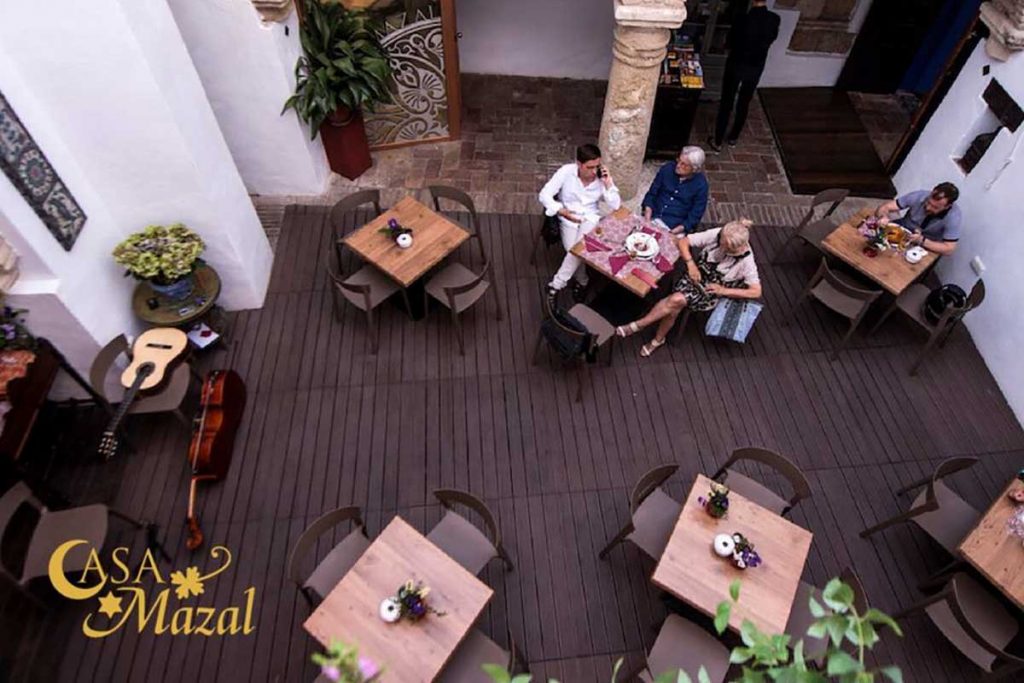
Finally, some places where you can savor Sephardic cuisine are Cordoba and Lucena, and not by chance: they are two of the cities with the largest Jewish population in the past. In the former, Casa Mazal stands out. And in the latter, the restaurant Tresculturas.