


Rural tourism in Seville: nature, dehesas, and charming villages
Seville is also about nature, small historic villages, and perfect corners to disconnect from the urban pace.
Rural tourism in Seville: the hidden beauty of the province
Although the provincial capital is one of the most visited cities in Andalusia and Spain, rural tourism in Seville also has a long way to go. Its offerings, sometimes eclipsed by the great appeal of the city of Seville itself, are aimed at all types of audiences. In particular, at lovers of gastronomy, nature, and traditions. Below, we show you the most prominent places in the main areas of the province, with special mention of the Sierra Norte, the Sierra Sur, and the Campiña, but without forgetting El Aljarafe, the Vega del Guadalquivir, and the Marismas del Bajo Guadalquivir.
Contents
The Sierra Norte: The Engine of Rural Tourism
To speak of rural tourism in Seville is often to speak of the Sierra Norte region. It is undoubtedly the favorite getaway for Sevillians, but it also offers many reasons to attract other visitors from the rest of Andalusia, Spain, and even the rest of the world. It is located in the north of the province, bordering Extremadura, with Huelva to the west and Córdoba to the east. It shares a natural space with the latter two, as the Sierra Norte is actually part of Sierra Morena, just like the neighboring Sierra de Aracena (Huelva) and Sierra de Hornachuelos (Córdoba).
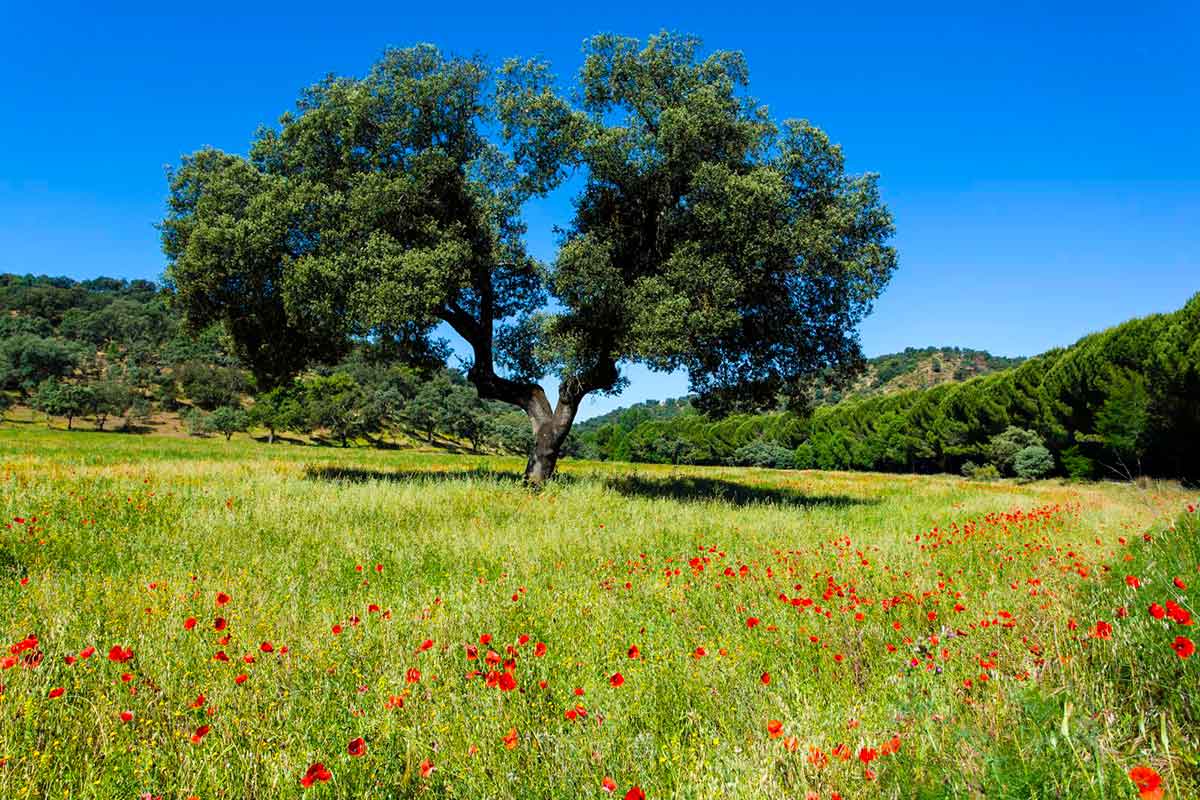
This mountainous area, which encompasses the Sierra Norte de Sevilla Natural Park, comprises nearly 180,000 hectares and is characterized by its low elevations, not exceeding 1,000 meters above sea level, as its space is dominated by a dehesa forest of cork and holm oaks, as well as riverside vegetation. Thus, it is perfect for family hiking or other activities such as cycling, climbing, or horseback excursions. Furthermore, it is easy to enjoy the flight of large birds, such as golden eagles, black storks, or vultures.
Cazalla de la Sierra
The most famous village in the Sierra Norte and, therefore, one of the most important for rural tourism in Seville is Cazalla de la Sierra. Its scenic and heritage wealth attracts numerous visitors, especially on weekends, holidays, and vacation periods, so it has a good range of hospitality establishments: hotels, rural houses, restaurants, etc. Its most spectacular natural space is the waterfalls of the Huéznar River, at its source, which provides a breath of fresh air for hikers.
On the other hand, the most prominent monumental complex is the Monastery of the Cartuja de la Inmaculada Concepción, better known as the Cartuja de Cazalla, located on the outskirts of the town. Its origins date back to the beginning of the 16th century, when it began to be inhabited by monks of the Order of Saint Bruno. Even today, elements of great personality stand out, such as the belfry, the bell tower, and the church, as well as several cloisters. Today it is a National Monument and can not only be visited freely or with a guide, but its facilities can also be used for events, courses, etc. Additionally, it offers accommodation within the complex itself.
The most important functioning religious temple today is the Church of Nuestra Señora de la Consolación, attached to the old Almohad wall, featuring Gothic-Mudejar, Renaissance, and Baroque elements. Another space that is part of its monumental route is the former convent of San Agustín (now the Town Hall).
Like other rural tourism destinations in Seville, another attraction of Cazalla de la Sierra is its gastronomy. In particular, its distilleries, which produce anisettes and spirits of recognized prestige. There are also wineries producing white and red wines, included within the Protected Geographical Indication Vinos de la Sierra Norte de Sevilla. Furthermore, it has estates producing olives, pickles, hams, and cured meats.
Other Tourist Towns in the Sierra Norte
The list of places of interest in the Sierra Norte goes far beyond Cazalla and covers towns from the western limit with Huelva to the eastern border with Córdoba. These are some examples:
- Constantina: it is one of the most picturesque villages in the province and a favorite for rural tourism in Seville. In its charming town center, you can admire the parish church of Nuestra Señora de la Encarnación, whose bell tower is visible from any point, the church of Nuestro Padre Jesús, the hermitage of Nuestra Señora del Robledo, or the convent of Santa Clara. All of this is watched over from the top of the hill by its castle, from the Arab period and built upon an earlier Roman castrum . From there, the views of the white houses and the gentle surrounding hills represent one of the most pleasant panoramas in the region. Additionally, it has numerous wineries and anise distilleries.
- Alanís de la Sierra: in a peaceful corner of the mountains, bordering the province of Badajoz to the north, lies this village surrounded by Mediterranean forest (gall oaks, cork oaks, holm oaks, etc.), as well as chestnut trees, elms, and riverside forests along its streams, which provide shelter for a wide variety of native fauna. From its small cluster of houses, the suggestive ruins of a 14th-century castle stand out. Its church, opposite the Town Hall, is dedicated to Santa María de las Nieves.
- San Nicolás del Puerto: this small village, with its simple and orderly layout, has the church of San Sebastián as its main temple. However, it represents an interesting option for rural tourism in Seville thanks to the numerous routes that can be taken in its surroundings. For example, through the Cerro del Hierro, with a landscape eroded by nature and man due to former mining activity, which has resulted in highly unique geological formations. Another example is the Huesna Waterfall, with various cascades of consistently crystal-clear water.
- El Castillo de las Guardas: it is one of the villages with the oldest heritage in the province, as it even features megalithic dolmens, as well as the remains of a 13th-century fortress, from which a beautiful landscape of scrubland and dehesa can be seen. Its church of San Juan Bautista also stands out. However, its most famous tourist resource is La Reserva, an animal park that will delight the little ones: zebras, giraffes, lions, ostriches, dromedaries…
- Munigua: this is not a village per se, but an archaeological complex near Villanueva del Río y Minas. However, its large size (4 hectares) makes it a first-rate site and a great attraction for rural tourism in Seville. It spans a wide period of several centuries, from the 4th century BC to the 6th century AD, although the most prominent features are attributable to the Roman period. Among the main and recognizable elements of Munigua are the Terraced Sanctuary, the Podium Temple, the Two-story Portico, the Forum, and the Temple of Mercury. The combination of history, archaeology, and nature makes this enclave one of the jewels of the Sierra Norte.
The Sierra Sur: Another Hub for Rural Tourism
The Sierra Sur is another very interesting option for rural tourism in Seville. This is because there are numerous towns with picturesque corners and interesting routes in natural settings. Furthermore, its medium-sized municipalities, which have a great monumental wealth, also offer rustic accommodations, such as estates. For all these reasons, organizing a getaway or a family vacation here will be a guarantee of peace and rest.
The Sierra Sur is a terrain dominated by low mountains within the Subbaetic system: in its southeastern part, on the border with the provinces of Cádiz, Córdoba, and Málaga, its landscape is more rugged, with peaks exceeding 1,000 meters above sea level, while to the north, bordering the Sevillian Campiña, its profile is more hilly. In this area, you will find towns of interest such as those detailed below.
Osuna, Estepa, and Morón: Monumental Towns
Osuna and Estepa are the two main municipalities in this region, located in the transition to the Campiña, so their landscape combines hills and farmland that give it a very balanced appearance between nature and agricultural fields. Furthermore, both towns share a medium size (between 10,000 and 20,000 inhabitants), so there is a greater sense of tranquility than in a large city, while still having more services than a small village. And that list of services includes estates or rustic accommodations for those who wish to engage in rural tourism in Seville.
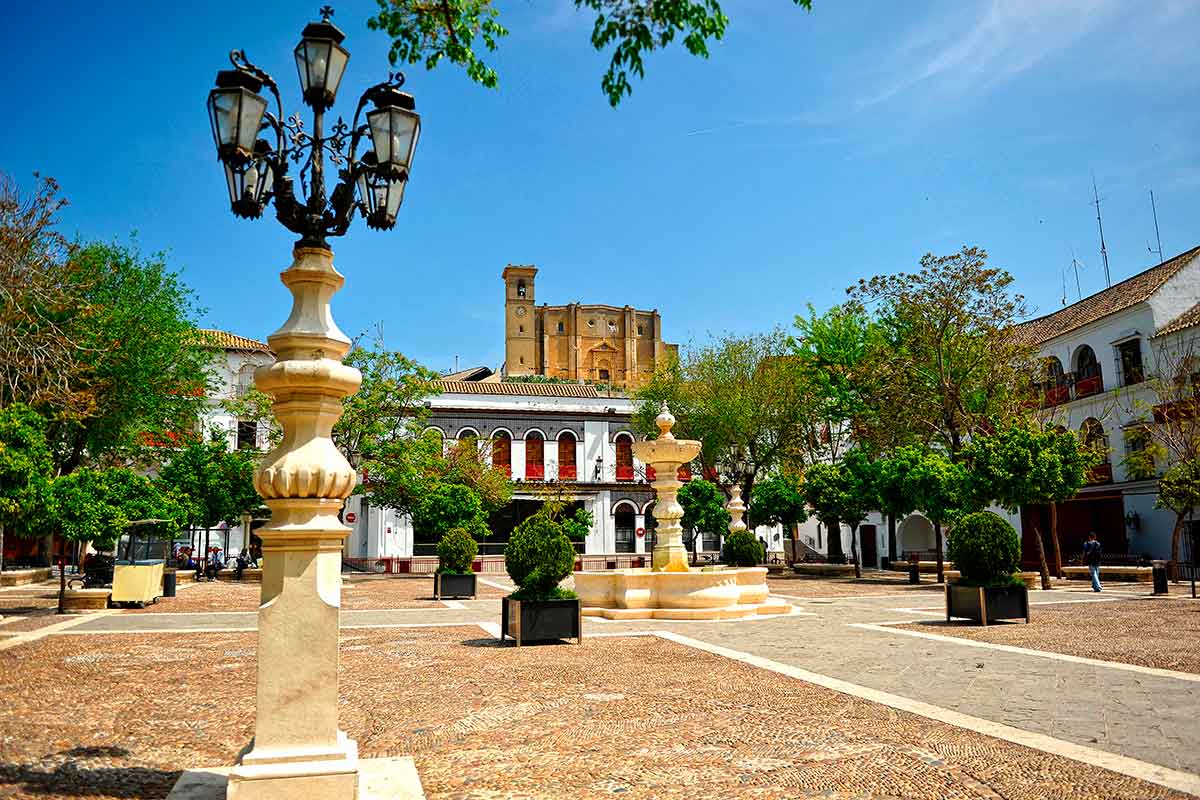
Osuna is the capital of the Sierra Sur, with a population of about 17,000 inhabitants. Its streets are mainly arranged on the hillside, providing tourists with beautiful views of the surroundings, full of olive groves and farmland, where the endorheic lagoons of La Lentejuela have also formed, interesting for bird watching. Its monumental heritage is mainly due to its past as a ducal city, as it was part of the territories of one of the most important noble families (the Dukes of Osuna) in Spain, especially between the 16th and 18th centuries. This splendor can be observed in its Renaissance University with a fortress-like air, its Collegiate Church with great Baroque artistic works, its peaceful Monastery of the Encarnación, its historic Bullring, its museums, or its stately palaces.
A similar layout is found in Estepa, surrounded by fields and olive trees, with its Cerro de San Cristóbal, which houses the ruins of the old 10th-century alcazaba and the Keep, as well as an interpretation center for the archaeological remains found here, mainly from the Tartessian period. From this medieval fortress, one can enjoy magnificent views, as well as from its Balcony of Andalusia. Its main constructions are the church of San Sebastián, the church of Santa María, or the Victoria Tower. To all this monumental wealth, another factor is added that makes this municipality one of the most attractive for rural tourism in Seville: its gastronomy. And especially its famous mantecados, whose history can be learned inside the Convent of the Clarisas, where batches of these sweets are also sold. Additionally, it has a museum dedicated to chocolate.
For its part, Morón de la Frontera is administratively part of the Morón and Marchena region, although it is popularly considered a territory of the Sierra Sur. In fact, its main monument, the church of San Miguel, is nicknamed ‘the cathedral of the Sierra Sur’. Built over a former mosque, it harmoniously integrates Gothic, Renaissance, and Baroque elements. Other prominent temples are the church of San Ignacio, the church of La Victoria, or the hermitage of Nuestro Padre Jesús de la Calzada. It also preserves the ruins of an Almohad castle.
Other Charming Villages in the Sierra Sur
In addition to Osuna, Estepa, and Morón de la Frontera, the Sierra Sur has smaller and more secluded villages, with old quarters full of charm and surrounded by peaceful nature. Below is a list of some of the favorites among lovers of rural tourism in Seville:
- Casariche: this town of about 5,000 inhabitants surprises with its rich Roman legacy, which can be appreciated in the José Herrera Rodas Roman Mosaic Museum Collection, with interesting mosaics, as well as in the Roman Quarries of Cerro del Bellido, where the Ventippo Viewpoint is located. Furthermore, one of the most original routes of rural tourism in Seville passes through the landscapes of this municipality: that of the Lands of José María el Tempranillo, dedicated to this bandit known as the Andalusian Robin Hood. Other villages in the province through which this route runs are Badolatosa and Corcoya.
- La Roda de Andalucía: this other town has less historical heritage, as its great boost came with the railway in the 19th century, due to its strategic location between Málaga, Córdoba, and Seville. But that has allowed it to create one of the most interesting spaces in this town, which is the railway museum, with models that the youngest members of the family will enjoy. Additionally, it has the Olive Grove Park, where you can learn more about this tree so closely linked to Andalusia and where representative varieties from all provinces have been planted.
- Gilena: a small and peaceful village where its 16th-century church of the Purísima Concepción stands out.
The Campiña: Fertile and Welcoming Land
The Campiña, a generic designation referring to the regions of Écija, Carmona, Morón, and Marchena, is a fertile land inhabited since ancient times, so it has interesting archaeological sites and a beautiful monumental heritage, integrated into a landscape of farmland where tranquility is felt. Dotting these lands are several lagoons that add a very interesting natural touch, especially for their importance to migratory birds. Below we show you some towns that can be part of your rural tourism route in Seville.
Surprising Villages of the Campiña
Among livestock dehesas, olive trees, vineyards, and fields dedicated to the production of cereals and vegetables, some small villages with a quiet atmosphere emerge in the Campiña. In them, there are monuments and places of interest that will surprise tourists staying in rural houses or coming for a few hours’ visit.
This is the case with Arahal, from whose cluster of houses the church of Nuestra Señora de la Victoria stands out with great personality, especially its 18th-century bell tower. Its rich interior features a wooden coffered ceiling. Special mention should be made of other religious temples, especially the church of Santo Cristo de la Misericordia, in colonial Baroque style, as well as the church of San Roque, the church of Santa María Magdalena, the chapel of Veracruz, or the convent of Nuestra Señora del Rosario. In civil architecture, the elegant palace-house of the Marquises of Peña de los Enamorados stands out.
Another town well worth a visit is Mairena del Alcor. Here you can admire, above all, its great medieval castle (14th and 15th centuries), which can be visited as it is also the Jorge Bonsor House Museum, the great restorer of the complex. But to flamenco lovers, this town will ring a bell for another reason: being the birthplace of Antonio Mairena (Antonio Cruz García), who adopted the surname of his hometown. A cante jondo festival is held in his honor.
Another Campiña town that can be part of a rural tourism route through Seville is Fuentes de Andalucía, where its main monument is the imposing Monclova Castle, medieval and once belonging to the Dukes of Infantado, with spectacular spaces such as the Tapestry Room, the Canvas Room, the Old Mill, the Bishop’s House, or the gardens. It currently hosts events, including a music festival. In the old town, full of Baroque facades, the church of Santa María la Blanca, the church of San José, the monastery of the Encarnación, and the hermitage of Calvario stand out, as well as the ruins of its primitive Muslim castle, of which the Keep is preserved.
Finally, La Puebla de Cazalla can also be mentioned, loaded with architectural heritage: religious (church of Nuestra Señora de las Virtudes and hermitage of San José), civil (Plaza de Andalucía), or military (Luna Castle, on the outskirts). Additionally, it has several museums (Oil, Contemporary Art, Archaeological, and Ethnological…) to complete an intense day of rural tourism in Seville.
Small Cities of Great Monumental Wealth
Due to its proximity and size, the Campiña is one of the most populated areas of the province. So in this section, we group several municipalities that, while not villages, can offer an interesting half-day or full-day visit. A visit that can be planned as an excursion from the capital or from any nearby village, such as those mentioned in the previous section, so they also deserve their place on this page about rural tourism in Seville. Furthermore, between one and another, you can easily find active leisure and nature proposals, such as the Vía Verde de la Campiña, which runs through Marchena, Écija, and Fuentes de Andalucía.
These municipalities, which have several tens of thousands of inhabitants, are:
- Carmona: it is probably the most interesting city in the Campiña from a tourist point of view, as it has monuments from very different periods. For example, from the Roman era (necropolis, amphitheater, or its Archaeological Complex). Also from the medieval era (Alcázar de Puerta de Sevilla and Alcázar del Rey Don Pedro). And of course, from the modern era, with numerous Renaissance and Baroque churches and palaces (church of Santa María, church of El Salvador). Another representative monument is the Puerta de Córdoba, whose arch stands as a balcony over the plain.
- Marchena: its nickname ‘the unknown beauty’ says it all. In its old town, the Almohad walls can still be seen, where the Arco de la Rosa (Puerta de Sevilla) is still preserved in very good condition. Its religious temples are outstanding, such as the church of San Juan Bautista, the church of Santa María de la Mota, the church of San Agustín, or the chapel of Vera Cruz.
- Écija: walking through its streets, one easily understands its stately past, as they are full of houses and palaces from the 16th to 18th centuries. Those of Peñaflor, Los Palma, or Benamejí are some examples. The latter also houses the Municipal Museum. Regarding religious architecture, the church of Santa María, profusely decorated inside, the church of San Francisco, and the church of Santiago stand out.
- Utrera: although its recent growth has made it one of the largest and most populated cities in the province (more than 50,000 inhabitants), it also represents a good excursion for those doing rural tourism through Seville, and specifically through the Campiña. The main monuments of Utrera are its Arab castle, its church of Santiago el Mayor, and the church of Santa María de la Mesa.
- Alcalá de Guadaíra: another of the province’s large municipalities (more than 70,000 inhabitants), which has two castles in its territory: that of Alcalá de Guadaíra, at the western end of the town, and that of Marchenilla, on the outskirts. The first has its own interpretation center.
El Aljarafe: Culture and Art
El Aljarafe is a region located west of the capital, in a fertile area where olive groves predominate but where vineyards and numerous fruit crops can also be found. Furthermore, it is an area that adapts well to rural tourism plans in Seville, as it lacks large urban centers. In its municipalities, culture and art are very present, and in its surroundings, there are also some green recreational areas, such as the Guadiamar Green Corridor.
One of the most prominent towns is Olivares which, despite its proximity to the capital, maintains a pace far from rushes and crowds. This town of just over 9,000 inhabitants gave its name to Gaspar de Guzmán y Pimentel Ribera y Velasco de Tovar, better known as the Count-Duke of Olivares, favorite and strongman in the times of Philip IV. In fact, his palace is one of the municipality’s tourist attractions, in the Plaza de España: of radiant whiteness, this former residence is now the Town Hall and is themed in the Baroque style of the Golden Age. In addition to this palace, it is worth visiting the Collegiate Church of Nuestra Señora de las Nieves, its Muslim-era watchtowers, or the chapel of Vera Cruz.
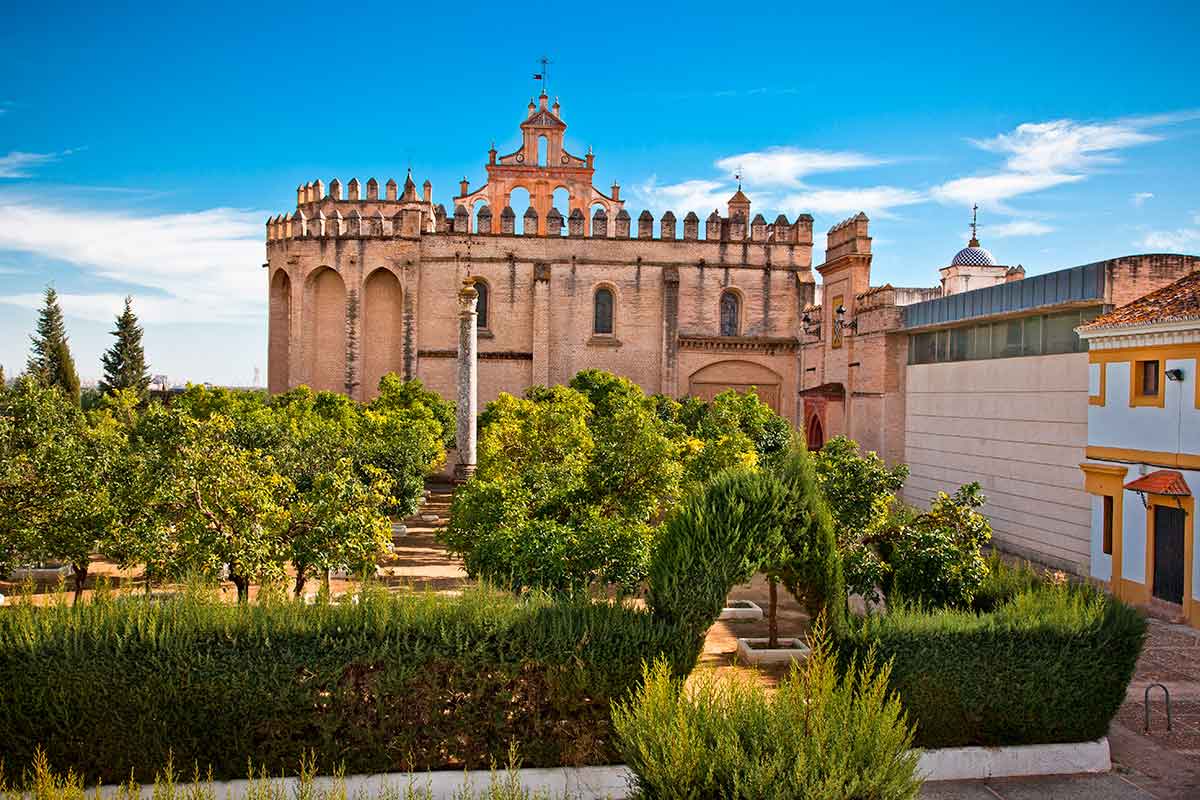
Another municipality whose visit should not be missing from a good rural tourism plan through western Seville is Santiponce. And specifically, its archaeological complex: Itálica, which was one of the most important cities in Roman Hispania. In fact, it was the birthplace of two Roman emperors: Trajan and Hadrian. Therefore, it is no coincidence that this great archaeological park is preserved here, featuring a splendid amphitheater with a capacity for about 25,000 spectators, as well as an equally valuable theater. Abundant mosaics and numerous sculptures are also preserved, many of them replicas of those kept in the Archaeological Museum of Seville. In addition to its Roman complex, in the town center of Santiponce, you can visit other places of interest, such as the monastery of San Isidoro del Campo, a monumental Gothic-style complex.
Beyond Olivares and Santiponce, if your rural tourism trip through Seville brings you to this part of the province, you can take the opportunity to visit these other towns:
- Bollullos de la Mitación: it preserves several important temples, such as the church of San Martín de Tours, the hermitage of Nuestra Señora de Roncesvalles, or the hermitage of Nuestra Señora de Cuatrovitas, where its old Almohad minaret is visible. Its rural location has allowed for the establishment of active leisure and nature activity companies, which will appeal to those doing rural tourism in Seville with children
- Villanueva del Ariscal: the church of Santa María de las Nieves is its main construction, with a beautiful 17th-century altarpiece on the main altar. The municipality, located in an environment of cereal fields, olive groves, and vineyards, is situated in the heart of the region.
- Castilleja de la Cuesta: despite being almost adjacent to the capital and on one of its main entry routes (A-49), this municipality of just over 15,000 inhabitants still preserves part of its past charm. The Palace of Hernán Cortés undoubtedly stands out, named so because it was here that the Extremaduran conqueror happened to die in 1547, while staying at the residence of his friend, the juror Don Alonso Rodríguez. On the other hand, the church of Santiago el Mayor is its main temple.
Vega del Guadalquivir: Another Interesting Option
Located along the Guadalquivir, in its northern stretch coming from Córdoba, it is an area relatively close to the Andalusian capital. For this reason, its towns are not as small as in other parts of the province, but it also houses some interesting getaways for those who practice rural tourism in Seville. The riverbanks are very fertile land, so orchards and farmland abound. Manor houses and the formation of small reservoirs from the contribution of streams are other marked characteristics of this area.
One of the interesting towns for rural tourism in Seville is Lora del Río, with interesting complexes such as those of the Plaza de España, the Bailío Palace, the House of Lions, the House of Columns, or the cozy Setefilla square, with the church of Nuestra Señora de la Asunción. La Campana is another municipality that houses an interesting monumental heritage that can be visited as a brief getaway, highlighting the church of Santa María La Blanca. The same applies to Tocina, where the churches of San Vicente Mártir and Nuestra Señora de Fátima stand out. Cantillana or Villaverde del Río also allow for getaways near the capital, as do the more distant villages of this region: Puebla de los Infantes, at the foot of the Sierra Norte and with a variety of sports activities on the shores of the two nearby reservoirs, José Torán and Retortillo (skydiving, MTB, etc.), or Peñaflor, with a charming old town where the church of San Pedro Apóstol or the convent of San Luis del Valle emerge, among others.
The Marismas del Bajo Guadalquivir
The area of the Marismas and the Bajo Guadalquivir is marked by the influence of the Doñana National Park and the course of this great Andalusian river, which is fully navigable here. Both aspects multiply the leisure possibilities for those who wish to engage in rural tourism in Seville, as in the towns of this region you will find rustic and quiet accommodations for a holiday retreat, during which you can ride a bicycle, go hiking, or organize horseback routes, among other possibilities. The main municipality is Lebrija, its capital, where the largest services in the area (commercial, leisure, etc.) are concentrated, and where you can also visit monuments of interest, such as the church of Santa María de la Oliva.
Some of the villages and municipalities that offer attractive proposals for any visitor are:
- Villamanrique de la Condesa: this is a village closely linked to the Doñana National Park and is considered one of its gateways, as the Dehesa Boyal Visitor Center is located here, with exhibitions on its ecosystems and the traditional uses of its resources.
- La Puebla del Río: this municipality is located in the so-called pre-park or Doñana Surroundings Natural Park, with interesting enclaves such as the Brazo del Este or the Cañada de los Pájaros, where common coots, squacco herons, or marbled ducks, among many other species, are often spotted.
- Aznalcázar: part of its land is within the Doñana National Park, so it is also a good option for those who want to add ecological routes to a rural tourism vacation in Seville
- Gelves: despite its proximity to the capital, it is a relatively small and quiet village that has a magnificent marina and wintering port, ideal for those interested in nautical activities.
For more information on the tourist proposals of the Doñana National Park, you can visit this page.
How do you want your trip through Andalusia to be?
Your turn.
Tell us what you have in mind for your experience.