


Córdoba Province: Nature and Tradition
Discover Córdoba at its most rural through a personalised lens: serene landscapes, historic villages, and tailor-made experiences designed to connect you with the authentic essence of Andalusia.
Rural tourism in Córdoba: charming villages and great food
The fact that the Costa del Sol is one of the most powerful holiday destinations in the world and that the provincial capital has become a cultural benchmark in the country should not overshadow the appeal of rural tourism in Malaga. Inland, there are charming places, not only for their picturesque old towns but also for their beautiful natural landscapes, from the mountain ranges of Ronda and Las Nieves to the west, to those of Tejeda, Almijara, and Alhama to the east. On this page, we tell you about the main areas for getaways and trips where you can recharge your batteries.
Contents
A natural north, ideal for rural tourism
The north of the province is defined by areas of great natural wealth, home to charming villages. It is therefore a perfect region for those looking to enjoy rural tourism in Córdoba. This is an area shaped by the elevations of the Sierra Morena of Córdoba, which runs northeast to southwest, linking two protected green areas: the Sierra de Cardeña y Montoro Natural Park and the Hornachuelos Natural Park. Further north, two other distinctive areas open up: Los Pedroches and Alto Guadiato.
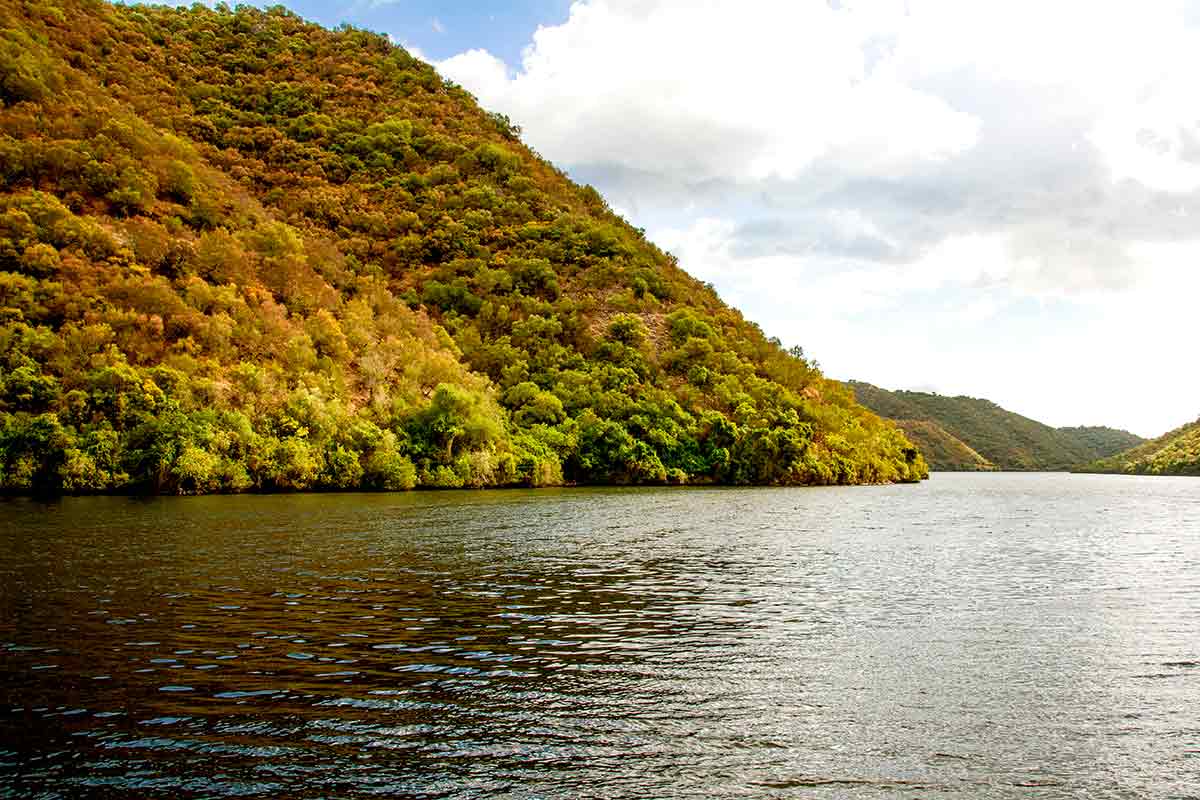
Sierra Morena of Córdoba: nature on a human scale
Although it is not a geographical comarca, the Sierra Morena of Córdoba does form a unified territory, with administrations and businesses joining forces to promote its strengths and attract visitors. As a result, some of the best plans for rural tourism in Córdoba can be found here.
At its eastern end lies the Cardeña y Montoro Natural Park, which connects with the Sierra de Andújar in Jaén. In this area of almost 40,000 hectares, the terrain is characterised by rolling relief and gentle slopes, where granite outcrops emerge in the form of ‘boulders’, some over one metre in diameter. It is the natural habitat of Iberian lynx, wolves and, along its watercourses, otters. Its highest points barely exceed 800 metres above sea level.
At the western end, the Hornachuelos Natural Park (60,000 hectares) continues towards the Sierra Norte of Seville and offers a beautiful Mediterranean forest landscape dominated by holm oaks. It also features extensive dehesa woodlands and wetter areas along its many rivers and reservoirs, where wild olive trees, cork oaks and even dwarf palms appear. It is also excellent habitat for lynx, wolves and otters, as well as wild boar, deer and large birds, notably the Spanish imperial eagle, the black eagle, the griffon vulture and the black vulture—the latter with one of the largest colonies in the entire region.
These are the municipalities in the province that form part of Sierra Morena and have earned a place among the preferred destinations for rural tourism in Córdoba:
- Montoro: gives its name to one of the area’s Natural Parks—and not by chance, which reflects its wealth of options. It is a town where you can find the three landscapes that define rural tourism in Córdoba. Namely, the surrounding mountains; the banks of the Guadalquivir River, which here forms a meander declared a Natural Monument; and the fertile countryside of its agricultural fields. Rising above its tightly clustered rooftops is the bell tower of the Church of San Bartolomé Apóstol, the town’s main church. Other religious buildings of interest include the Hermitage of Santa Ana and the Church of San Sebastián. The Municipal Museum is also worth visiting, with archaeological pieces, minerals and fossils from the area. There are many hiking routes, for all levels of difficulty.
- Adamuz: one of its main attractions is the Cueva del Cañaveralejo, set in the heart of nature about 4 kilometres from the town. This natural cave has yielded artefacts from the Neolithic and the Metal Ages. These pieces are displayed in the town museum, and the visit can be combined with access to the cave. The surrounding area also offers numerous viewpoints and distinctive spots in the so-called Montes de la Sierrezuela. As for cultural heritage, highlights include the Church of San Andrés Apóstol, the hilltop hermitage, and the ruins of the Monastery of San Francisco del Monte. As well as being an option for rural tourism in Córdoba, it is also one of the top destinations for hunting tourism
- Hornachuelos: this town lends its name to the other Natural Park in the area and stands out for its striking location. It sits atop a hill between two large ravines, so the houses on one side literally overlook the drop, while those on the other have views of the Bembézar reservoir. This strategic position led to the construction of a watch castle, probably built between the 8th and 9th centuries. Some remains of walls and towers still stand. Its main church is Santa María de las Flores, dating from the time of Ferdinand III ‘the Saint’, incorporating earlier Muslim elements.
- Espiel: has modest yet picturesque buildings, such as the Hermitage of La Estrella and the Church of San Sebastián. This small town attracts not only visitors interested in rural tourism in Córdoba but also outdoor sports enthusiasts, especially climbers, thanks to the spectacular vertical walls of the Sierra del Castillo.
- Obejo: a small town of steep streets, set on a hill sheltered by the surrounding mountains. The most notable heritage feature of its whitewashed houses is the Church of San Antonio Abad. Three times a year (January, March and July) one of the most striking traditions of rural tourism in Córdoba takes place: the Dance of the Swords, in which 32 dancers and their leader demonstrate their skill with these weapons. The final moment, known as patatú, recreates the moment when the leader is ‘hanged’ with the swords of his disciples
- Villaharta: this village in Sierra Morena, set among Mediterranean forests and farmland, is visited not only by enthusiasts of rural tourism in Córdoba but also by local residents, who see it as an ideal place to unwind. Its main buildings include the Monastery of Pedrique and the Church of Nuestra Señora de la Piedad. On one of its estates, you can discover the collection of Aurelio Teno, a sculptor linked to the area and creator of the statue dedicated to the town’s patron saint, San Rafael. It offers viewpoints and well-signposted hiking routes in the surrounding area.
- Villanueva de Rey: a peaceful town set in a hollow, surrounded by hills, farmland and holm oak pastures. In its modest streets you will find the Church of the Immaculate Conception and the Hermitage of the Apostle Saint James, although its main appeal lies in the surrounding hiking routes, some of which lead to the middle basin of the Guadiato River.
- Villaviciosa de Córdoba: within the Hornachuelos Natural Park, its municipal area contains one of the province’s finest oak forests, along with large expanses of pine woodland. Like many other towns in the Sierra Morena of Córdoba, it has numerous hunting estates that attract many enthusiasts from the province. But what will most captivate lovers of rural tourism in Córdoba is its wide variety of routes for cycling, horse riding, or walking
- Cardeña: although it belongs to the Los Pedroches comarca, it is more appropriate to include it here, as it also gives its name to the Cardeña y Montoro Natural Park, which lies within its territory. It therefore offers countless hiking routes along rivers such as the Yeguas, through Pyrenean oak and holm oak woodlands. Known for its hunting tradition, it also has several hamlets where you can truly disconnect: Aldea del Cerezo, Azuel and Venta del Charco.
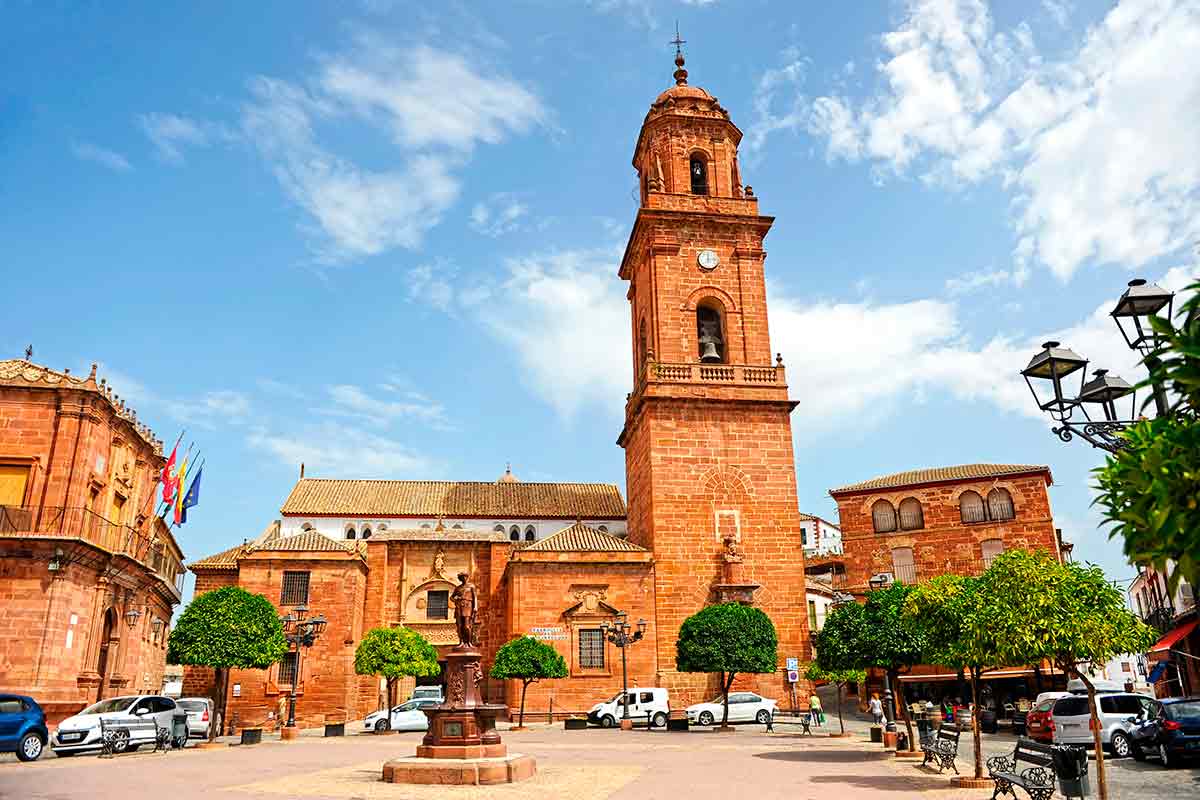
Los Pedroches: a truly top-tier destination
Calling the Los Pedroches comarca a truly top-tier destination is no poetic licence: it is a green corner filled with holm oak dehesas, whose most legendary inhabitant is the Iberian pig—alongside sheep and cattle, also very present in the area. In fact, this is where hams under the Los Pedroches Designation of Origin are produced, as well as top-quality cured meats. For this reason, it is one of the best options for those who wish to enjoy gastronomic experiences during their rural tourism trip in Córdoba. rural tourism in Córdoba.
The Valle de Los Pedroches comarca lies in the far north of the province, bordering Ciudad Real (Castile-La Mancha) and Badajoz (Extremadura). It is a large, gently undulating peneplain that once served as a crossroads between the Castilian plateau and the Guadalquivir Valley. One of the aspects that most attracts enthusiasts of rural tourism in Córdoba is that the pace of life here seems slower and quieter than anywhere else in the region, allowing you to enjoy the surroundings in a more sensory way: here you can sense the timeworn aroma of traditional customs, which reach their apotheosis on the palate.
One of the most interesting elements of this comarca is the vernacular architecture of its villages, influenced by Castile and Extremadura. Alongside the classic Andalusian white limewash is the age-old use of granite for door jambs and lintels, thanks to the abundance of this rock in the area and in the nearby Cardeña y Montoro Natural Park. A simple, modest beauty, often enhanced by cobbled streets arranged in geometric patterns.
These are some of the most famous destinations in Los Pedroches, which shine in their own right as essential villages for rural tourism in Córdoba and form part of the so-called Route of the Seven Towns:
- Pedroche: a town located in the heart of the valley and which gives its name to the comarca. For that reason, it brings together the main features that make this area so genuine: dehesa landscapes, houses combining limewash and granite in an original white-and-grey two-tone effect, steep cobbled streets full of charm… Its main building is the Church of El Salvador, constructed at different times, mainly during the reign of Ferdinand III (13th century) and later, the Catholic Monarchs (15th century), as suggested by details in its interior decoration. Its imposing tower is a reminder that it was built on an earlier castle. Also modestly beautiful are the Hermitages of Piedrasantas, Santa María and San Sebastián. Its main square—Plaza de las Siete Villas—is particularly charming. It also has an Interpretation Centre for the comarca.
- Dos Torres: another village where you can best appreciate the distinctive vernacular architecture of the area, especially in its Plaza Mayor and in the many carved lintels of its houses. It therefore has an Interpretation Centre dedicated to this theme. The main church is Nuestra Señora de la Asunción, a 15th-century Gothic building with a magnificent wooden coffered ceiling. The Hermitage of San Roque and the Church of Santiago also stand out. Another surprising structure is the Pozo de la Nieve, one of the few remaining examples in Andalusia.
- Torrecampo: a peaceful village surrounded by farmland, and also an interesting option if, on your rural tourism trip in Córdoba you would like to add some cultural visits. Here you can find the intriguing Museo Posada del Moro, which displays traditional household items elevated to the level of art, sharing space with pieces of archaeology, painting and sculpture. Another exhibition space is the old Pósito, restored and adapted for this purpose. Also worth visiting are the parish church of San Sebastián, the Hermitage of Siete Veredas, and that of the Virgen de Gracia.
- Pozoblanco: the comarca’s main population centre, with close to 20,000 inhabitants. As a result, it has embraced modernity more and offers a wider range of services, as well as more imposing buildings. Highlights include its large bullring and the Parish Church of Santa Catalina, with the adjacent Chapel of Nuestro Padre Nazareno. It has numerous hermitages, some in privileged settings, such as the Virgen de Luna in the Dehesa de la Jara. The same applies to the Monastery of Pedrique, now converted into a museum.
- Villanueva de Córdoba: the imposing tower of the Church of San Miguel Arcángel is a true symbol of the Seven Towns, and its interior does not disappoint either—especially its elegant wooden ceiling. Other places to visit include the Civil War Shelter and the Interpretation Centre of the Dehesa.
- Alcaracejos: known as ‘the Southern Gateway to Los Pedroches’, it has distinctive landscapes around it, traced by the Guadalbarbo and Cuzna rivers. In the town centre you will find the Museum of the Matanza, which hints at one of the great attractions of rural tourism in Córdoba: the delicious meats and cured products you can sample here
- Añora: a village that, despite its small size, encapsulates the essence of Los Pedroches’ most distinctive features—especially in terms of vernacular architecture, traditions and folklore. Strong local devotion surrounds its May Crosses and its jota noriega, a popular dance reflecting the Castilian influence in these lands. The Parish Church of San Sebastián and the Hermitages of La Peña and San Pedro are well worth a visit.
However, there are other municipalities in the comarca that, while not part of the Seven Towns, also offer many attractions for those wishing to enjoy rural tourism in Córdoba. They are as follows:
- Hinojosa del Duque: unmissable is the Church of San Juan Bautista, known as ‘the cathedral of the Sierra’, a Renaissance jewel by the great architect Hernán Ruiz I, who also worked on Córdoba’s cathedral-mosque. Its Plateresque and Classicist elements are remarkably pure, although its great symbol is the slender, elegant bell tower. It is not the only religious building worth mentioning: the town is full of convents (Purísima Concepción) and hermitages (San Sebastián, Virgen del Castillo, etc.), among which the Sanctuary of the Virgen de la Antigua stands out in a beautiful setting. The Ethnological Museum reviews the comarca’s traditional way of life. All of this makes it one of the favourite destinations for rural tourism in Córdoba
- Belalcázar: its name already hints at its greatest attraction: the imposing Castle of the Sotomayor family (15th century), from whose splendid keep you can see across into Extremadura. Its noble past has left a rich architectural heritage, such as the Convent of Santa Clara de la Columna, one of the finest examples of Isabeline Gothic in the province. The Church of Santiago el Mayor and the Hermitage of Nuestra Señora de Gracia de la Alcantarilla also stand out.
- El Guijo: contributes one of the comarca’s most interesting archaeological sites, Majadaiglesia. The Parish Church of Santa Ana, in which Hernán Ruiz II took part, combines elegance and simplicity.
- Santa Eufemia: the Islamic Castle of Miramontes, preserved in ruins on one of its hills, has an impregnable air—also reflected in the Church of the Encarnación (13th century).
Alto Guadiato: nature and mining
The Valle del Guadiato comarca is shaped around the upper course of this 100% Córdoba river and is another interesting option for nature lovers. Although its landscapes are not as lush as other corners of Sierra Morena, it does offer the tranquillity and fresh air sought by everyone who chooses rural tourism in Córdoba. It also shares with neighbouring areas a strong hunting tradition, which translates into cuisine rich in game meats such as venison and wild boar. Among its most notable natural spots is the area around the Puente Nuevo reservoir, although its main ecological value is the Special Protection Area for Birds, to the north of the comarca on the border with Extremadura: it is home to birds of prey and waterfowl such as the mallard and the coot.
To all of this, it adds an extra attraction: mining. The extraction of coal, copper, lead, iron and silver, boosted from the late 18th century onwards, has led to the creation of several museums on this theme and the preservation of mining structures in situ. Therefore, it is not only one of the most interesting comarcas for rural tourism in Córdoba, but also for lovers of industrial tourism, which is increasingly popular.
Some of the most interesting towns in this comarca are:
- Fuente Obejuna: immortalised by the play by dramatist Lope de Vega, it is a symbol of a people united against the tyranny of power. This is reenacted every year by local residents in the streets of the town—an ideal setting to recreate this popular uprising against the commander of the Order of Calatrava, who held dominion over it for a time. But this small municipality is more than that, and if you include it on your rural tourism route in Córdoba you will be able to visit monuments such as the parish church of Nuestra Señora del Castillo, on Plaza Lope de Vega next to the Town Hall. The Church of San Francisco and its Camarín de la Virgen also stand out, as do the various hermitages spread around the town centre and beyond. It also has a museum that reviews the town’s history.
- Bélmez: its urban fabric still preserves the feel of vernacular architecture, with homes set on the hillside and religious buildings such as the Church of the Anunciación, the Hermitage of the Virgen de los Remedios and that of the Virgen del Castillo. However, its most outstanding feature is the Castle of Bélmez itself, dating from the 13th century, perched on a rugged limestone crag and visible from every angle. It watched over the old road to Los Pedroches and was mainly managed by the Order of Calatrava. Even older is another stone construction: the Dolmen of Casas de Don Pedro, a megalithic monument that, according to some authors, may date to the end of the 5th millennium BC. In addition, it has the Historical Museum of Bélmez and the Mining Territory, with prehistoric archaeological pieces and items related to the area’s modern mining activity.
- Peñarroya-Pueblonuevo: another mining-focused town, which has led to the creation of the Geological and Mining Museum, one of the finest of its kind in the province.
Another rural tourism plan in Córdoba: La Subbética
At the opposite end, in the south of the province on the borders with Málaga, Jaén and Granada, lies another of the most interesting areas for rural tourism in Córdoba: the Subbética comarca, which includes the Sierras Subbéticas Natural Park. This protected area is a favourite among geology enthusiasts, but also among those less familiar with the subject. Both types of visitors will be captivated by views from Pico de la Tiñosa, the province’s highest summit, or by formations as whimsical as the Cueva de los Murciélagos.
On the hiking routes—many of them easy—you will walk through landscapes as varied as elm and ash woods along the riverbanks, or patches of holm oak and Portuguese oak in shady areas. With good binoculars, you will have the chance to spot cliff-dwelling birds such as Bonelli’s eagles, golden eagles and griffon vultures. And with a little luck, you may even see an Iberian ibex, one of the park’s most emblematic animals. For those who prefer family cycling, the Subbética Greenway is an unbeatable option, with 65 km along a former railway line.
But if, on your rural tourism getaway in southern Córdoba you would rather enjoy the flavour and charm of its traditional villages, the options are also numerous. These are the most interesting:
- Carcabuey: the village most closely linked to the Sierras Subbéticas Natural Park, with much of its municipal area within it. It also has one of the comarca’s most symbolic monuments: its rock castle. As we see it today, it is the result of Christian rebuilding after the reconquest of the area by Ferdinand III, although there was previously an Islamic-era fortress and, before that, a Roman one, on a hill inhabited at least since the Metal Ages. Its Municipal Historical Museum offers an excellent overview, with finds so important that the British Museum in London took an interest in them (it currently holds a Bronze Sword). The Hermitages of Cristo del Calvario, El Castillo and Santa Ana also stand out.
- Almedinilla: its introduction for those coming to enjoy rural tourism in Córdoba includes numerous and very varied attractions. Perhaps the most important is its archaeological wealth, featuring the spectacular Roman villa of El Ruedo, which still preserves many mosaics in situ (1st to 6th centuries AD). Even older is the Iberian settlement Cerro de la Cruz (2nd–3rd centuries BC), on the outskirts of town. It is therefore no coincidence that the municipality also has an interesting Historical-Archaeological Museum. You can also wander its steep streets and orange-blossom-scented corners, or head out of town for hiking routes such as the waterfall trail of Salto del Caballo.
- Cabra: a town of around 20,000 inhabitants which, despite its size, still has corners of true charm. For example, in the Cerro neighbourhood, whose narrow streets still preserve medieval, traditional arches, with façades and balconies adorned with flower pots. From many angles you can see the bell tower of the Parish Church of the Assumption, the city’s main church. However, the monument of greatest historical value is the Castle of the Counts of Cabra, with its evocative keep and the Capuchin Convent integrated into the complex. It also has an interesting Archaeological Museum, as well as one dedicated to olive oil at the Molino Viejo.
- Rute: if, during your rural tourism getaway in Córdoba, you would like a flavourful gastronomic experience, this town is an excellent option. It has a strong tradition of producing spirits and anise liqueurs, as well as a variety of sweets. For that reason, the museums you will find here focus on this theme: Nougat Museum, Sugar Museum, Anise Museum, Ham Museum…
- Doña Mencía: this town, named after the wife of D. Alvar Pérez de Castro, captain of Ferdinand III, is also the name of one of the province’s most prestigious wines. It is an essential stop on rural tourism in Córdoba thanks to the charm of its old town, with many evocative ruins: those of the old church, those of the keep tower on Calle Llana and, of course, those of its castle. Its various hermitages reflect the religious devotion of its people, and its Archaeological Museum showcases the rich history this town can proudly claim.
- Iznájar: this hilltop village gives its name to the reservoir at its feet, whose waters from the Genil River create a unique scene. To take in the calming panorama of the lake, there is nothing better than the town’s rock castle, built in the 8th century by the Arabs. To reach it, you will climb steep streets full of local character, decorated with traditional blue flower pots, as you can see in the Patio de las Comedias and other corners.
- Luque: at first glance, this municipality’s main attractions are Hisn Lukk Castle, built in the Umayyad period on the remains of a Roman one, and the baroque Church of Nuestra Señora de la Asunción, nicknamed by many as the ‘cathedral of La Subbética’. But this town hides one of the best-kept secrets of rural tourism in Córdoba: the Cueva de la Encantada, a 40-metre cave located in the centre of town that contains fascinating cave paintings dating to the Chalcolithic or Neolithic. Guided tours are organised to visit them.
- Zuheros: within this village’s municipal area lies another of the fascinating caves you will discover while enjoying rural tourism in Córdoba. In this case, its interest is geological: it is the Cueva de los Murciélagos, and it will amaze visitors with the striking limestone formations inside, along a route of around 2 km. This makes it one of the largest caves in the province. The Chamber of Formations, the Organ Chamber and the Asparagus Stalactite are some of the names that help you imagine the whimsical shapes nature has sculpted within. Back in the village, the highlight is the Castle of Zuheros, a rock fortress rising at one edge of the tightly clustered houses. It also has a Museum of Popular Arts and Traditions.
- Priego de Córdoba: like most towns in the comarca, this municipality has a large castle (13th and 14th centuries), with a 30-metre keep, as well as a major parish church: Nuestra Señora del Carmen, transitioning from baroque to neoclassical. The most beautiful, however, is probably Nuestra Señora de la Asunción, with Gothic-Mudejar and Plateresque elements and a spectacular ribbed dome inside. Another point of interest, rarely found in other rural tourism destinations in Córdoba, is the La Trufa Mycological Garden. It is a very beautiful town that is well worth a visit.
And in addition to these charming villages—true gems of rural tourism in Córdoba—we cannot fail to mention another gem: that of Sepharad. This is the name given to Lucena, the comarca’s capital and its most populated city, with close to 50,000 inhabitants. Visiting it can be an interesting excursion from any of the villages mentioned, especially for those interested in Sephardic history and culture, since in the Middle Ages it was one of the main Judeo-Spanish cities. Although little remains standing from that period, there are places in the municipality that still refer to that past, such as the Jewish cemetery. And of course, you can visit other monuments of a Christian nature, such as the Casa Museo de la Virgen de Araceli or the Royal Sanctuary that houses it. Meanwhile, the most imposing monument is the Castillo del Moral, which also houses the Archaeological-Ethnological Museum of Lucena.
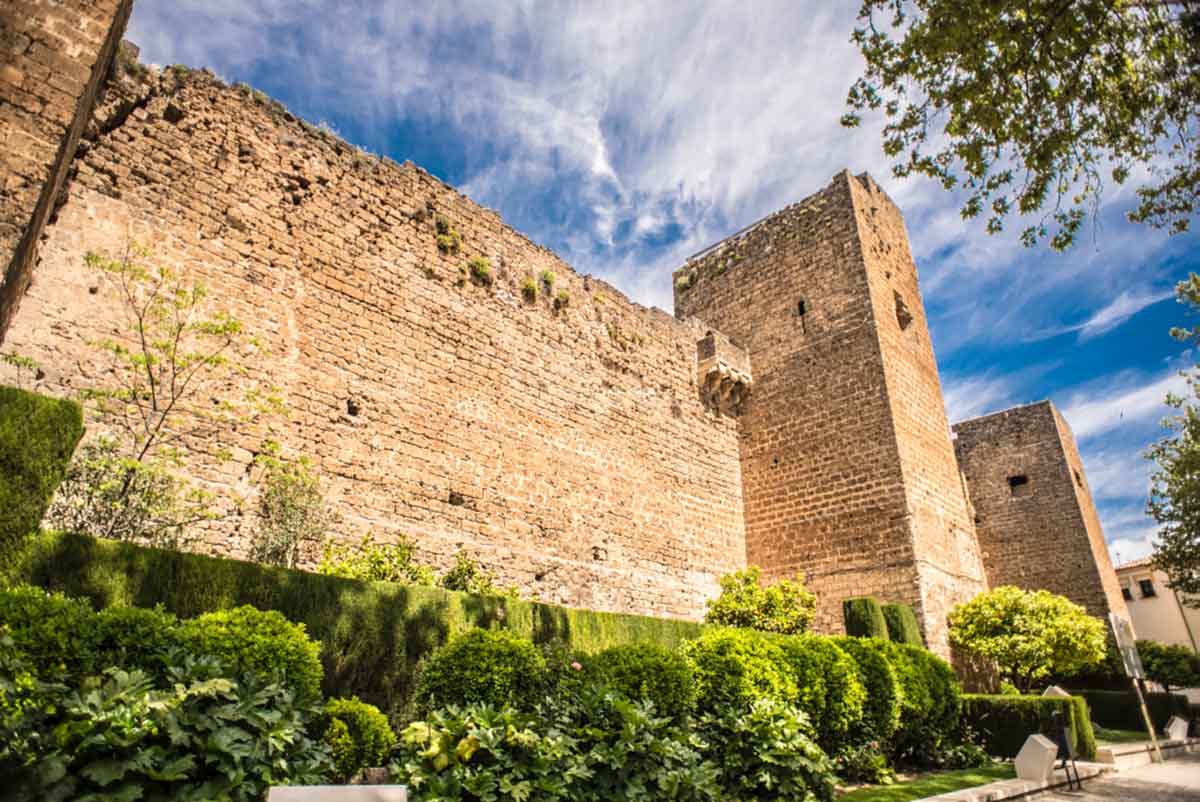
Gastronomic interest: La Campiña
The Campiña comarcas (Campiña Sur and Campiña de Baena), located between the Guadalquivir Valley and La Subbética, are not as appealing for nature as the previous areas, but they are of great gastronomic interest. Their landscape is a plain with gentle undulations, filled with farmland—both irrigated and dry—only broken here and there by several lagoons (Zóñar, Tíscar, etc.), the Cordobilla reservoir, and the courses of rivers such as the Cabra, Genil and Guadajoz.
In this context, the towns and municipalities of the province have joined forces to promote two gastronomic routes to showcase their most emblematic products and attract those who enjoy rural tourism in Córdoba: the Montilla-Moriles Wine Route and the Olive Oil Route. And with this draw, they also highlight the monumental beauty found in some of them.
Montilla-Moriles Wine Route
This Designation of Origin includes numerous wines, some of which come from other comarcas in Córdoba. But this is undoubtedly its epicentre. These typical wines are produced from different varieties of white grapes, using the ageing system ‘under a veil of flor’ in Criaderas and Soleras. Wine styles range from fino to palo cortado, as well as amontillado and oloroso.
The following municipalities, which form part of Córdoba’s rural tourism offering have numerous wineries where you can learn about and taste the famous wines of this DO. They also have an interesting historical and cultural heritage to discover between glasses:
- Montemayor: preserves one of the province’s most interesting fortresses, the Ducal Castle of Frías, with a lovely viewpoint and three slender towers. Rivaling them is the bell tower of the Church of Nuestra Señora de la Asunción, with Gothic-Mudejar and baroque elements. You can also visit the Ulía Museum, with archaeological pieces from the municipality.
- Montilla: as well as giving its name to the Wine Designation of Origin, its town centre holds some surprises for those enjoying rural tourism in Córdoba. —especially those linked to Saint John of Ávila, who spent his final years here in the mid-16th century. His Casa Museo is preserved, and you can visit the basilica dedicated to him, where his tomb is located. There are also various stately homes, such as that of Don Diego Alvear, and other religious buildings, such as the Parish Church of Santiago.
- La Rambla: its main attraction lies in its pottery-making tradition, which continues to this day and can be explored in depth at its Ceramics Museum. The keep tower of its old castle and the Torre de las Monjas, from the former Dominican convent, are also preserved. The Church of Nuestra Señora de la Asunción is the most important church, with an imposing bell tower and a beautiful Plateresque doorway by Hernán Ruiz I.
- Aguilar de la Frontera: offers reasons to include it on a rural tourism route in Córdoba. —for example, the ruins of the hilltop castle, the stately homes, or the slender Clock Tower. Its octagonal Plaza de San José (early 19th century) is also striking: although it lacks the bustle that bars and taverns would bring, it provides an incomparable setting for events such as Holy Week celebrations or bullfights.
- Fernán Núñez: its standout building is the neoclassical Ducal Palace—alongside the baroque Church of Santa Marina, which is even more beautiful inside.
Olive Oil Route
This is the other flavor route for those seeking rural tourism in Córdoba. And like the wine route, it also serves as an invitation to discover some of the province’s charming villages. Many of the towns from the previous itinerary are also included here, as many areas are dedicated to olive groves in addition to vineyards. However, the Campiña de Baena region is the most focused on this production.
In the following municipalities and many others, you will find oil mills and establishments specializing in this product, known as Andalusia’s ‘liquid gold,’ particularly in this province and its neighbor, Jaén.
- Baena: This is the most important municipality in the region and along the route, not only in terms of population but also for tourism, as it offers unique experiences within rural tourism in Córdoba. In particular, its Torreparedones Archaeological Park, popularly known as Castro Viejo or Torre de las Vírgenes. Located several kilometers from the town center, it is one of the most significant Roman sites in the area, along with Fuente Álamo in Puente Genil. These are the remains of a Roman municipality where visitors can still see the layout of the forum with its sculptures, the thermal baths, and the market. The Roman road is in perfect condition, though its most iconic feature is the columns of its civil basilica. There are also findings from a preceding Iberian settlement, as well as remains of a later medieval castle. Many of its original pieces are housed in the local Archaeological Museum. In the town center, the castle stands out, used for centuries as a noble residence and extensively restored today. The Plaza de la Constitución is the most important public space, and the Church of Santa María la Mayor is the most prominent temple. Additionally, it features an Olive and Oil Museum.
- Espejo: A much smaller town than Baena, yet it represents a pleasant surprise for those visiting Córdoba for rural tourism. Its whitewashed houses clustered on a hill create its most characteristic image, with its grand ducal castle at the top. This fortress, built in the 13th century, remains very well preserved, especially its crenelated towers. It was the residence of the Osuna family. Nearby is the Church of San Bartolomé, a beautiful example of the region’s Gothic-Mudéjar style with Renaissance elements. It has its own parish museum where visitors can admire major artistic works, particularly the San Andrés altarpiece from the circle of Pedro Romana.
- Castro del Río: Another rural tourism destination in Córdoba where cultural visits (Museum of Uses and Customs, Archaeological Museum, Church of the Assumption) can be blended with gastronomic experiences, especially those linked to olive oil (Alcubilla Oil Mill)
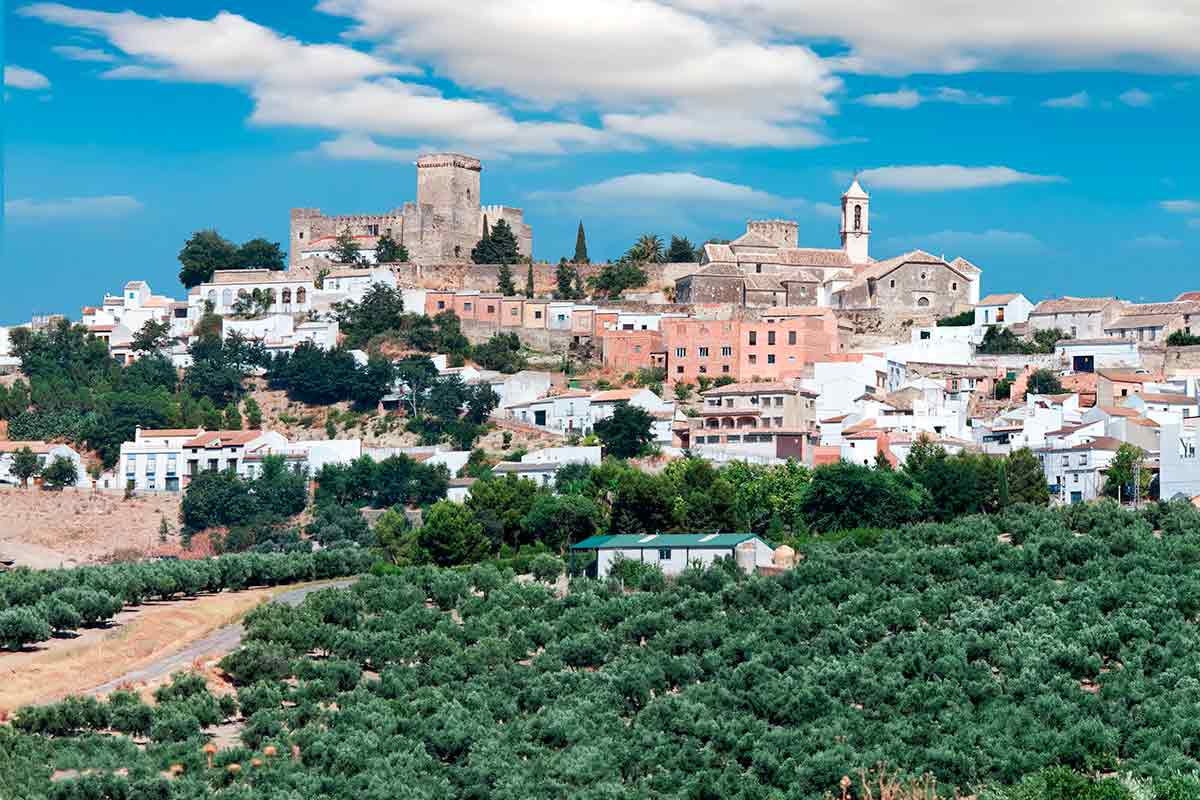
The Guadalquivir in Córdoba
Finally, when visiting Córdoba you can also consider a series of towns located along the banks of the Guadalquivir, both to the east and west of the capital. This river also forms a green corridor of over 100 km, offering many spots for sporting activities. Some of these towns exude local charm, excellent gastronomy, and historical-artistic monuments. Here is a brief overview of the main ones:
- Palma del Río: It preserves part of its Almohad walls, at the foot of which lies the Portocarrero Palace, featuring period decoration inside and peaceful Hispano-Mudéjar gardens. It combines site visits with the organization of private events. Also next to the wall, the recently restored Plaza Mayor de Andalucía is a large space that serves as a meeting point for many locals. The Monastery of San Francisco is another fine example of restoration for hotel use. A final highlight is the slender bell tower of the Church of Nuestra Señora de la Asunción.
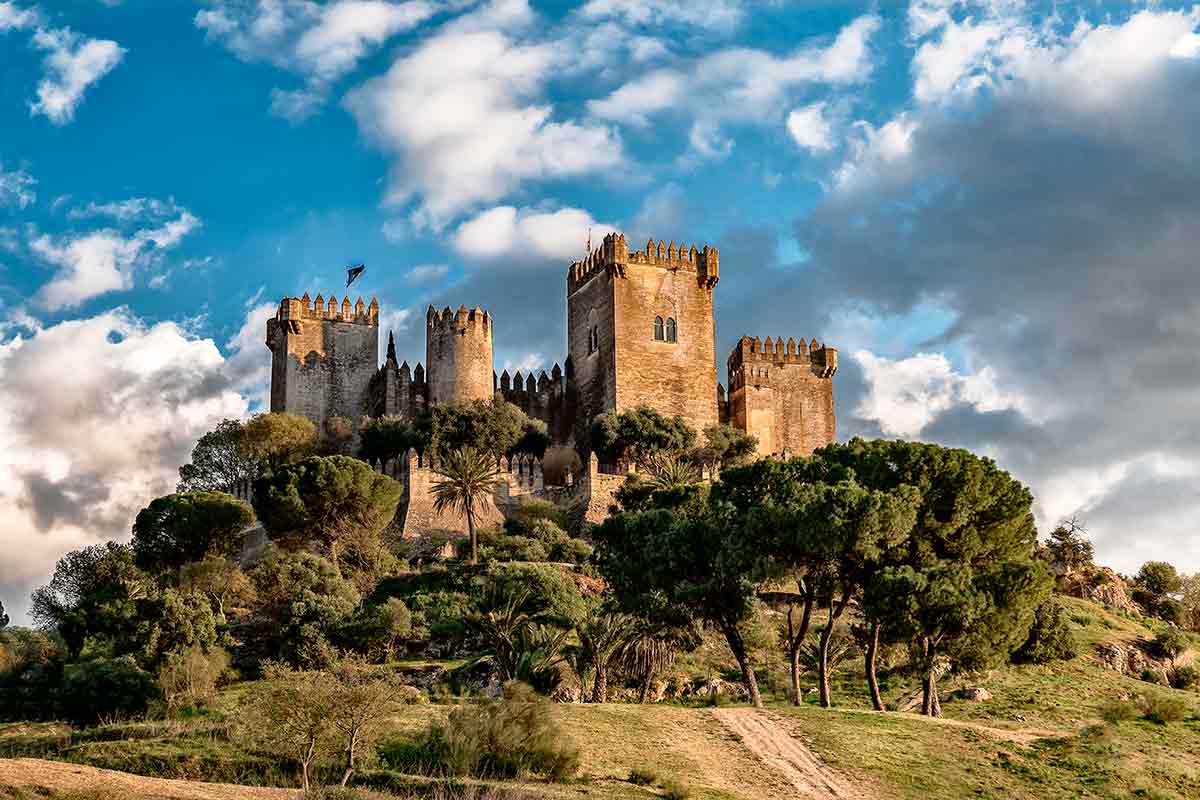
- Almodóvar del Río: Located near the Hornachuelos Natural Park, its greatest historical monument is the crenelated castle of Muslim origin, later renovated during the Christian era. The interior is open to visitors and even offers dramatized tours, as it has been themed. It is no coincidence, therefore, that several scenes from Game of Thrones were filmed here.
- Villa del Río: Situated on one of the most traveled routes on the peninsula in past centuries, as evidenced by its Roman Bridge, one of the town’s most valuable historical structures. The Town Hall also stands out, incorporating the preserved tower of its old Islamic castle.
How do you want your trip through Andalusia to be?
Your turn.
Tell us what you have in mind for your experience.